22 January 2009

Coverage of yesterday's hearing

An Associated Press wire article contains a lot of the elements that media frequently earns criticism for. It's to be a superficial, "He said, they said."

The crowd — as well as the review panel — was sharply split on the proposal to drop language in the current curriculum that requires teachers to address "strengths and weaknesses" of scientific theory.

Of course the panel was split. Because the Texas State Board of Education is split. And the many members of the have been doing all sorts of things (here) to try to create the impression of an even split, and to manufacture the appearance a scientific controversy.

21 January 2009

Second hearing on Texas K-12 science standards

Eugenie ScottEvo.Sphere and Thoughts from Kansas (first post, second; more may be coming) are both liveblogging today's hearing on the Texas State Board of Education's public hearings of the state's K-12 science standards.

Pictured: NCSE's Eugenie Scott, lifted from Evo.Sphere blog.

Money and science

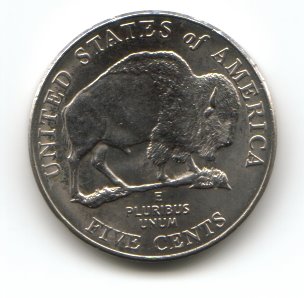
Bison nickelThe Understanding Science website was a big launch at the SICB meeting in January. In each of our little conference bags was a poster put out showing the "How science works" flowchart that is sort of at the core of the website.

One of my colleagues looked at it, and said, "There's no place where it says, 'Beg for money.'" You might think this to be a joke, but this person was deadly serious. A little upset, maybe. "If that's what they want us to tell people about science..."

So I've been thinking a lot about how science is funded. And it's hard not to come to the conclusion that it's seriously messed up.

Costs are going up faster than inflation. Faculty are expecting a lot to get their research going, because if they don't do it right, they're screwed afterwards. New faculty at MIT get (all together in that Dr. Evil voice of Mike Meyers) one million dollars.

Zuber, head of MIT's department of earth, atmospheric, and planetary sciences, says a new junior faculty member receives a $1 million start-up package from the university for buying equipment, renovating existing space, and doing whatever else it takes to launch an experimental program. After that, the fledgling scientist generally must fly solo.

Not sure about other sciences, but in biology, if you are doing medical research, there are various charitable organizations that might fund your work, plus the National Institutes of Health. If you're not doing medical research, almost the only source of money to fund science is the U.S. federal government. Competition is very, very, tight for every single federal dollar.

And one of the perverse things, as a letter in Science noted last year, is that there is no reward for being frugal or efficient. If two researchers run their labs, and both get our 3 papers in a year, but one gets those out with a million dollar grant and the other a ten thousand dollar grant, the former is probably going to get better reviews because that person "brought in more money to the institution."

I've though for a long time that a lot of researchers would end up pricing themselves out of the market. But the market can reward people who do expensive science, not productive science.

Messed up.

There are several links to talks and article about funding are found at the TED blog. See also how scientific funding shouldn't be part of "stimulus packages" here.

20 January 2009

A surprise announcement

The president of our university will be resigning at the end of the month.

Listen, and you can hear university vice-presidents around the country updating their CVs.

Additional: News coverage here, here, here.

Many are speculating. I suppose they're allowed.

19 January 2009

Wrong approach

The title of this editorial, “Universities should flag up which websites to trust,” sums up a well-intentioned but wrong-headed approach. The article goes on:

(T)o make best use of the internet as an educational resource, its content has to be audited for reliability, and a system of classification introduced.

No, it really doesn't. People have to learn how to evaluate information on their own. They have to learn to ask not, "Who do you trust?", but "What is the evidence?"

Knowing kids

The Texas State Board of Education will meet this week to have public hearings on K-12 science standards for the next 10 years. The Austin American-Statesman has an article about it.

Ken Mercer, a member of the State Board of Education, says that excluding the phrase about strengths and weaknesses "raises a huge red flag about academic freedom and freedom of speech" by essentially telling students that they are not qualified to ask questions about scientific theories, he said.

Mercer uses the concept of academic freedom in a weird way. Academic freedom is about what instructors do research on and say in class, not what students can ask.

"I'm hoping for a 10-5 vote, with a strong majority on whatever we go with, whatever's best for the kids," Mercer said.

I strongly suspect an 8-7 vote. Everything I have read indicates that about seven of the State Board of Education members are unlikely to change their opinions.

"I know the kids of today, and if you tell kids not to ask questions, you lose your credibility," he said.

That Mercer says "kids of today" suggests he really might not know them as well as he'd like to think. When I was younger, that's sure what "you kids today" signaled to me. But I digress.

Mercer provides no evidence that anyone has said the science standards should limit what students can ask. The science standards more to do with things like what textbooks can be purchased, and what topics are covered.

Meanwhile, while some in the state fret about evolution, some Texas A&M University faculty have apparently done some interesting research showing evolution in real time in yeast. I say apparently, because this is a press release with no indication of what journal is publishing this work.

And there's an engaging article on transitional fossils over at Science News.

17 January 2009

Secret reports

In the Evo.Sphere blog, Steve Schafersman reports that creationist members reviewing Earth and Space Science (ESS) standards submitted secret "minority reports" to the State Board of Education. The post in lengthy, but provides important documentation of the general smarminess going on in the Texas State Board of Education review of science standards. This is relevant to evolution because earth science has things to say about the age of the earth.

Additional: Only about 5 hours after I initially wrote about this, the post I referred to was taken down for as yet unknown reasons. The content of the original post can be read here.

Teach Them Science

Teach Them ScienceThere's a new website devoted to the current kafuffle over the Texas K-12 science standards called Teach Them Science. I wish it had come to the party earlier.

I particularly love the summary of "False weaknesses." For each example, it gives an summary of why teaching the alleged weakness is counter-productive in an educational setting. For instance, the common claim the "Transitional fossils are rare or missing" ends with the summary:

This false weakness…

  • Teaches students to argue illogically.

  • Teaches that one unknown invalidates everything.

  • Teaches students to argue by establishing impossible criteria.

This website is among the best I've seen for clearly summarizing why teaching "limitations" or "weaknesses" to K-12 students is a poor idea.

16 January 2009

I’m a “highlight”!

An email from The Society for Integrative and Comparative Biology comes in this morning, and says, “Visit SICB Home Page to see photos of the Boston meeting; you might be there!”

I went looking for pictures of my students, but, to my surprise...

Zen and Erica and SICB
It should be noted that the woman I’m talking to, Erica Chao, is on the home page twice.

15 January 2009

Weird chemistry on Mars

I'm betting chemistry, not life. But Carl Zimmer's report of a press conference suggests researchers are seriously thinking they may have evidence for life on Mars.

We'll see. People have gotten excited about this twice before that I can recall. Once in the 1970s, after Viking landed, and again in the 1990s, when people saw some suspicious things in Martian meteors. Neither panned out.

Additional: The research being referred to is here, with the decidedly low-key title, "Strong Release of Methane on Mars in Northern Summer 2003."

More additional: The Bad Astronomy blog looks at headlines related to this story. Annoyance ensues.

Consider this when if you're writing a syllabus

Teresa Neilsen Hayden wrote:
Over-specific rules are an invitation to people who get off on gaming the system.
She's talking about internet moderation here, but this can be applied to many other situations.

14 January 2009

Hero worship

I have many heroes who don't exist. Such is the power of art.

Patrick McGoohan died today. He created a television series that is amazing in how completely, unabashedly it declares itself as a piece of art. A television series that is amazing because, in a medium where realism rules, it makes no sense. (Taking the series as a whole -- individual episodes often make perfect sense.)

That series was The Prisoner. CBC ran it a couple of times late at night in the 1980s, where I caught it by chance one night after I came home from working at the movie theatre, if I remember correctly. I was instantly hooked. I was a member of The Prisoner Appreciation Society for a while.

I loved the design, the font, the strange but somehow plausible game of kosho, the human chess game, the music, the top notch actors who rotated through playing Number Two, the Lotus car that McGoohan drove in the opening credits, the clever traps in "The Girl Who Was Death," and above all, the uncompromising commitment of the lead character, Number Six, played by McGoohan, to independence and individualism.

Number Six is one of my heroes. Thank you, Patrick McGoohan, for your art and craft and intellect.

A new version of The Prisoner series is in production. I hope it will be good. One of the nice bonuses of that is that you can watch the original episodes online here.

Advice for next Texas State Board of Education hearings

In a Houston Press blog, Richard Connelly is being snarky (and I like it):

Just in case you were worried that Texas hadn't made an embarrassing spectacle of itself lately, you need fret no more.

Once again the State Board of Education is coming to your rescue.

There is some actual news here, however. Apparently, the Discovery Institute is coming to town for the next State Board of Education public hearings on the science standards. A member from the institute writes:

Texas has invited scientists on both sides of the evolution debate to testify about the scientific status of Darwin's theory.

Connelly's responds to the idea that this is all just about "good teaching" and offers advice:

We assume these people will also call for standard that demand critical thinking in the theory of the boiling temperature of water and whether gravity makes things go up or down.

January 21, folks. In Austin. Bring popcorn and enjoy the show.

The Evo.Sphere blog has more.

Only (SBOE member and chairman, Don McLeroy) has the power to invite the six experts to attend a SBOE hearing to give testimony and answer questions from the other State Board members, but this idea was not his alone. He was coached by his Discovery friends to set up this misleading debate, since it is designed to fit perfectly with the Discovery Institute marketing campaign to spread fear and doubt about evolution, thus promoting the currently-popular alternative that the DI markets, Intelligent Design Creationism.

Oh, and one more thing: Apparently, Texas has the lowest high school graduation rates in the country.

13 January 2009

What grades should look like

Another riff emerging from a conversation at SICB...

My students may not like knowing this little fact about my teaching philosophy. I tend to think a grade distribution should look like this.


C, being the middle letter grade, should be average. An A should be fairly unusual... but so should an F. Now, I'm not saying my grade distributions actually look like this. They're often skewed one way or another. And I'm okay with that. Every class is different, and I don't feel there's any reason to have any particular distribution of grades. And, interestingly in the context of this discussion, nobody in my institution has really said I should have any particular sort of grade distribution. I do submit my grade distributions during my annual review.

I had a very interesting conversation with a colleague at a different kind of higher educational institution. Her institution expects grade distribution like this:


I'm not sure of the distribution of Bs and Cs, but I distinctly remember 25% As, and 5% Ds and Fs combined.

And if the grades deviated from that too much, a faculty member could conceivably get in trouble.

I'm tired right now, so don't want to comment about the pros and cons of either scheme. But I had never really encountered someone working under such a significantly different regime.

Being an empiricist, I wonder if there's any evidence of what grading system produces the best outcomes.

12 January 2009

SICB 2009, Part 4 and how long to get into science?

Ira Flatow of National Public Radio's Science Friday was another featured speaker at this year's SICB meeting in Boston. In fact, he was the opening speaker. I particularly appreciated one response to a question near the end. Someone asked if Flatow could show that his shows (and presumably other science journalism) actually educated people, or if there were mere entertainment.

Flatow immediately responded with the question, that was something like, "Do you have any evidence that entertainment is not also educational?" I clapped at that. Substitute "entertainment" with "engagement" and maybe people will remember the point. Scientists' suspicion of "mere" entertainment is crazy, much like scientists' distrust of beautiful things.

By curious coincidence, near the end of his talk he hit upon a theme that I'd been listening to in the Scientific American podcast the day before, on the plane to Boston.

Flatow pointed out that when people think of a scientist, they usually think of this guy:


In fact, the person who revolutionized physics with three incredible papers in one year was this guy:


Albert Einstein was doing astonishing science in his 20s. Flatow said that when we show pictures of scientists to students and others, we should use the second picture and not the first. Because students can't see how they can get to be the first guy (and, I should add, don't want to think of as that guy), but they might be able to see themselves as the second guy.

This riff came right after I was listening to the SciAm podcast on Doctor Atomic, an opera (!) about the Manhattan Project. During the discussion with some of the Manhattan Project team, they mentioned most of the people working on the atomic bomb were in their 20s and early 30s. I think Oppenheimer was the "grand old man" of the project at 38!

People working at NASA during the Apollo moon missions were in their 20s. 26 is the figure given for Apollo 17, one of the later missions; so the average age during the earlier missions like Apollo 11 must have been even slightly younger.

And this being a Darwin centennial, I should point out that Darwin was on a cruise around the world on the Beagle in his mid-20s. Sean Carroll mentioned the youth of Darwin, Wallace and Bates during their adventures far from England his talk.

Now, people are just barely getting their first "real job" in science usually in their 30s. Academics are maybe getting tenure and stability, and maybe their first stand alone grant, around their early 40s.

The current system is a horrible waste of talent. People are being put on hold for far too long. Is it any wonder that undergraduates who love science look at the length of training to do it as a career and say, "No thanks"?

How many species have you worked on?

To my fellow biologists: How long is the list of species you have published new data on, in peer reviewed research articles?

Being at the SICB meeting reminded me of something I've been meaning to put up for a while. I take a certain amount of pride in not being someone who has studied a single thing. There are a lot of people who spend their entire careers working on, say, yeast. Good for them.

I, on the other hand, have scientific attention deficit disorder. I am the proverbial mile wide and an inch deep.

I thought it would be fun to list all the species I've published new, original data on (taxonomic surveys don't count). In no particular order...

  1. Spiny sand crabs, Blepharipoda occidentalis (Paper)
  2. Pearly sand crabs, Lepidopa californica (Paper; pictured, right)
  3. Mole crabs, Emerita analoga (Paper; pictured, left)
  4. Squat lobster, Munida quadrispina (Paper)
  5. Signal crayfish, Pacifastacus leniusculus (Paper)
  6. Yabby, Cherax destructor (Paper)
  7. Spiny lobster, Panulirus argus (Paper)
  8. Balmain bugs, Ibacus peronii (Paper)
  9. Slipper lobsters, Ibacus alticrenatus (Paper)
  10. Spanner crab, Ranina ranina (Paper)
  11. Cricket, Teleogryllus oceanicus (Paper)
  12. Sea squirt, Ascidia interrupta (Paper)


I am hoping that by the end of the year, the number of in the list will go up by 2 to 4 species.

What does your species list look like? I'd like to find the most comparative biologist working out there...

11 January 2009

Fisking a Discovery Institute letter

Over at the San Antonio Express News, one Robert Crowther from The Discovery Institute makes a few interesting claims about the review of K-12 science standards. (Crowther is responding to an earlier editorial.)

Crowther correctly points out that viewed narrowly and literally:
The [Texas State Board of Education] is not considering religious, non-scientific beliefs, nor creationism, and certainly not intelligent design for inclusion in science classes. ...

The controversial issue before the SBOE is whether the TEKS will retain language calling for students to learn about both the scientific “strengths and weaknesses” of scientific theories.

Not all people view things narrowly and literally. This is why people object to the inclusion of wording like "strengths and weaknesses," particularly when the chairman of the Board of Education admits is is applied selectively to one theory (evolution).

Crowther then makes two incorrect statements.
Some have proposed removing that language from the TEKS entirely, while others have suggested that good science education that encourages critical thinking should apply to all aspects of the curriculum, especially to the teaching of controversial scientific theories like neo-Darwinian evolution.

Evolution is not controversial science. It's astonishingly well-supported, and the controversy around it isn't scientific, but social.
Furthermore, Lane’s absurd assertions that intelligent design advocates at the Discovery Institute are trying to usher in “a theistic fundamentalist Christian nation” are also false. As a libertarian agnostic who works at Discovery, I can attest to the fact that neither the institute’s motivations or aims includes Protestant fundamentalism, as Lane falsely claims.

I wonder how Crowther explains the Wedge document? It says, in part:
Design theory promises to reverse the stifling dominance of the materialist worldview, and to replace it with a science consonant with Christian and theistic convictions.

Maybe not Protestant, but definitely Christian, definitely theistic, and a damn good case can be made for it being fundamentalism.

09 January 2009

I try to stay out of politics, but politicians don't stay out of science

Former presidential candidate John McCain takes a swipe at lobster research.
On Wednesday, McCain himself grabbed for the fruit-fly swatter at a press conference to unveil his new anti-earmark legislation.

After a long takedown of research into lobsters by the University of Maine that involves a "Lobster Cam," McCain, a Senator from Arizona, turned on the fruit flies, saying, "also, there's one in Paris that -- yes -- $212,000 for Olive Fruit Fly research in Paris, France."

I'll wager that's something related to the Lobster Institute. It used to have a lobster cam (picture from it is part of this post), but it's down now.

The article continues to make much about fruit fly research, was discussed at length during the presidential election.

I'm reminded of something Ira Flatow said during his talk at SICB, which was to point out that science is always the first thing to get cut. He was talking in particular about the closing of reporting in the media, like CNN's cut of its entire science division, but I think this is another example of the same mentality.

I appreciate the Senator's efforts to reduce government expenditures, but going after a couple of hundred thousand dollars for science projects seems to be a poor way of saving.

SICB 2009, Part 3

Last year at SICB, I got to see two of the witnesses in the Kitzmiller v. Dover trial, Barbara Forest and Kevin Padian. This year, I got to hear Ken Miller. Having seen several of these witnesses give live talks now, I am very thankful. They are great, articulate speakers, and you couldn't wish for much better advocates for biological science in a courtroom.

My favourite moment from Miller's talk was his discussion of the fossil Ambulocetus, an early ancestor of whales. He showed creationist literature -- recent, still on regularly updated websites -- claiming the fossil was only small and partial, and that most of the reconstruction was pure fantasy by scientists. What is neglected to mention is that while the original description was based on partial fossils... more have been found since then.

Another description of this story is here.

;;;;;

Here's some discussion of the Year of Science, and here's some personal notes from the meeting. (Note to students: See? Other people get nervous, too!)

And we weren't the only ones trying to do some science outside the conference.

A quick nod on the diversity of beliefs

An opinion piece in the San Antonio Express News is one of the few tackling Texas science standards that deals with a favourite theme of mine, the wonderful diversity of human belief:
Students in Texas come from families with diverse religious and personal beliefs about the origins of life. It is imperative to abide by the constitutional mandate of separation of church and state. No single religious perspective should be taught in our public schools and no religious belief should be taught as scientific fact.

Our founders understood this issue all too well. They had witnessed the treachery, both abroad and here at home, that state-mandated religion can create. That is why the Founders were so adamant to begin the First Amendment to the Constitution with “Congress shall make no law respecting an establishment of religion, or prohibiting the free exercise thereof.....”

Not much to add, really.