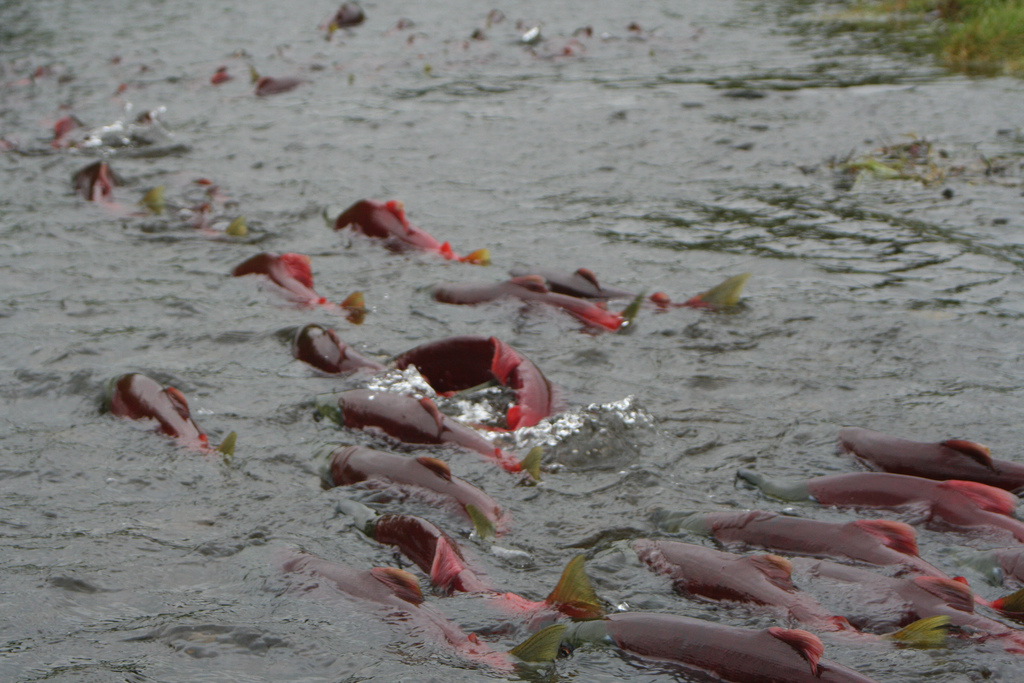
How could I have forgotten to mention that the Carnival of Evolution #61 is now up at Teaching Biology? Especially when it is chock full of crustacean goodness?
Get your crustie lovin’ right here! And hosts are needed for the upcoming carnivals! Email bjorn@bjornostman.com if you’d like lots of evolution-minded people reading your blog.
External links
Carnival of Evolution #61: Crustie Lovin’ Edition
Carnival of Evolution
Showing posts with label blog carnivals. Show all posts
12 July 2013
03 June 2013
Carnival of Evolution #60: Party like it’s 1953
Ladies and gentlemen, this is a special edition of the Carnival of Evolution. It’s the big six oh!
In honor of that achievement, we shall share this carnival’s space with other events celebrating their sixtieth anniversary.
Trillions and trillions... if viruses were dollars, we’d all be as rich as Richie Rich (debuted 1953). Carl Zimmer brings us the story in Meet Your New Symbionts: Trillions of Viruses.
“Think of the happiest things / It’s the same as having wings...” is what they sing in Peter Pan (Disney version debuted 1953). Birds may beg to differ, having gone to hard way to evolving flight. The feathers on a new dinosaur, Auronis xui are examined at the Pterosaur Heresies.
Evolution can be fast and relentless, like a Chevy Corvette (first built in Flint, Michigan in 1953). If that’s your thing, you need to check this post on Relentless Evolution at The Molecular Ecologist.
Evolution can be fast, like the first plane to hit twice the speed of sound (Mach 2 reached November 1953). The Digital Cuttlefish has the story about how roach bait lost it sweet allure for its intended targets, who now find the traps bitter.
The physics of sound are demanding. Test pilots like Jackie Cochrane (first women to fly past Mach 1) could attest to this. An unassuming moth, like Cochrane, broke a new record in sound this month, with its ability to detect extraordinarily high sound frequencies, covered here at NeuroDojo. (But what’s the selective pressure?)
Look! In the manuscript! Is it a cladogram? Is it a phylogeny? It’s... supertree! No, this is no parody, like Superduperman (appeared in Mad magazine in 1953), but a real method in evolutionary biology. Learn more about the Supertree method at Teaching Biology.
Sometimes, the ruthless anti-hero James Bond (who first appeared in Casino Royale in 1953) is described as a bit of an animal. This means he has tight junctions and radial cleavage. (I saw lots of cleavage in the Bond stories, but not like that...) At least, that’s what Teaching Biology tells us in the examination of what it means to be an animal.
In 1953, Russell and Monroe proclaimed that gentlemen prefer blondes. However, being brunette might be better indicators of fitness, given that dark pigments are costly to produce. At least, that’s the case in for dark colour in crickets, covered here at NeuroDojo.
Many considered the first issue of Playboy magazine a scourge (released December 1953), but let’s face it, a magazine is an amateur scourge compared to the blight that destroyed the potato crops of Ireland, leaving the Irish with nothing to eat. John Hawks covers some recent work on the potato pathogen at John Hawks’ weblog.
In 1953, you could get over 70% of American households turning into watch one television show, like I Love Lucy. Mass media was here! Today, there are all kinds of media, including the pervasive podcast! Neuroanthropology tells us about a recent Neuroanthropology podcast that answers such pressing questions as, “What is it and why should I care?”
For those with a taste for live performance, Broadway say the debut of Arthur Miller’s The Crucible in 1953. The Galápagos Islands have sometimes been called a crucible of evolution for all the wonderful organisms that have invaded and adapted to those hard specks of land in the ocean. Many biologists want to go there, and Eco-evolutionary Dynamics got the chance and describes the trip to the Galápagos for us.
It has not escaped our notice that the announcement of DNA structure occurred in 1953 as a trio of papers in Nature, which ultimately led to the proliferation of modern molecular techniques so widely used in evolutionary biology today. For instance, gene expression is used to examine the evolution of the eyes of cave bugs, covered here at NeuroDojo.
Elizabeth II was crowned in 1953, and became the first Queen of Canada, which matters to Canadians like myself and T. Ryan Gregory. The debate over whether the monarchy is superfluous invites almost as much controversy as whether large swathes of DNA are also superfluous. Ryan examines genome reduction in the context of ongoing “junk DNA” debates at Genomicron.
Viruses were big news in 1953, particularly with the announcement of the polio vaccine. Viruses are central figures in this Story behind the paper at The Tree of Life. It’s largely about snot... or, to use the technical term, mucus.
Another evolutionary controversy... one might even say a war (though not an interplanetary war, like the one depicted in George Pal’s classic telling of War of the Worlds) concerns group selection. David Sloan Wilson has been a long-time proponent of the idea. Evolving Economics examines Wilson’s paper on intentional change.
Speaking of worlds, in the World Series of baseball, the New York Yankees were on an incredible winning streak. They won their fifth world series in a row in 1953. Did modern humans have a similar winning streak against our Neanderthal relatives? Trapped by the Box investigates the possible role of culture in the eventual extinction of the Neanderthal lineage.
And for the big finale, the pinnacle, the Everest, as it were (which was first climbed in 1953 by Hillary and Norgay), we have God and Evolution, the conclusion from John Wilkins at Evolving Thoughts.
Want more? Join the Carnival of Evolution on your favourite social media site!
Want more 1953? Here is more and more and more!
What...? Sixty installments for the Carnival of Evolution, not sixty years?
01 July 2012
Blog Carnivals for July, 2012
The Carnival of Evolution #49 is now up at Mousetrap!
And does anyone know what happened to Circus of the Spineless?
06 March 2012
Carnivals for March 2012
The Carnival of Evolution #45 is up at Splendour Awaits. The first slideshow in this carnival’s history, I think!
Circus of the Spineless #70 is at Beasts in a Populous City.
04 January 2012
Carnivals for January 2012
Eeek! I fell behind a bit in announcing these.
Carnival of Evolution #43 is up at The Eeb & Flow. (#42 and #41 are at the Ocelloid, and The Mermaid’s Tale, respectively.)
Circus of the Spineless #69 is hosted by Wild About Ants. (#68 was at Ecology Spot; #67 was at Deep Sea News.)
Carnival of Evolution #43 is up at The Eeb & Flow. (#42 and #41 are at the Ocelloid, and The Mermaid’s Tale, respectively.)
Circus of the Spineless #69 is hosted by Wild About Ants. (#68 was at Ecology Spot; #67 was at Deep Sea News.)
08 October 2011
Carnivals for October 2011
It’s October, and you know what that means? It’s Zelnio month!
Kevin is hosting Carnival of Evolution #40 at EvoEcoLab.
Kevin is also the overlord of Circus of the Spineless. Circus of the Spineless #66 is hosted by Wanderin' Weeta. Kevin is looking for hosts for future editions of the Circus; email him.
Isn’t that, like, a conflict of interest or something...?
04 September 2011
Carnivals for September 2011
Carnival of Evolution #39 is being hosted at The End of the Pier Show.
Encephalon #90 is up at Labcoat Life.
Circus of the Spineless #65 is hosted at The Cephalopodiatrist.
Encephalon #90 is up at Labcoat Life.
Circus of the Spineless #65 is hosted at The Cephalopodiatrist.
08 August 2011
Carnivals for August 2011
The Carnival of Evolution #38 is hosted at Sandwalk, and features a massive 60 entries!
There are two editions of Circus of the Spineless: an interim edition #63.5, up at Artful Amoeba, and the full edition, #64, is at EvoEcoLog.
02 July 2011
Carnivals for July 2011
Carnival of Evolution #37 is up at The Lessons of Evolution.
Encephalon #88 is hosted by Cognoculture this month.
Circus of the Spineless entered diapause for the month of June, but will be back in July!
Encephalon #88 is hosted by Cognoculture this month.
Circus of the Spineless entered diapause for the month of June, but will be back in July!
02 June 2011
Carnivals for June 2011
Encephalon #87 is up at Cephalove.
Carnival of Evolution #36 is at Greg Laden’s Blog.
Blog carnivals are falling upon hard times, with several long-running ones shutting up shop. So I am unsure as to how often I will have the opportunity to do these little round-ups of the carnivals related to the main topics in this blog.
Carnival of Evolution #36 is at Greg Laden’s Blog.
Blog carnivals are falling upon hard times, with several long-running ones shutting up shop. So I am unsure as to how often I will have the opportunity to do these little round-ups of the carnivals related to the main topics in this blog.
02 May 2011
Carnivals for May 2011
Encephalon #86 is hosted at Forensic Pscyhologist. By the way, this carnival needs hosts for the next couple of months! Check out here if you want to contribute.
The carnival of Evolution #35 is hosted by Lab Rat.
Circus of the Spineless #62 is now available at Squid a Day.
The carnival of Evolution #35 is hosted by Lab Rat.
Circus of the Spineless #62 is now available at Squid a Day.
08 April 2011
Carnivals for April 2011
I’ve been fortunate to host two of my favourite blog carnivals right here on NeuroDojo this month. You can find Encephalon #85 here and Circus of the Spineless #61 here, too.
Oh, among carnivals I didn’t host this month....
Carnival of Evolution #34 is over at Quintessence of Dust.
Oh, among carnivals I didn’t host this month....
Carnival of Evolution #34 is over at Quintessence of Dust.
01 April 2011
Circus of the Spineless #61: Legs!
Welcome to the 61st edition of the monthly celebration of the little (and occasionally not so little) animals that run the world!
When hosting a blog carnival, one of the biggest challenges is figuring out how to organize the posts. Last time I hosted the Circus, over at the Marmorkrebs blog, I sorted by presence or absence of exoskeleton – that is, into crunchies and squishies.
This time, the circus is larger, and I needed something with a little more resolution. Something a little more complex than a simple binary division. So...
Reporting from the lower mainland, Wanderin’ Weeta has some sea squirts in her camera lens lens.
Meanwhile, out on my old stamping grounds of Vancouver Island, Island Nature has some meadow slugs for you.
Okay, I’m homesick now.
This fun post at Uncharted Atolls features two kinds of echinoderms, including crinoids. Which are not to be confused with Krynoids.
Cool invertebrate. Deadly galactic weed. Know the difference!
Six legs means hexapod, which means insects, which means a lot of beetles!
The Pashford Pot Beetle? Lovely! Also in serious trouble, according to Dave Hubble’s Ecology Spot. Dave also examined how beetles in Britain are responding to climate change.
Beth Jones, stepping in at the SciAm Guest Blog looks at whether the Asian long-horned beetle can be contained.
There are some lovely little butterfly at Wild Sri Lanka and Trees, Plants and More.
Bees in Art has an artistic representation of wood boring wasp.
Real Monstrosities describes some stompatopods thus:
Honestly, the things you learn doing a carnival. I had no idea that stomatopods’ raptorial appendages were modified mouthparts. Embarrassing for a crustacean biologist to admit.
Don’t look, Mom! (My mom hates spiders.)
Hey! That's not a beetle! Well, you can see how a blog title like Beetles in the Bush might give a person the wrong impression when you suddenly come across a jumping spider.
Here on NeuroDojo, I started off the month examining whether very small spiders with very small brains could make very complicated webs.
Okay, Mom. You can look now.
Despite the title of this post – “Entomology of Star Wars. Episode III: Bears in Space” – tardigrades are not insects: wrong number of legs.
If you think it would be tough to keep track of eight legs, it can be: it’s very hard for octopuses to learn how to coordinate their legs and their eyes. Oh, this is one of my own posts here at NeuroDojo.
And yes, horseshoe crabs have eight legs– it’s just hard to tell in these pictures from Rebecca in the Woods.
Don’t be silly. That would violate the law of bilateral symmetry.
While true crabs have ten legs, I focus on just the big, sexy claw of fiddler crabs in this NeuroDojo post, and ask if the boys’ll wave them at any female. Even the wrong species.
Several decapods get caught in fishing nets at Trees, Plants and more. Yup, this would be one of those “More” posts in the blog title.
I put this section in to prove that myriapod bloggers are slackers. Thirteen thousand species, and you can’t even give me one post, guys? Sheesh.
The next edition of Circus of the Spineless will be hosted by Squid a Day. The circus is looking for the next stop on its tour after that, so if you would like a chance to be a part of this show, email ringmaster Kevin Zelnio.
When hosting a blog carnival, one of the biggest challenges is figuring out how to organize the posts. Last time I hosted the Circus, over at the Marmorkrebs blog, I sorted by presence or absence of exoskeleton – that is, into crunchies and squishies.
This time, the circus is larger, and I needed something with a little more resolution. Something a little more complex than a simple binary division. So...
No legs
Reporting from the lower mainland, Wanderin’ Weeta has some sea squirts in her camera lens lens.
Meanwhile, out on my old stamping grounds of Vancouver Island, Island Nature has some meadow slugs for you.
Okay, I’m homesick now.
One leg... okay, a stalk
This fun post at Uncharted Atolls features two kinds of echinoderms, including crinoids. Which are not to be confused with Krynoids.
Cool invertebrate. Deadly galactic weed. Know the difference!
Six legs
Six legs means hexapod, which means insects, which means a lot of beetles!
The Pashford Pot Beetle? Lovely! Also in serious trouble, according to Dave Hubble’s Ecology Spot. Dave also examined how beetles in Britain are responding to climate change.
Beth Jones, stepping in at the SciAm Guest Blog looks at whether the Asian long-horned beetle can be contained.
There are some lovely little butterfly at Wild Sri Lanka and Trees, Plants and More.
Bees in Art has an artistic representation of wood boring wasp.
Six legs and a pair of nasty-ass raptorial appendages
Real Monstrosities describes some stompatopods thus:
Superheroes usually arrive in ridiculous costumes resplendent in triumphant, “look-at-me, look-at-me, I-really-want-you-to-look-at-me” colours. Many Mantis Shrimps do the same, while others are best described as “brown”. I wonder if they’re the bad guys?
Honestly, the things you learn doing a carnival. I had no idea that stomatopods’ raptorial appendages were modified mouthparts. Embarrassing for a crustacean biologist to admit.
Eight legs
Don’t look, Mom! (My mom hates spiders.)
Hey! That's not a beetle! Well, you can see how a blog title like Beetles in the Bush might give a person the wrong impression when you suddenly come across a jumping spider.Here on NeuroDojo, I started off the month examining whether very small spiders with very small brains could make very complicated webs.
Okay, Mom. You can look now.
Despite the title of this post – “Entomology of Star Wars. Episode III: Bears in Space” – tardigrades are not insects: wrong number of legs.
If you think it would be tough to keep track of eight legs, it can be: it’s very hard for octopuses to learn how to coordinate their legs and their eyes. Oh, this is one of my own posts here at NeuroDojo.
And yes, horseshoe crabs have eight legs– it’s just hard to tell in these pictures from Rebecca in the Woods.
Nine legs
Don’t be silly. That would violate the law of bilateral symmetry.
Ten legs
While true crabs have ten legs, I focus on just the big, sexy claw of fiddler crabs in this NeuroDojo post, and ask if the boys’ll wave them at any female. Even the wrong species.
Several decapods get caught in fishing nets at Trees, Plants and more. Yup, this would be one of those “More” posts in the blog title.
Many legs
I put this section in to prove that myriapod bloggers are slackers. Thirteen thousand species, and you can’t even give me one post, guys? Sheesh.
The next edition of Circus of the Spineless will be hosted by Squid a Day. The circus is looking for the next stop on its tour after that, so if you would like a chance to be a part of this show, email ringmaster Kevin Zelnio.
26 March 2011
Encephalon #85: Bottom up!
Welcome to the latest edition of the brain and behaviour blog carnival, Encephalon! The study of brain and behaviour is one of the most widely varying disciplines, ranging all the way from the very, very small to the classic “big picture” questions. In this edition of Encephalon, we’ll take a bottom-up approach.
Bacteria have no nervous systems, so they don’t appear on Encephalon all that often. But we have far more bacterial cells in our body than brain cells. Might all those bacteria have an influence on your behaviour? Mo investigates a story of germ-free mice at Neurophilosophy.
The always prolific Scicurious looks at those itty-bitty antidepressant drug molecules, and wonders where they are working in your brain. She notes, “Sci is funded by nothing, but motivated by chocolate cupcakes and coffee.”
Speaking of cupcakes, Sci also blogged about weight gain. She still has antidepressants on the mind, examining the complex dance between weight, stress, and antidepressants.
But if you want to keep your girlish figure by exercising, you might be relieved to learn from Scicurious (told ya she was prolific!) that exercise improves both the size of your hippocampus and your spatial memory.
Athletes are no stranger to exercises, but athletes in contact sports might do their brains more harm than good. Sabrina DeRiso looks at a new test designed to assess whether an athelete has a concussion. This is not trivial, as Sabrina notes:
Exercise and athletics are all about coordination. And one of the most challenging problems you can imagine a brain facing is coordinating a limb with visual input... especially when that limb is one of eight and has no bones. I look at visual-tactile learning in octopuses here at NeuroDojo.
How brain size is related to behaviour is always a trick, contentious subject. The webs of some very small spiders might give some insight into how much small brains limit the behaviour complexity of animals.
Are brain and behaviour sciences unique in the funding race? Taylor Burns at Cognoculture says they are in “A more perfect science: Jon Haidt and our Tribal Moral Community” because it is “one of the only sciences where a proposal can spur an instinctual, cultural reaction...in funding bodies, faculties or the public at large.”
What is the role of metaphors in solving problems? David Deriso at The Artful Brain argues that it’s more important than you probably would think at first, because “our senses are often too blunt for nature's finer points.”
Can you imagine a smell? Not just recognize one, but imagine it? Most people can’t, according to Janet Kwaniak. But, like many things, imagining smells is a skill that can be learned - which has interesting implications for conscious experience more generally.
Songs from the Woods examines the simple act of pointing. Except, of course, it’s not that simple, or you wouldn’t get such a rich blog post out of it. Pointing is loaded with implications about our development, our culture, and our conscious experiences.
Thank you for reading this edition of Encephalon! Encephalon #86 will be hosted at In the News.
Don’t forget to subscribe to the Encephalon home page. We are looking for volunteers to host upcoming editions of the carnival!
Photo by Xenocryst @ Antares Scorpii on Flickr; used under a Creative Commons license.
Micro
Bacteria have no nervous systems, so they don’t appear on Encephalon all that often. But we have far more bacterial cells in our body than brain cells. Might all those bacteria have an influence on your behaviour? Mo investigates a story of germ-free mice at Neurophilosophy.
The always prolific Scicurious looks at those itty-bitty antidepressant drug molecules, and wonders where they are working in your brain. She notes, “Sci is funded by nothing, but motivated by chocolate cupcakes and coffee.”
Speaking of cupcakes, Sci also blogged about weight gain. She still has antidepressants on the mind, examining the complex dance between weight, stress, and antidepressants.
Meso
But if you want to keep your girlish figure by exercising, you might be relieved to learn from Scicurious (told ya she was prolific!) that exercise improves both the size of your hippocampus and your spatial memory.
Athletes are no stranger to exercises, but athletes in contact sports might do their brains more harm than good. Sabrina DeRiso looks at a new test designed to assess whether an athelete has a concussion. This is not trivial, as Sabrina notes:
I spoke with 5 accomplished athletes in my high school from the ages of 15-18. I gave them an scenario where if they were going to cost the game by notifying a coach about a head injury and asked them what they would do, or have done in the past. All their responses portrayed the fact that they would continue playing, and that it was their “responsibility” or “duty”.
Exercise and athletics are all about coordination. And one of the most challenging problems you can imagine a brain facing is coordinating a limb with visual input... especially when that limb is one of eight and has no bones. I look at visual-tactile learning in octopuses here at NeuroDojo.
How brain size is related to behaviour is always a trick, contentious subject. The webs of some very small spiders might give some insight into how much small brains limit the behaviour complexity of animals.
Macro
Are brain and behaviour sciences unique in the funding race? Taylor Burns at Cognoculture says they are in “A more perfect science: Jon Haidt and our Tribal Moral Community” because it is “one of the only sciences where a proposal can spur an instinctual, cultural reaction...in funding bodies, faculties or the public at large.”
What is the role of metaphors in solving problems? David Deriso at The Artful Brain argues that it’s more important than you probably would think at first, because “our senses are often too blunt for nature's finer points.”
Can you imagine a smell? Not just recognize one, but imagine it? Most people can’t, according to Janet Kwaniak. But, like many things, imagining smells is a skill that can be learned - which has interesting implications for conscious experience more generally.
Songs from the Woods examines the simple act of pointing. Except, of course, it’s not that simple, or you wouldn’t get such a rich blog post out of it. Pointing is loaded with implications about our development, our culture, and our conscious experiences.
Next time...
Thank you for reading this edition of Encephalon! Encephalon #86 will be hosted at In the News.
Don’t forget to subscribe to the Encephalon home page. We are looking for volunteers to host upcoming editions of the carnival!
Photo by Xenocryst @ Antares Scorpii on Flickr; used under a Creative Commons license.
14 March 2011
Carnivals for March 2011
The Carnival of Evolution #33 is hosted this month at Genome Engineering. And it’s one of the most massive entries to date!
Encephalon #84, a neuroscience and neurobiology carnival, is hosted at Thoughts on Thoughts.
Circus of the Spineless hits #60 over with Bug Girl!
And by the way... the next editions of both Encephalon and Circus of the Spineless will be hosted right here! Submit all your spineless (but nor brainless!) posts to me!
Additional: And now Carnival of the Blue is up at Oceanographer’s Choice!
07 February 2011
Carnivals for February 2011
Encephalon #83 is at Providentia.
Carnival of Evolution #32 is available at Denim and Tweed.
Finally, Circus of the Spineless #59 is hosted at Shell and Mantle
I’ve got a brain carnival, an evolution carnival, an invert carnival... if I had an ethology carnival, I’d have a personal scientific carnival quadrafecta.
Oh, don’t forget Carnival of the Blue #45 is just a post behind this one!
Carnival of the Blue #45
The epipelagic: The sunlight zone
The surface of the ocean is the place that most of us are familiar with, since this is where the water meets the land. Humans have been driving stakes into the mud flats and beaches for generations.
The interactions of humans with the denizens of these shallow waters are not always... friendly. And well lit does not always mean “visible.” Heed well the tale of Ivan, he who stepped on a stonefish and live to tell thee the tale.
On rockier shores, we get tidal pools that house delightful animals like hermit crabs. There are more crabs than snails in some places, according to Wandering Weeta. This clearly warrants further investigation.
This top layer of the ocean is also where the fresh waters of the land mix with the salt waters of the seas. Some fish brave both environments. Salmon are born in the fresh waters of rivers and streams, the live their lives trying to find their way home again. This clearly warrant immortalization in poem.The mangroves are often near all the interface of all three: the sea, the fresh waters, and the land. Fishpond Fever looks at the sediments and bacteria you’ll find down among the mangrove roots...
The mesopelagic: The twilight zone
Going deeper, light is slowly filtered out. But you can still make out human activity at some of these depths. Like, say, establishing an oil rig. Last year, of course, oil drilling led to an massive escape of oil in the Gulf of Mexico. Emily discusses a report about the BP oil accident and wants your take.
The bathypelagic: The midnight zone
This deeper layer probably makes up a large amount of the total volume of the world’s oceans. When Danielle Meitiv talks about how the ocean will absorb the carbon dioxide humans are putting into the atmosphere, this is probably where much of it will end up (even if we’re more focused on shallower waters where corals live). Danielle’s good news is that some chemistry might mitigate things.
Abyssopelagic: The abyss
Light doesn’t penetrate to the deep sea. The only light to be see are those of biolumiscent animals, and those we bring ourselves. It’s no wonder that Danielle calls the ocean deep the most mysterious ecosystem on earth. (Incidentally, she describes how not to preserve a giant isopod.)Hadopelagic: The trenches
Finally, we have the deep ocean trenches. Sadly, there were no posts on the literal ocean trenches, so let me to play with the double meaning of “in the trenches”: not only can it mean being in the deep ocean, it can mean being in a difficult working environment.
When you’re being sexually harassed by a giant sea turtle during your working day, you might wish that you could escape from the workplace trenches to the actual trenches. Just for a little while.
As we ascend back to the surface, prepare for next month’s dip into the depths at Oceanographer’s Choice! And the Carnival is looking for hosts for the second half of the year.
Salmon picture by toddraden on Flickr; trench photo by drakegoodman on Flickr; used under a Creative Commons license.
12 January 2011
Carnivals for January 2011
Carnival of Evolution #31 is hosted this month at Dispersal of Darwin.
Carnival of the Blue #44 is at Beach Chair Scientist.
Circus of the Spineless is supposed to be up at Cephalove... but nothing yet. Mike? Mike!
Additional: Circus of the Spineless #58 is now live!
Carnival of the Blue #44 is at Beach Chair Scientist.
Circus of the Spineless is supposed to be up at Cephalove... but nothing yet. Mike? Mike!
Additional: Circus of the Spineless #58 is now live!
03 December 2010
Carnivals for December 2010
Encephalon, the neuroscience blog carnival, has returned from wherever it had gotten to, and #81 is being hosted by A Blog Around the Clock.
Circus of the Spineless #57 is hosted by Wanderin’ Weta.
Carnival of the Blue #43 is hosted by Deep Type Flow.
And lucky last is the Carnival of Evolution #30, at This Scientific Life.
Circus of the Spineless #57 is hosted by Wanderin’ Weta.
Carnival of the Blue #43 is hosted by Deep Type Flow.
And lucky last is the Carnival of Evolution #30, at This Scientific Life.
02 November 2010
Carnivals for November 2010
The Carnival of Evolution #39 is up at Byte-Sized Biology.
Carnival of the Blue #42 is up at The Beacon.
Meanwhile, Circus of the Spineless celebrates its 59th edition at Cephalopodcast with a sweet redesign of their logo...
Carnival of the Blue #42 is up at The Beacon.
Meanwhile, Circus of the Spineless celebrates its 59th edition at Cephalopodcast with a sweet redesign of their logo...
Subscribe to:
Posts (Atom)


.jpg)