Showing posts with label parasites. Show all posts

23 May 2022

RIP Robin Overstreet

I learned yesterday that Dr. Robin Overstreet died.

Dr. Overstreet played a small but important part in my research. When I realized that things I was seeing in shrimp nerve cords were not staining artifacts but were alive, my colleague Brian Fredensborg contacted Dr. Overstreet. Robin generously keyed them out to the genus at least. Polypocephalus, a larval tapeworm.

I think the three papers I co-authored about that animal would have been much harder to sell to editors, reviewers, and readers, if we’d had to write something like, “Unidentified parasite A.”

I met Overstreet at a American Society for Parasitology meeting in San Antonio in 2017 in front of my poster. I was glad I was able to thank him for helping me, my student, and colleague. We talked a little about potential for more collaboration, but alas, it wasn’t to be.


22 September 2017

When two lines of research collide

It’s so nice to have two new papers drop in short succession! I had one come out in Journal of Coastal Research last week, and another paper drops today in PeerJ!

A couple of years ago, I posted this picture to try to explain who I ended with papers strewn across multiple research fields.


Little did I know then that a couple of those lines of research were to destined to collide:


This paper started, as several of my papers had, with an unplanned chance observation. I was working with a summer undergraduate student on a project related to my ongoing project to understand the basic biology of the sand crab crab Lepidopa benedicti (reviewed in yesterday’s post).

I looked under the microscope at a sand crab brain we were staining, and thought, “Hey, I recognize that!” It was a larval tapeworm. I’d coauthored two papers about how they infect the nervous system of local white shrimp (Carreon et al. 2011, Carreon and Faulkes 2014).

I had already co-authored published a paper on parasitic nematodes in sand crab (Joseph and Faulkes 2014). But when we did the initial screen for whether there were any parasites in this species, we missed the tapeworm larvae entirely! Even though we has spent a lot of time looking at them in shrimp, we did not notice them.

Once I recognized that there was this familiar parasite in sand crabs, it was off to the races. I knew how to visualize the parasite from the “tapeworm in shrimp” papers. I knew behaviour tests we could do from the “nematodes in sand crabs” paper. This project was, to me, very low hanging fruit that I was confident could yield a paper quite quickly.

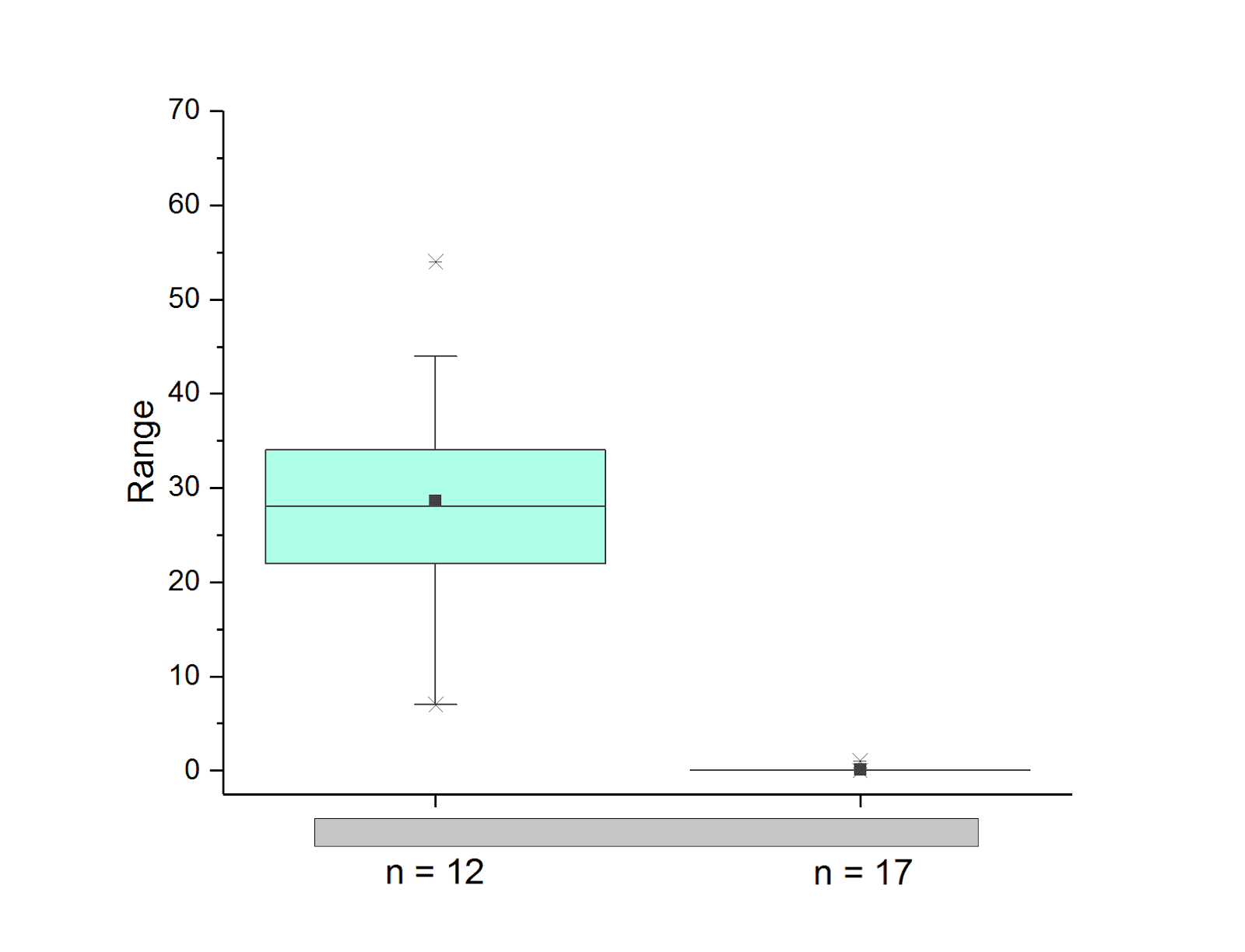
But it became so much cooler than I ever expected as the data started rolling in. I had both sand crabs and mole crabs available, so I checked both for tapeworms. It became obvious quickly that the infection patterns in sand crabs and mole crabs were very different. I tweeted out a few graphs while I was collecting the data:


You don’t get differences that obvious that early that often. And it held up! And it was consistent with something else in my archive...

I had some unpublished data from the nematode project. My former student, Meera, had searched for those nematodes in mole crabs. We couldn’t find any. That result was okay for a conference poster at the 2014 parasitology meeting, but on its own was just an observation and probably not publishable.

But having two parasites show the same infection pattern in two species – one species heavily infected, the other one practically uninfected – now that was much more interesting.

The paper came together, as expected, pretty quickly. I submitted it to PeerJ. I’ve published with them before, and I was recently reminded how much I like their editorial process. They truly did build the better mousetrap. They are prompt but thorough. I still think PeerJ’s submission process for figures is still far more fiddly than it needs to be, even though I realize why it is that way.

I also wanted to milk my PeerJ lifetime membership more. I got it when it was $99 per author for life. With two papers, buying that membership when I did had probably save me thousands of dollars in article processing fees.

One thing that makes me happy about this pair of papers that has just come out (this and the phenology one) is that I genuinely feel that I have made progress in understanding the basic biology of these sand crabs. Yes, albuneid sand crabs are obscure little critters that few other people care about.

But a lot of papers feel like you’re mostly filling in details, or are variations on an established theme. It’s very satisfying to have a project where you genuinely feel you are shedding new light on topic. That’s why I kept doing the sand crab papers.

And I did have a student email me with a question about sand crabs not too long ago, so maybe these papers aren’t just to make me happy. Maybe some other people will find them cool and useful, too.


Related posts

Connections in my scientific career
Staying active in the lab and/or field when you’re the boss
823 days: A tale of parasite publication
Where’s the site for the parasite?
Tracking tiny worms

References

Carreon N, Faulkes Z. 2014. Position of larval tapeworms, Polypocephalus sp., in the ganglia of shrimp, Litopenaeus setiferus. Integrative and Comparative Biology 54(2): 143-148. https://doi.org/10.1093/icb/icu043

Carreon N, Faulkes Z, Fredensborg BL. 2011. Polypocephalus sp. infects the nervous system and increases activity of commercially harvested white shrimp (Litopenaeus setiferus). Journal of Parasitology 97(5): 755-759. https://doi.org/10.1645/GE-2749.1

Faulkes Z. 2017. Filtering out parasites: sand crabs (Lepidopa benedicti) are infected by more parasites than sympatric mole crabs (Emerita benedicti). PeerJ 5: e5832. https://doi.org/10.7717/peerj.3852

Joseph M, Faulkes Z. 2014. Nematodes infect, but do not manipulate digging by, sand crabs, Lepidopa benedicti. Integrative and Comparative Biology 54(2): 101-107. https://doi.org/10.1093/icb/icu064 

03 July 2017

American Society of Parasitologists, Day 5

For the last day at the Parasitologists conference, I mostly sat in on taxonomy talks. Now, I love taxonomists and admire the work that they do to no end, but I think it’s fair to say that their talks do not always have the most compelling narratives. So most of my notes for talks I saw were very short.

Sara Brandt: Schistosome taxonomy. Thinks snail ecology plays the biggest role in determining the schistosome relationships.

Santos Portugal (@jsportugal3): Tick phylogeny.

Tim Ruhnke: Cestode tapeworm phylogeny.

Veronica Mantovani Bueno: More cestode tapeworm phylogeny. The revision the taxonomy of host skates and rays led to big changes in interpretation of the taxonomy and ecology of their cestode parasites. There seems to be very relaxed associations between host and parasite. Some of the cestodes she studies have very similar DNA sequences, but dramatically different morphology.

Anna Phillips: new medicinal leech. #CollectionsAreEssential

Carlos Ruiz: I came in late and missed the start of this talk, but it involved possible new copepod species.

Jackson Roberts: Turtle blood flukes, of which he described one new species. A bunch of stuff is coming about flukes in South American turtles.

Bret Warren: Looking at flukes in sturgeon. I learned that Lake Winnebago has a sturgeon fishery, which is spearfishing in winter, through holes in ice. That alone was worth the price of admission. Here’s a video of this great tradition:


Carlos Ruiz again (this was sprung on him about 10 minutes before the talk): Myxozoans are parasitic jellyfish. In this case, they cause “whirling disease” in fish. Very tough to get rid of. Started with reports from anglers noticing strange fish. State natural resources came on board to get samples.

After the contributed talks, the moment I had been waiting for: poster session! I had a poster that I was very happy with. I’ll show it on the Better Posters blog after the paper is published. (I’m writing it now!)


I was also super pleased to be reunited with my SICB symposium partner in crime, Kelly Weinersmith, who had new progeny with her.


Because the diversity of parasite research is so wide, it can be hard to detect commonalities across a conference (which I saw less than half of, at best). But there were a recurring theme from this meeting.

Parasitology, like much of biology, has been transformed by molecular biology. The techniques are making it possible to answer questions that would have been very difficult to answer without them. For instance, “Is this species of parasite in this intermediate host the same species in this definitive host?”

But parasitologists emphatically do not want molecular biology to take over their field.

Several speakers referenced the #CollectionsAreEssential hashtag on Twitter, which was prompted by the possible loss of NSF funding supporting museum collections. Museum collections are constantly under threat, and constantly proving useful to current science.

Several people noted that DNA sequence data needs to be connected to “ground truths”: you have to be able to see the organism whose DNA you are sequencing.

The recurring theme of this meeting was that for parasitology to remain a viable field, never mind a vibrant one, organismal biology has to remain strong. This is going to be a challenge, because many people find the “Sequence it all and let algorithms sort it out” approach enticing and alluring.

One last note that is tangential to the conference, but relevant to a recent post on publishing costsThe Journal of Parasitology has very competitive article processing charges, particularly for open access. Even nonmembers can publish open access for $1,000, about the same as PeerJ, which is one of the most cost effective open access megajournals.

Related posts

American Society of Parasitologists, Day 1 and 2
American Society of Parasitologists, Day 3
American Society of Parasitologists, Day 4

01 July 2017

American Society of Parasitologists, Day 4

These are my notes from talks I saw on Friday's sessions!

R Grunberg gave a very nice talk about whether parasite abundance (density) scales with body size (Damuth’s Law). Her data suggests not. But host body size comes into play: if you do that, the parasites follow Damuth's Law. How you feed and disperse tweaks the effect a little.

Janine Caira: This project started with a donation of a huge, awesome army ant collection. Over 500 species were associated with just one species of army ant – guests associated with the army. Lots of ectoparasites live on specific parts of specific species. This prompted a lot of outreach at her campus, around the tag line, “Be our guest.” Antu.uconn.edu

Jessica Light: surveyed parasites on property in South Texas, supported by East Foundation. Not many mammals in museum collections are from South Texas. #collectionsareessential Found 19 mammal species, about 70% parasitized. Tick borne diseases are particularly interesting.

Niyomi Wijerardena: pika parasites! Pikas have five very distinct lineages, but the endoparasites don’t track those lineages. What about the ectoparasites? Fleas don’t track those lineages either, suggesting ancient contact between pika populations that are not recorded in DNA.

Lijun Lu is doing transcriptome work on what makes snail resistant to infection by schistomes.

Lauren Bassett
was looking at the genetics of a microsporidium that is a potential biocontrol for red invasive fire ants.

Maria Castillo is also studying protein expression related to schistosomiasis infection of the snails. Thioester containing proteins seem to be related to resistance to various kinds of infection.

Presidential lecture by Gerald (Jerry) Esch. Described three stories, each of decades long and filled with obstacles from fights, fallacies, and waiting for blind luck, to emphasize the long road that research faces. He ended saying, “What does the future hold? I don’t know. But neither did the researchers who founded the field of parasitology 150 years ago.”

Michael Zimmerman
starts describing the mating system of bluegill sunfish, which has dominant alpha males and beta males, which perform “drive by insemination.” Parasites may contribute to the maintenance of these two forms. The alpha males had higher diversity and abundance of parasites than beta males or females.

Nicci Carpenter
: Helminths reduce fitness in mosquito fish (Gambusia affinis, also known as the plague fish)mosquito fish. The nematodes reduce brood size, and parasite diversity reduces embryo size.

Victor Vidal Martinez: healthy ecosystems have more parasites. Studying parasites on the fish on the Mexican portion of the Gulf of Mexico, which are subject to pollutants. Saw a higher diversity of parasites off the Yucatan Peninsula, which is good! It indicates a a healthier ecosystem than in the rest of the Mexican region of the Gulf.

Isabel Caballero: Although the cestode species she studies are definitely inbred, they show no strong evidence of inbreeding depression.

Stephen Greiman
(@sgreimanbio): what drives species interactions now and in the past? He points out that when you look at just the top ten museum for mammal species, there are literally millions of samples in just those ten institutions. Using next generation sequencing, he was able to use next generation DNA sequencing to identify known parasites in shrews. Different sequences were slightly better at resolving some groups than others.

Seth Bromage: Bluegill and pumpkinseed sunfish are about the same size, but very different parasite infection patterns. The same species, U. dispar, is bigger on bluegill. Seth filled his talk with speculation, because “It’s fun for me.”

P Robison: For fish, salinity is a major environmental factor that limits distribution. Guppies will tolerate salty water in an aquarium, but you never find them in any salty water in the wild. Metacercaria are very high near the range limit, but rare near the center of the distribution (further from ocean). Exposure to brackish water killed more fish, and resulted in a higher parasite load, for the guppies.

John Shea: How do horsehair worms find each other to reproduce in hosts? Blood borne parasites can potentially have miles of blood vessels to search. It looks like in aquariums, there is substantial luck involved. But it looks a little better in lower water depth, with more evidence of successful mate detection.

Justin Wilcox
: Most parasitologists think most animals are parasites, but that is just a hunch. He tested the hypothesis that parasite diversity will be comparable to free living microbial communities, using  parasites in macaques and next generation sequencing. Diversity of parasites and free living species is comparable. And there is a lot of diversity in these macaques.

Matt Bolek
: presenting work of master’s student Chelsie Pierce. How do amphibian tadpoles differ from the adults in their parasites? Tadpoles are herbivores, e.g., and adults are carnivores: very different parasite habitats. Tadpole size, just like adults, affects parasite communities. Difficult to compare species, because the tadpoles’ basic natural history is so different. But parasite life cycle strategies were major factors in determining community structure.

Charles Criscione: The goal is to try to work out mating systems in parasite systems in the wild, and the particular focus here is on inbreeding. We know little about the ecological drivers of parasite mating systems. Looking at gecko tapeworms, which probably have high inbreeding. But, as mentioned in Isabel’s talk, not evidence of inbreeding depression.

The day ended with a student/faculty mixer, which the organizers called “The Vortex.” It was a good  idea, although it might have done with a little more room.

30 June 2017

American Society of Parasitologists, Day 3

I brought my iPad, with one of those nice little keyboards, and all the keys were working except the space bar. Great. That rather slowed my plans for tweeting, blogging, and so on.

The day started with the presidential research symposium on parasite ecology, given by Celia Holland on Ascaris. She is talking about how parasites tend to aggregate:  the variance to mean ratio is almost always greater than one (higher numbers mean more aggregation). Ascaris infection is a very bad, neglected tropical disease – maybe one of the worst in terms on number of people infected world wide. A big chunk of her talk was about trying to develop a model for Ascaris infection. The only animal that Ascaris will go through its entire life cycle are pigs. Well, pigs are big, expensive, and tricky to house. So, can we do it in a mouse? Well, sort of. The Ascaris will do some of their life cycle in mice, and some mouse strains are better hosts than others.

Kim Jacobson talked about using parasites as tags for fisheries management. Artificial tags are often too big for commercially important fish, like anchovies. Parasites can tell you were fish have been, since they can only get infected in the parasite’s endemic range. They used parasites to try to figure out the migration of sardines.

Derek Zelmer (who apparently is the punchline for many jokes at ASP) talked about the synchrony of parasite populations in sunfish. Variance to mean ration of 1 is random, variance to mean ratio less than one is even. Over and over, he saw more synchrony between sites that were further away from each other. This can allow for “rescue effects”: if one population drops, another can replace it.

Notes from some of the regular contributed talks I saw:

Rachel Paseka showed carbon,nitrogen,and phosphorus ratios vary across species. This is mostly related to body size; growth needs phosphorus.

Sarah Bush gave one of my favourite talks so far. It was like the classic peppered moth story in evolution, except with lice and bird feathers instead of moths on blackened tree trunks. Feather lice are under strong selection pressure from host preening, and they evolve cryptic colouration to match feather colour quite quickly.

Martina Laidemitt: amplification or dilution effects. Coolest part of this talk was discussion of how one trematodes species can completely take over a host from competitor species.

Tim Anderson more snail parasites. Schistosomes parasites vary in Ho the time in when their cercaria are shed. Some species synchronize their release. In one case, the same species releases at different times depending on what host they have infected. Does this have a genetic bases? Oh yes. And they have tracked it down to chromosome 1, which affects lots of cercaria release traits.

Laura Eliuk: trematodes life cycles often have a three host life cycle. Not much research on mollusk (first intermediate) hosts. Parasites may alter mucus composition of first intermediate host, to make them more attractive to the second host. The moral of her talk was never trust sweet smelling snail snot (my summary, not hers).

Alyssa Gleischner: does parasite competition influence virulence? Related parasites should have reduced virulence, as per kin selection theory, since if host dies, it takes all kin with it. But if parasites are not related, there is direct competition, so you care less if competitors die. She tried answering this in schistosomes. Results were sometimes supportive of kin selection, sometimes not, depending on what you measure. Low virulence for intermediate hosts, high for definitive hosts. Stage in life cycle may also matter.

Frederick Chevalier: schistosomes were transported from Africa to South America. How are they adapting to new habitat? Quite well.

Erika Ebbs was supposed to be speaker, but Sara Brant ended up giving it instead. Watch the fun when a supervisor has to take over a student's talk. Duck ecology shapes influence microevolutionary changes of parasites. I think at one point she mentioned that one of her duck species was infected 98% of the time, and she couldn't remember seeing prevalence that high before. Heh. I got something that ties that; come to my poster tomorrow!

The afternoon ended with a student session about funding. People discussed NIH, NSF, and small society grants. I took over the session for a minute or two to talk about crowdfunding.

Then, I walked around. San Antonio is a very walkable city.

29 June 2017

American Society of Parasitologists, Day 1 and 2

I missed Day 1 entirely. Nothing to report. Sorry.

I drove up to San Antonio on Wednesday afternoon. During the four hour drive, I reflected on how I chose this meeting to come to this summer instead of many of the others that interest me because it was “close.” Ah, Texas, where a four hour drive is “close.”

I got there too late to get my name tag. But when I walked up to the social without the name tag, the man at the door gave me two drink tickets, unprompted.

I guess I looked scruffy enough that I couldn’t be anything but a biologist.

29 January 2016

Rabid Alaskan foxes


Karsten Hueffer was on our campus yesterday, giving an interesting talk on the biology of rabies in Alaska. And yes, whenever someone from Alaska comes to Teas, there were a few pointed jokes about the relative size of the two states.

Rabies is one of those diseases that almost everybody knows about, but not very many people actually experience it, either directly or indirectly. (Well, in North America, anyway: about 50,000 people worldwide die of rabies annually.) The pathology of rabies is still not understood: the brains of people who die from rabies are not dramatically different from those of people who don’t have rabies. almost 100% mortality for people who are infected.


Rabies in Alaska is a big problem, and is primarily spread by foxes. Most cases of rabies occur along the Alaskan coast, where arctic foxes predominate. Red fox dominate central Alaska. Hueffer hypothesized that Arctic foxes are main rabies reservoir, and red foxes are just spillover hosts. He tested this by examining the three different strains of rabies, and looking at the population structure of the arctic foxes. It turned out there were three populations of Arctic foxes, and they all lined up very well with the three rabies strains.

Hueffer went on to do some species distribution models of rabies, to answer why is there no significant rabies problems in central Alaska? The models predicted rabies distribution well, but was also good at predicting the occasional outbreaks that occur sporadically in central Alaska. The species distribution models also predicted that the rabies will retract in the future, due to climate change.

Hueffer then switched gears to look at how rabies affects its host mammals. Normally, lethal infections doesn’t spread well, because the hosts are killed before the infection spreads. Rabies is able to beat this problem, in part, by manipulating their hosts into biting other animals. One protein in the rabies virus binds to nicotonic acetylcholine receptors, which are surprisingly similar to snake bungarotoxins.

In collaboration with molecular biologists, Hueffer and colleagues were able to create a toxin that was derived from the rabies protein (basically, a portion of the whole protein, if I understood right). From an experimental point of view, this is convenient because you can study the effects of rabies on nervous systems with none of the normal immune responses, and so on, that are triggered by infections.

They were able to show in a disk that this toxin interacted with acetycholine receptors. They then moved to testing their toxin in Caenorhabditis elegans (a.k.a. “a worm model”), and the rabies-derived peptide blocked normal feeding in their worms.

When this rabies-derived peptide was put in mice, the effect on behaviour was dramatic. The infected mouse kept running around its cage, up to ten times more than control mice. This strongly suggests that the virus is manipulating its host by directly interacting with neuronal receptors. While many viruses bind to cell receptors, usually they are doing do to trick the cell into bringing the some part of the virus into the cell. Rabies does not get into the neurons at all.

The entire rabies virus consists of just five genes. Rabies appear to be a particularly nice, simple model for behavioral manipulation by infectious agents.

External links

Karsten Hueffer’s faculty page
Karsten Hueffer on Google Scholar

Fox photo by Ralf Κλενγελ on Flickr; used under a Creative Commons license.

21 November 2014

Saving even the species we hate

Sure, we’ll save this species:


Or this:


But this?


Not only do we not try to save the latter, we’re actively trying to wipe it out.

A recent article notes that one of the effects of breeding endangered species in captivity is that organisms that live on them can suffer. The black footed ferret (top picture) had a louse species specific to it that is probably gone forever. The same holds true for the California condors (second picture from top) bred in captivity, then released into the wild. The captive-bred animals were, perhaps, too healthy... from a certain point of view. Lice that lived on the condor were removed systematically, and as far as we know, that species is now extinct. These do not appear to be the only examples.

Those cases might be unintended consequences. It is possible that the people involved did not know about the parasites that lived on those species, and may have though they were general parasites, rather than ones that specifically lived on those species.

But it raises an interesting ethical issue about how much we value living species.

The third picture in my series is Dracunculus medinensis, also known as the Guinea worm. The Carter Center, founded by former American president Jimmy Carter, is spearheading a campaign to eradicate this species. Admittedly, Guinea worm is a human parasite that has caused a lot of misery to a lot of people over the millennia. Nevertheless, it is as irreplaceable a life form as much as a ferret or a condor. 

I have never heard anyone suggesting that we might want to consider saving this species.

I can see the case for wiping out this species if it was an obligate human parasite, and there was no other way for this thing to live than infect human beings. But Muller (1972) showed decades ago that this species can be reared in captivity, in a non-human host. Some sources suggest it has a fairly wide host range (but haven’t been able to confirm that with peer-reviewed journal article yet).

If you think that conservation of biodiversity is a good thing, should someone start a Guinea worm captive breeding program? The goal might not be to reintroduce the species into the wild, given the harm it causes. Instead, the goal could to preserve it in perpetuity, both for scientific research and because of its intrinsic worth as part of the life on our planet.

Maybe we should have a parasite bank to go next to our seed banks.

Additional: Parasitologist Mark Siddall calls the expected loss of the Guinea worm something to celebrate in this New Yorker article. Mark and I tweeted back and forth on this quite a bit, and I am glad to have his article, with a personal touch, as a counterpoint to my little armchair essay.

References

Jørgensen D. Conservation implications of parasite co-reintroduction. Conservation Biology: in press. http://dx.doi.org/10.1111/cobi.12421

Muller R. 1972. Maintenance of Dracunculus medinensis (L.) in the laboratory and observations on experimental infections. Parasitology 64(1): 107-116. http://dx.doi.org/10.1017/S0031182000044681

External links

Save the parasites!
Conservation biology of parasites (Surprisingly thorough Wikipedia entry)
Carter Center Guinea worm eradication program
Which endangered species would you save?
More harm than good intentions

No wildlife charity campaigns to save parasites. But they should (Added 9 February 2017)

Ferret picture by USFWS Mountain-Prairie on Flickr; condor picture by Pacific Southwest Region on Flickr; both used under a Creative Commons license. Guinea worm picture from Wikipedia.

29 July 2014

Tracking tiny worms

Continuing the series of “behind the scenes” stories around papers in the new issue of Intergrative and Comparative Biology issue...

Brian Fredensborg and I had successfully collaborated on a project looking at parasites in the shrimp nervous system. Along the way, I bugged him about the possibility of doing another project on the local sand crabs, Lepidopa benedicti. I’d decided that there was so little known about that family, that anything we discovered about their basic biology would be new and publishable. And part of the basic biology of any species is the parasites.

I remember Brian mentioning to me after some of the first sand crab dissections that he saw some worms “But,” he said, with a slightly far-away look, “they’re tiny.”


But we knew there was something there to look at, which just meant that we needed a student to pick up the project.

As it happened, two years ago, in 2012, I got roped into having a summer high school intern, Meera Joseph:


I’d had a summer high school student back in 2006, and the experience was positive all around. But I didn’t want to take on more high school students for a long time. I just wanted a break.

Part of the reason I was persuaded to take on another high school student was I had an undergrad in the lab, Karina, who was very gung ho to mentor other students. I relented, and Meera got put on the sand crab parasite project. We knew there was something to look for, so this made it a project that would almost certainly give us some data in the time frame of the internship.

Brian showed her how to do the dissections and look for the parasites. I helped her set up the video recordings for the behaviour. Everything went well, and Meera finished her internship with a poster presentation and a very nice data set.


There was only one reason we didn’t write it up at the end of her internship.

We couldn’t identify the nematodes.

This seemed to both Brian and me to be kind of important. We hoped we could get down to something more specific than the phylum. It would be like identifying the sand crabs the worms were living in as “arthropods.” You could never do that for the crabs, so it seemed wrong to have no better identification for the parasite.

We made a little headway on the worm identification. But before we could get the level of clarity we wanted, it was time for the SICB parasite symposium in Austin, which I’d co-organized with Kelly Weisnersmith. Because Meera had already done a poster, I suggested she give a talk at this meeting, which she did.

Two things happened then.

First, I met and talked to actual parasitologists in this field at SICB, who sort of gave me their blessing. They told me that for this kind of work, saying “Species A, Species B, Species C” in a paper was okay. Suddenly, a gap that seemed insurmountable was now potentially navigable.

Second, the editor of Integrative and Comparative Biology surprised Kelly and me again. We thought we only had to deal with papers by speakers at our symposium. The editor said, “Why don’t you ask people who presented in the complementary sessions if they’d like to publish in the same issue?”

Well, gee, we’d just made all the graphs for Meera’s SICB talk. The text was written, submitted, reviewed, and I’m very happy.

I’m particularly pleased that because Meera was supported by our institution’s HHMI grant, they agreed to pay the fees so that Meera’s paper is open access, and free for all to read!

Additional, 1 August 2014: Bethany Brookshire (a.k.a. Scicurious) has written a nice article about Meera’s research!

Reference

Joseph M, Faulkes Z. 2014. Nematodes infect, but do not manipulate digging by, sand crabs, Lepidopa benedicti. Integrative and Comparative Biology 54(2): 101-107. http://dx.doi.org/10.1093/icb/icu064

Related posts

823 days: a tale of parasite publication

External links

Crabby project inspires young scientist

25 July 2014

Where’s the site for the parasite?

I’ve had the good fortune to have a glut of papers appear, thanks in part to the publication of symposium proceedings I helped organized with Kelly Weisnersmith. One of the papers in the symposium proceedings is the follow-up to Carreon and colleagues (2011), which I described here. (My goodness, was that three years ago already?)

In our previous paper, we showed that living inside the neural tissue of shrimp were these little baby tapeworms:


After Nadia Carreon (pictured) finished her bachelor’s degree, she volunteered to stay and try to push the project forward a little further before she went off to graduate school.  (Nadia will will soon be finishing a master’s degree at University of Texas Brownsville.)

We decided to have a first pass at trying to answer the question of where the parasites were located in the shrimp nervous system. I knew the basic landmarks of the crustacean nervous system, and the general function of different parts of the nervous system. If parasites were infecting one region but not another, we would have a reasonable first explanation for why.

We did this work a couple of years back, so why is it only being published now? For two reasons. First, projects often sit waiting for a student to pick them up. I don’t have the sort of research lab doctoral students, post-docs, or technicians, so progress comes in fits and starts.

Second, and more importantly, there things that I hoped to add to this paper to make it a richer and deeper story. (This is a recurring theme in my writing. It happened with another recent paper, too. Note to self: don’t let the perfect be the enemy of the good.)

First, I wanted to analyze the position of parasites in the brain, not just the abdominal ganglia. There are fewer parasites in the brain, though, so it would take longer to build up a coherent picture, which is why we started where we did. Checking the position in the brain will have to wait for another paper.

Second, I wanted to section the nervous tissue, and look at those at higher power; under an electron microscope, say. This would help us to see where the larval tapeworms are sitting in three dimensions, not just two. The higher magnification might also help us get a better sense of how the neurons are displaced around the tapeworms, and whether the tapeworms were damaging the tissue.

One reviewer said it would be nice to have these sections. I agreed, but Nadia had left, no other student had picked up the project, I don’t have sectioning skills, and we have no histology core with technicians who might help with something like that. There was no telling how long it might be before I could get sections, so this paper went forward without them. that will be in a later paper (I hope!)

Speaking of which, one reviewer suggested something very helpful. We show in this paper that there are more tapeworms in the ganglia than the nerve cord between them. We show that in the first figure.


The reviewer suggested correcting for the number of parasites by the volume of tissues. Doing this required a quick couple of measurements from photographs I already had, and some quick back of the envelope calculations. And it made the difference in infection even more striking: more parasites in the ganglia than the nerve cord, even though the ganglia are smaller than the cord!

Although I describe it in the text, I could have shown this figure in the paper, which would have emphasized the differences all the more:


Even when you are happy about a paper coming out, you will always know there are things that could have made it better. At least I share the better graph here.

By the way, thanks to the support of my department, this paper is open access and free for all to read!

Coda


Nadia and I dedicated this paper to the late Luis Colom. I am glad we we able to give some personal recognition to Dr. Colom. Dr. Colom’s influence on UTB (and, eventually, UTRGV) looks like it be a lastng one, judging from this picture Nadia shared yesterday:


Related posts

823 days: a tale of parasite publication
Luis Colom, the peer I never met

Reference

Carreon N, Faulkes Z, Fredensborg BL. 2011. Polypocephalus sp. infects the nervous system and increases activity of commercially harvested white shrimp (Litopenaeus setiferus). Journal of Parasitology 97(5): 755-759. http://dx.doi.org/10.1645/GE-2749.1

Carreon N, Faulkes Z. 2014. Position of larval tapeworms, Polypocephalus sp., in the ganglia of shrimp, Litopenaeus setiferus. Integrative and Comparative Biology 54(2): 143-148. http://dx.doi.org/10.1093/icb/icu043

17 July 2014

Zombie symposium outbreak

The latest issue of Integrative and Comparative Biology is now out! And the cover story comes from one of the papers from the parasite symposium I co-organized with Kelly Weinersmith! It’s been three years in the making, and I want to tell you how it all happened.

It all started with #SciFund.

I sometimes tell students, “You never know who’s going to walk through your door,” as a way of saying that research and career opportunities and plans are often completely unpredictable. Someone you never heard of before walks through your door, and boom! You’re off on a new adventure.

Kelly Weinersmith walked through my door (figuratively) in the first round of #SciFund. We both had projects in round one, and got to know each other a bit through that. She invited me to be a guest on The Weekly Weinersmith podcast, which I was happy to do. We talked about zombie shrimp, because I had just published my first parasite paper (Carreon et al. 2011).

Shortly after this, around the end of 2011, I suggested to Kelly that we should do a symposium about parasite manipulation. The idea of parasites as “natural neuroscientists” had been used by a few people. It seemed to me that Kelly and I had a good combination of skills to sell that idea as a symposium (parasitology and neurobiology, respectively) .

I did not suggest we do this for Society for Integrative and Comparative Biology (SICB), where it ended up. No, I suggested writing a proposal for a different, and much larger conference.

It was rejected. But... the reviews were actually encouraging. The program committee had suggested we submit it again next year.

Before the 2012 deadline for Big Conference rolled around, the deadline for for SICB came up. The SICB meeting for 2014 was in Austin. Living in far south Texas, a major conference in my field happening close enough to drive to is so rare that when it happens, I go.

It also seemed to me that SICB might also be a good fit, if not a better fit, than the Big Conference would have been. So we dusted off the proposal, rewrote it, and it was approved by the program committee.

The moral of that story is: Never throw away any of your writing.

From there, it was a matter of looking for external funding. SICB requires symposium organizers seek external funding. Kelly and I wanted to try a crowdfunding campaign, as between us we had a few successful crowdfunding campaigns under out belts. The SICB leadership, however, didn’t like the idea and told us not to. They were worried it would interfere with other SICB fundraising efforts. This baffled me, and is still rather a sore point.

Kelly and I wrote a grant for the National Science Foundation, which I had to submit because I had the faculty gig. And we got it.

The symposium came, and then we had to hunker down and get papers out to the journal Integrative and Comparative Biology (another requirement of the symposium).

I expected to submit one paper, based on data I presented at the symposium. I was caught off guard when the editor contacted Kelly and I to ask us for another paper, to introduce the symposium.

We wrote it, but it did make the early part of this year a bit frantic. I was in the middle of submitting a bunch of other manuscripts. Kelly was just about to deliver her first child. And yes, that Kelly was about to deliver her baby was the inspiration for this post.

I am pleased that our paper together is dedicated to the young Weinersmith, Ada Marie, shown at right.

But writing an introductory paper was not the first surprise I received from the journal editor. But that’s another story for another day.

Related posts

832 days: a tale of parasite publication
Zombie (scientific paper) outbreak!
Science babies

References

Carreon N, Faulkes Z, Fredensborg BL. 2011. Polypocephalus sp. infects the nervous system and increases activity of commercially harvested white shrimp (Litopenaeus setiferus). Journal of Parasitology 97: 755-759. http://dx.doi.org/10.1645/GE-2749.1

Weinersmith K, Faulkes Z. 2014. Parasitic manipulation of hosts’ phenotype, or how to make a zombie—an introduction to the symposium. Integrative and Comparative Biology 54(2): 93-100. http://dx.doi.org/10.1093/icb/icu028

09 June 2014

Zombie (scientific paper) outbreak!

Many papers from the parasite symposium I co-organized with Kelly Weinersmith back in January at the Society for Integrative and Comparative Biology conference in Austin are now available as pre-prints at the Integrative & Comparative Biology advance access page. We’ve got nine available now, with a few more to come.

The following is the slated list of papers, in the order they should appear in in the journal. They should all be out in August in volume 54, issue number 2, if all goes well. I’ll update this to include DOI links for the other papers as they arrive.

This is a good time to thank the National Science Foundation once again for supporting this symposium!


Weinersmith K, Faulkes Z. Parasitic manipulation of hosts’ phenotype, or how to make a zombie—an introduction to the symposium. Integrative & Comparative Biology: in press. http://dx.doi.org/10.1093/icb/icu028

Joseph M, Faulkes Z. Nematodes infect but do not manipulate digging by, sand crabs, Lepidopa benedicti. Integrative & Comparative Biology: in press. http://dx.doi.org/10.1093/icb/icu064 Open access

Paranjpe DA, Medina D, Nielsen E, Cooper RD, Paranjpe SA, Sinervo B. Spatio-temporal dynamics of side-blotched lizards (Uta stansburiana) and their micro-parasites. Integrative & Comparative Biology: in press. http://dx.doi.org/10.1093/icb/icu069

Kaushik M, Knowles SCL, Webster JP. What makes a feline fatal in Toxoplasma gondii’s fatal feline attraction? Infected rats choose wild cats. Integrative & Comparative Biology: in press. http://dx.doi.org/10.1093/icb/icu060

Libersat F, Gal R. Wasp voodoo rituals, venom-cocktails, and the zombification of cockroach hosts. Integrative & Comparative Biology: in press. http://dx.doi.org/10.1093/icb/icu006

Carreon N, Faulkes Z. Position of larval tapeworms, Polypocephalus sp., in the ganglia of shrimp, Litopenaeus setiferus. Integrative & Comparative Biology: in press. http://dx.doi.org/10.1093/icb/icu043 Open access

Fredensborg BL. Predictors of host specificity among behavior-manipulating parasites. Integrative & Comparative Biology: in press. http://dx.doi.org/10.1093/icb/icu051

Adamo SA. Parasitic aphrodisiacs: manipulation of the hosts’ behavioral defenses by sexually transmitted parasites. Integrative & Comparative Biology: in press. http://dx.doi.org/10.1093/icb/icu036

de Bekker C, Merrow M, Hughes DP. From behavior to mechanisms: an integrative approach to the manipulation by a parasitic fungus (Ophiocordyceps unilateralis s.l.) of its host ants (Camponotus spp.). Integrative & Comparative Biology: in press. http://dx.doi.org/10.1093/icb/icu063

Boze BGV, Moore J. The effect of a nematode parasite on feeding and dung-burying behavior of an ecosystem engineer. Integrative & Comparative Biology: in press. http://dx.doi.org/10.1093/icb/icu017

Weinersmith K, Warinner C, Tan V, Harris D, Mora A, Kuris A, Lafferty K, Hechinger R. A lack of crowding? Body size does not decrease with density for two behavior-manipulating parasites. Integrative & Comparative Biology: in press. http://dx.doi.org/10.1093/icb/icu081

Mauck KE, De Moraes CM, Mescher MC. Evidence of local adaptation in plant virus effects on host–vector interactions. Integrative & Comparative Biology: in press. http://dx.doi.org/10.1093/icb/icu012

Hughes, DP. On the origins of parasite-extended phenotypes. Integrative & Comparative Biology: in press. http://dx.doi.org/10.1093/icb/icu079

11 June 2014: Added two more. Two to go...

15 June 2014: Added link to second last paper. Just one more for you to see!

19 June 2014: And now we’ve got the last one up!

External links

SICB parasite symposium page
SICB 2014 meeting page
Symposium: Parasitic manipulation of host phenotype, or how to make a zombie
ICB special issue on parasite manipulation
Integrative and Comparative Biology, volume 54, number 2

05 October 2011

823 days: A tale of parasite publication

It’s unusual that I can pick exactly how long a project took from beginning to end. This time, I can: 823 days.

Day 1: 4 July 2009


Since 2006, I’d been examining the nervous system of shrimp (for a project that is still ongoing – sigh). When I looked at the nerve cords under the microscope, I kept seeing odd little bits that I thought were caused by some problem with the fixation or clearing process. I realized that was wrong when on 4 July 2009, I took this video:


Okay, those slight odd looking bits in the nerve cord didn’t have anything to do with staining. They were moving. They were something alive inside the nerve cord.

Well. That was unexpected. Also, slightly freaky.

Here’s my notebook entry for the day:


(And yes, I am well aware of my terrible handwriting and other problems, thank you very much.)

Soon after, I went down the hall and showed this stuff to the man on the right in the photo below.


This is my co-author Brian Fredensborg, who is a real parasitologist. He had joined our department a couple of years previously. I showed him what I had. He didn’t immediately say, “Oh, yes, that’s a [name], and it’s well known that they live in the nervous systems of crustaceans. Not very interesting at all.” This was a good sign. We were both interested, for different reasons, in what the heck was going on here.

Day 4: 7 July 2009


Brian gives me a tentative ID of the beasts we’re dealing with: larval tapeworms. I record in my notebooks, “Possibly PROCHRISTIANELLA PENAEI or PARACHRISTIANELLA or POLYPOCEPHALUS.” Brian seeks out some help in narrowing down the possibilities from a colleague, and he hears from one of his colleagues that the last guess is the right one.

But the project had to wait. Neither of us had the time to follow it up immediately, and all our students at the time were already deep in working on projects of their own.

Enter the woman on the left.

Day 59: 31 August 2009


The last day of August in 2009 is the first day of class for the Fall semester. I am teaching my neurobiology class, and though I didn’t know it at the time, one of the students registered for the class is Nadia Carreon. We had some good conversations in that semester. This good relationship in class helps paves the way...

Day 200-317: Spring 2010


After the semester is over and neurobiology is done, Nadia comes into my office and asks about the possibility of doing a research project before she graduates. We sit down in my office, and I throw out a whole whack of half-baked ideas that could be turned into research projects, including the mystery shrimp parasites. Nadia thinks the parasite project is cool, so we walk down to Brian’s office and I introduce them to each other.

Everything looks good, so we start to plan a project that Nadia can complete over the summer that will, we hope, be publishable.

Days 318-422: Summer, 2010


And we are go for data collection! We plot, we plan, and we set up a way to gather data at the Coastal Studies Lab. We fiddle with webcams. We figure out ways to tag the animals so we can track them individually. I pull out a big honkin’ heavy mechanical cell counter – made of metal and that makes a very satisfying click every time you press one of the keys – to aid in the counting of all those parasites.

(For the record, I wish to apologize to Nadia publicly: I had no idea just how many parasites were going to be in those shrimp. I never expected that one shrimp alone might have 500 parasites infecting it.)

Proving the old adage, “If it weren’t for the last minute, nothing would get done,” much of the planning takes place in May and June, while a lot of the actual data collection happens late in August.

Day 451: 27 September 2010


We do get a first pass at data gathered over the summer, and get it together in time for a poster at the HESTEC science symposium. The poster wins third place in the undergraduate poster competition.

The analysis and writing continues at a slow but steady pace through the fall semester.

One moment I particularly liked was when I finally got the big, massive spreadsheet of all the behavioural data. For whatever reason, in my research, there are very few “Aha!” moments. There’s a lot more sneaking suspicions followed by a long period of trying to convince myself that what I think I’m seeing is actually what I’m seeing.

As it happened, we had a little bit of data destruction problem. Some of the last video shot was unusable. Brian and Nadia and I had talked about whether we might need to run some more behavioural tests on shrimp, but we still had a decent sized number of animals. We decided that if we didn’t see significant differences, we might run some more. But if it was significant, but it saw significant differences with the smaller sample, we could start writing up in earnest.

There was so much data here, there was no way to get a sense of whether there were going to be any trends associated with infection rates. So I was quite excited to run the first analysis, because I had no idea how it was going to turn out. ... and see significant differences in behaviour!

Day 533: 18 December 2010


Nadia graduates with her bachelor’s degree in biology!

Brian and I are committed to writing and finishing this manuscript before the year is out. The main reason is that Brian is expecting to become a father for the first time in very early January. This gave us very strong incentive to finish, because, as I said to several people, “I don’t know of anyone who has ever said, ‘Yes, we just had a baby. And my productivity has gone through the roof!’”

Day 545: 30 December 2010


Manuscript submitted! Happy New Year!

Day 609: 4 March 2011


Nadia gives the first presentation of this story to the larger scientific community at the Texas Academy of Science meeting. This poster later appears on the Better Posters blog.

Day 633: 28 March 2011


The manuscript is accepted. On the first submission, without any revisions. This has never happened to me before. Holy cow. And the pre-print goes up the same day!

Day 704: 7 June 2011


I present an updated version of the Texas Academy of Science poster at The Crustacean Society meeting in Honolulu. The new data makes this poster 33% bigger than its predecessor.

Day 823: 4 October 2011


The paper finally moves from “pre-print” to published status! And now, I have a paper in a parasitology journal, which was never something I expected to happen. Hooray for collaboration and academic freedom.

Day 824: 5 October 2011


“And on the eight-hundredth and twenty-fourth day, he blogged.”

But wait! We’re not quite done yet! Nadia continued working on this project a bit on a volunteer basis through 2011 after she graduated. We have more data, that we hope will eventually become part of the first follow-up paper.

Day 864: 14 November 2011


Come meet Nadia and myself at the poster session for the Faculty for Undergraduate Neuroscience at the Neuroscience meeting! 6:45-8:45 pm in the Grand Ballroom Central and North in the Renaissance Hotel.

There you have it. The long, winding road from an initial observation to a final, pretty, published article, with brushes along the way of both the thrill of victory (“No revisions?!”) and the agony of defeat (“The video’s gone?!”). It’s also fairly typical of research at undergraduate universities, I think, in that things can wait for a long time because you’re just waiting for a student to pick up the project. And I was surprised in writing up this retrospective to be reminded that stuff gathered even early in the project can be useful:

I took the picture in Figure 1a on Day 1.

Reference

Carreon N, Faulkes Z, Fredensborg BL. 2011. Polypocephalus sp. infects the nervous system and increases activity of commercially harvested white shrimp (Litopenaeus setiferus). Journal of Parasitology 97(5): 755-759. DOI: 10.1645/GE-2749.1

Faulkes Z. 2007. Motor neurons involved in escape responses in white shrimp, Litopenaeus setiferus. Integrative and Comparative Biology 47(Supplement 1): e178. DOI: 10.1093/icb/icm105