Showing posts with label stories behind the papers. Show all posts

30 January 2023

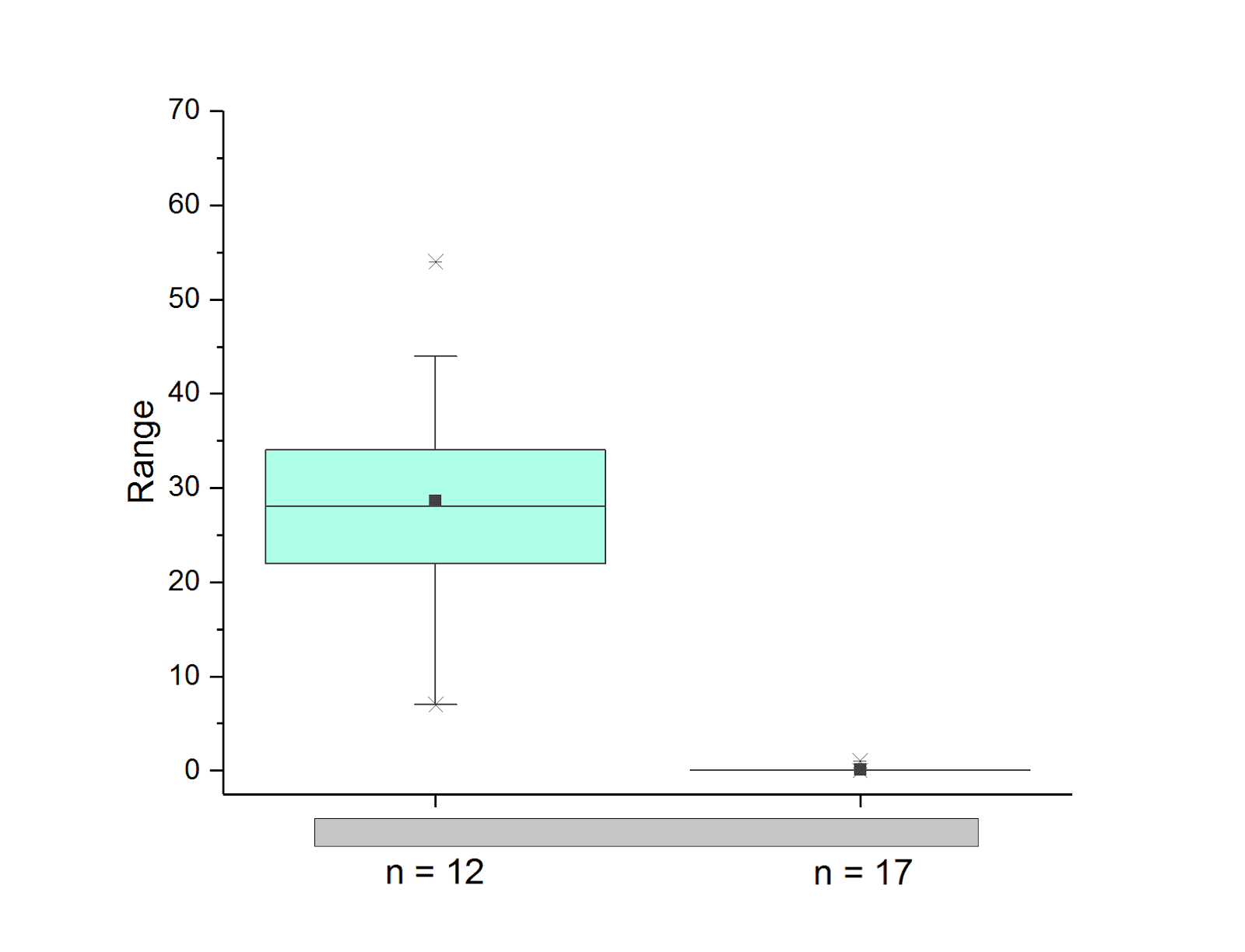
Why my new paper on award-winning conference posters is short

You know, sometimes you have plans for a project. Big plans. And sometimes those pan out. And sometimes, you are pleased that at least something came out.

I have a new little paper about conference posters out today.

It started when Paige Jarreau wrote somewhere (can’t remember if I saw it first on her Twitter or a Slack channel) that she was going to be organizing a special collection on visual narratives in science communication. And I thought, “Hey, I could use this to make the point that even though posters are a form of visual communication, they are usually very heavy on text.”

I submitted an abstract for a proposal to see if it fit the project. I had an idea for checking out a few posters every week over the summer to build up a little database. 

I didn’t want just a hodge-podge of random posters. I wanted distinct sets that were publicly archived. I had already bookmarked a few conferences that archived their posters.

Then reality set in. Some of my bookmarks had already succumbed to link rot, and the posters were no longer available. The semester started, and it was a hard semester in terms of preparation. So instead of posters from multiple conferences, I ended up with just one conference. But I think it was an interesting set of posters, because they were award winners from one of the biggest conferences in the world. Surely these would be awesome!

I hadn’t gotten as far or as detailed as I originally planned. But this project had a deadline, and 50% of something is better than 100% of nothing. I wrote the paper and submitted it. 

Things got worse, time wise, when reviews came back. It wasn’t rejected! But then, not only was class preparation had gotten more time-consuming, not less. I just couldn’t get to the revisions. Then there was a family emergency, so I got an extension.

Unfortunately, I was already so far behind that I missed one opportunity to make the paper better. 

One reviewer suggested a work I hadn’t heard about. But it wasn’t online or in the library. And it wasn’t a short article. It would take time to read. I decided not to wait until I could get the interlibrary loan. I submitted the revision without it. I have since gotten the work and... argh, it was so on point. It would have been a completely logical thing to include and discuss in my paper.

It’s going to be one of those losses that will haunt me until I put it right somehow.

I hope the paper has something to offer. It gave me more ideas for how I could push forward with bigger, better analyses in the future.

Reference

Faulkes Z. 2023. The “wall of text” visual structure of academic conference posters. Frontiers in Communication 8. https://doi.org/10.3389/fcomm.2023.1063345

25 October 2021

How to fix an author in 10 ways

Wow, it’s been far too long since I’ve had a new paper with my name on it.

I got an email out of the blue asking if I would be interested in participating in writing this paper. It arose from my earlier paper on authorship disputes (Faulkes 2018) and why I think we should have more alternative dispute resolution in academic publishing.

I said yes, obviously.

You will notice that there are an equal number of “strategies” and “authors.” This is not coincidence. For the most part, each person on the author list tackled one section of the paper.

I’m section #8. 😉

My section was originally something like “Seek arbitration.” This was obviously inspired by the title of my previous paper, but I wanted to make something that was a little more expansive and wasn’t as close to what I’d written before.

After we each wrote our sections, all the authors read through and left comments for each other. Steven Cooke did the work to smooth out the rough edges and harmonize the contributions of all the authors.

I made one other contribution. I think after the first draft went for review, Steven Cooke suggested it would be nice to have some sort of figure in the paper. I made this very quick and dirt concept figure in PowerPoint:

Flow chart with causes of disputes on left, dispute in middle, and solutions for disputes on right.

The final version in the paper is much better! It added more elements (four solutions instead of three). It used a lot of icons to make it much more visual.

So I am extremely pleased to have been part of this paper. I hope people find it useful.

References

Cooke SJ, Young N, Donaldson MR, Nyboer EA, Roche DG, Madliger CL, Lennox RJ, Chapman JM, Faulkes Z, Bennett JR. 2021. Ten strategies for avoiding and overcoming authorship conflicts in academic publishing. FACETS 6: 1753-1770. https://doi.org/10.1139/facets-2021-0103

Faulkes, Z. 2018. Resolving authorship disputes by mediation and arbitration. Research Integrity and Peer Review 3: 12. https://doi.org/10.1186/s41073-018-0057-z


24 May 2021

It’s Book Day! Better Posters is here!

It’s been a long time coming.

Today is the official release date for the Better Posters book.

Better Posters book in box.

The Better Posters blog started in 2009, inspired by in large part by Garr Reynolds Presentation Zen blog. Reynolds’s blog made the transition to book in late 2007. As my blog kept going, I quietly entertained the hope that maybe I might be able to write a book to do for conference posters something like what Reynolds (and many others) did for oral presentations.

Somewhere along the way, I even wrote out a partial incomplete outline for what a book might contain.

Flash forward to sometime in 2017. Nigel Massen from Pelagic Publishing contacts me about the potential for... a book on conference posters! I send him my crappy outline. Despite its crappiness, Nigel assures me that all books start with a crappy outline. I manage to convince him I can actually do this.

I start writing it in earnest in the first few months of 2018, and submit it on time on Halloween 2019. So yes, the writing and organizing and figure making and emailing people to ask if I can show their posters took well over a year. (In my defense, I was teaching a full course load while writing the book, too).

But proving that if it wasn’t for the last minute, nothing would get done, I was furiously making some fairly significant changes even on deadline day.

The original plan was to release the book in the first quarter of 2020. which would be in time for the normal summer conference season for academics. 

I don’t know if we would have made target, but the COVID-19 pandemic derailed that plan. There was just no way to release the book during a pandemic. The book got pushed back a couple of times until today.

After more than three years, it’s a little hard to believe that other people can now read this thing. It doesn’t quite feel the books that inspired it. When you have to write 80 thousand words, you just get too tired to emulate anyone else and what you get represents you and your voice, for good or bad.

I have more to say on the creation of this book, but for now, I will just say that if you get it, I hope you find it useful.

If you’re interested, the book is available in both paperback and ebook versions for Kobo, Kindle, Nook.

If you cannot buy a copy of the book yourself, you might recommend it to your university library or local community library.

Photo by Anita Davelos.

05 February 2019

Second letter in Science!

I have yet another story of a publication that started because I was wasting time on the Internet. I say again: blogging is one of the best ways for an academic to work out ideas.

This new publication is my second brush with the realm of glamour magazines in my career. It’s a letter again and not a research article, but I’ll take it.

Blog readers and maybe some of my Twitter followers might recognize the arguments. They are the same ones I made in this blog post previously. Somewhere along the way, I found myself referencing it in tweets that I thought, “Maybe I can bring this to a wider audience.” More people read the glamour magazines than my blog. I chose to try for Science because it seemed to me that GRE discussions were most relevant to the US.

While the letter is short, it actually expanded from what I originally submitted. Letters editor Jennifer Sills pushed me to expand the last paragraph to include a few sentences about possible solutions. This was a good push, and the letter is better because of it.  I’ll quote Clay Shirky again (emphasis added):

(W)hat are the parent professions needed around writing? Publishing isn’t one of them. Editing, we need, desperately.

While blogging is one of the best ways I have found to develop and work through academic ideas, an editor who genuinely edits is invaluable in fine tuning and honing ideas.

References

Faulkes Z. 2019. #GRExit's unintended consequences. Science 363(6425): 356. https://doi.org/10.1126/science.aaw1012

Related posts

Letter in Science!
I come to bury the GRE, not to praise it
Publishing may be a button, but publishing isn’t all we need

28 December 2018

Crayfish online: The sixth in a trilogy


I’m a little surprised to realize that one of my most recent papers, about the crayfish pet trade, marks almost ten years of “following my nose.” This is a series of little projects that I keep thinking, “This  might be nothing,” But they have not just turned into “something,” but they have been some of my more highly cited papers.

While working on my previous papers on the crayfish pet trade (Faulkes 2013), I noticed that some states and provinces have laws that would make having pet crayfish illegal. But I could still find people placing ads for crayfish on aquarium sites.

I though a lot more about whether legislation had any affect on whether people bought and sold crayfish when looking at sales of crayfish in Ireland (Faulkes 2015, 2017), since I believed at the time (wrongly) that crayfish were illegal there.

While working on those papers about Irish crayfish, I realized that whether laws work was actually something I could test using online ads. Because different jurisdictions had different laws, you had a sort of natural legislative experiment.


But while the expression “laboratories of democracies” is a phrase that is bandied about in US politics, any federal system will do. And, to my surprise, I ended up studying my home: the prairie provinces of Canada.

In looking back at this series of papers, one of the things that I am slightly surprised by, and proud of, is how I was able to improve the techniques. I know that looking at websites isn’t exactly the same as learning how to do some complex lab technique, but still, the potential for how to do some of these things are only obvious in hindsight.

I started off with a survey on my own website, moved to general Google Alerts, then to online auction site ads. The description of the trade in crayfish is more detailed and precise than I started with, and it’s more detailed and precise than I find in similar papers.

Plus, I have finally reached a point where I am using these online monitoring methods to do more than just describe the pet trade of crayfish: I’m using those hand-scraped classified ads data to test hypotheses. It’s the kind of subtlety in methodological refinement that you might not be able to get if you’re just looking at single papers.

I was also pleased the paper found a home in another journal that I had never published in before, Nauplius. I learned about the journal a couple of years ago. I may have read articles from the journal before, but never really clicked in to what the journal was. An well-established, open access society journal with no article processing fees? I’d take twenty, thanks, if I could.

Is this the end of the trilogy of six about the pet trade? I’m not sure. I think I might have an idea for at least one more paper on the pet trade paper. I might have an idea for how to test a question with even more nuance.

References

Faulkes Z. 2010. The spread of the parthenogenetic marbled crayfish, Marmorkrebs (Procambarus sp.), in the North American pet trade. Aquatic Invasions 5(4): 447-450. https://doi.org/10.3391/ai.2010.5.4.16

Faulkes Z. 2013. How much is that crayfish in the window? Online monitoring of Marmorkrebs, Procambarus fallax f. virginalis (Hagen, 1870) in the North American pet trade. Freshwater Crayfish 19(1): 39-44. https://doi.org/10.5869/fc.2013.v19.039

Faulkes Z. 2015. Marmorkrebs (Procambarus fallax f. virginalis) are the most popular crayfish in the North American pet trade. Knowledge and Management of Aquatic Ecosystems 416: 20. https://doi.org/10.1051/kmae/2015016

Faulkes Z. 2015. A bomb set to drop: parthenogenetic Marmorkrebs for sale in Ireland, a European location without non-indigenous crayfish. Management of Biological Invasions 6(1): 111-114. https://doi.org/10.3391/mbi.2015.6.1.09

Faulkes Z. 2017. Slipping past the barricades: the illegal trade of pet crayfish in Ireland. Biology and Environment: Proceedings of the Royal Irish Academy 117(1): 15-23. https://doi.org/10.3318/BIOE.2017.02

Faulkes Z. 2018. Prohibiting pet crayfish does not consistently reduce their availability online. Nauplius 26: e2018023. http://dx.doi.org/10.1590/2358-2936e2018023

26 December 2018

How wasting time on the internet led to my new authorship disputes paper


My newest paper came about as a direct result of me wasting time on the internet. It’s not the only paper that started out this way, but the pathway here is a little more direct than usual.

This paper started because I was answering questions on Quora like this one: “What should a PhD student do if he finds out that his ex-advisor (for a master's) published his work in a conference paper without adding his name?” Once you answer a particular kind of question on Quora, it shows you more like that one. I started seeing lots of variations on, “I’m being screwed out of credit for authorship. What do I do?”

In retrospect, it’s interesting that I never saw these questions on Twitter or other websites where I hang out with my fellow academics. What you see on one social media site is not what you see on all of them.

I saw this question enough that I thought it was worth writing a blog post here about it. More than any other paper I’ve written, that blog post was the first rough draft of what would become the published paper. Some of the examples were largely unchanged in the progression from blog post through to final published paper.

At a time when lots of blogging veterans are shutting down their blogs (farewell, Scicurious blog, you were fun), I want to hold this out as an example of why academics should keep a blog. Blogging is still the best intellectual sketch board there is. A blog lets you develop half-formed ideas into coherent arguments by writing them out in sentences and paragraphs. For me, a Twitter thread would not have acted as a springboard that could have developed into a proper manuscript.

I first chatted a bit to a couple of anonymous people behind the SmartyPants Science blog (now deleted) to see if they would like to collaborate on it. They apparently had some experience seeing authorship disputes in action, which I never had. That... did not pan out, so I went it alone. I workshopped it with a grad student writing class, who had some good remarks.

I thought this was an article with enough general interest that if I posted it up as a preprint, I might get some useful feedback. That turned out to be... not a straightforward experience. I had my manuscript rejected by the BiorXiv preprint server for capricious reasons, which I wrote about here

The good news about posting the article on the PeerJ preprint server was that I did get people tweeting it, and expressing interest in the topic of the paper. (Indeed, as of this writing, the preprint has a higher almetric score – 33 – than the published paper – 29.) The less good news was that nobody had any specific comments to make.

My reviewers, however, did have comments to make. After some desk rejects from a couple of journals (opinion pieces without data are not the easiest sell), I got some very thorough and encouraging reviews, with comments like, “I thoroughly enjoyed reading this paper” alongside the decision to... reject?! I’ve had accepted papers where the reviewers didn’t say as much positive as in these reviews rejecting the paper.

The reviews were very helpful, too, so I went back and revised and resubmitted it to the same journal. The final paper is so much stronger because of those reviews. The first half is shorter but has more concrete data. The second half has a much sharper focus on dispute resolution, because I realized that there was enough stuff talking about dispute prevention in the literature.

The moral of this part of the story is: Look past the editorial decision itself and pay attention to the tone and substance of the reviews.

And the moral of the whole story is: This paper demonstrates something I often tell people: “Yes, the internet / social media is a waste of time... but it’s not a complete waste of time. The qualifier is important.”

P.S.—I like the picture at the top of this post because these two chess pieces suggest conflict. But if you know how knights move in chess, the reality is that neither can capture the other. In other words, from the point of view of those pieces, it’s a “no win” situation.

I think that represents most authorship disputes pretty well.

Additional, 18 January 2019: Several reviewers argued that journals would never want to get involved in authorship disputes. Turns out the model I proposed is not all that similar from the one describe in this article, which came out shortly after mine was published.

Scientific journals’ creation of dedicated positions for rooting out misconduct before publication comes amid growing awareness of such issues, and stems from a recognition that spot-checking and other ad hoc arrangements were insufficient. ...

Renee Hoch(is)is one of three research integrity team members at PLOS ONE. “We’re not working in a job where people are generally happy to hear from us,” Hoch said. “You need to be a strong communicator, but also a very sensitive communicator.”

Hoch’s team, which was created in January, sees everything from concerns about data, to failure to disclose important conflicts of interest, to authorship disputes, and more. “If you wrote a list of potential ethical issues, we’ve probably seen everything on it,” she said, noting that the largest slices of the pie are image manipulation and data concerns.

Emphasis added.

And the moral of the update is: You will always find helpful articles you wish you could have cited after it’s too late.

References

Faulkes Z. 2018. Arbitration is needed to resolve scientific authorship disputes. PeerJ Preprints https://peerj.com/preprints/26987/

Faulkes Z. 2018. Resolving authorship disputes by mediation and arbitration. Research Integrity and Peer Review 3: 12. https://doi.org/10.1186/s41073-018-0057-z

Related posts

You think you deserved authorship, but didn’t get it. Now what? 
Does biorXiv have different rules for different scientists?

External links

This blog is dead. Long live the blog.

22 September 2017

When two lines of research collide

It’s so nice to have two new papers drop in short succession! I had one come out in Journal of Coastal Research last week, and another paper drops today in PeerJ!

A couple of years ago, I posted this picture to try to explain who I ended with papers strewn across multiple research fields.


Little did I know then that a couple of those lines of research were to destined to collide:


This paper started, as several of my papers had, with an unplanned chance observation. I was working with a summer undergraduate student on a project related to my ongoing project to understand the basic biology of the sand crab crab Lepidopa benedicti (reviewed in yesterday’s post).

I looked under the microscope at a sand crab brain we were staining, and thought, “Hey, I recognize that!” It was a larval tapeworm. I’d coauthored two papers about how they infect the nervous system of local white shrimp (Carreon et al. 2011, Carreon and Faulkes 2014).

I had already co-authored published a paper on parasitic nematodes in sand crab (Joseph and Faulkes 2014). But when we did the initial screen for whether there were any parasites in this species, we missed the tapeworm larvae entirely! Even though we has spent a lot of time looking at them in shrimp, we did not notice them.

Once I recognized that there was this familiar parasite in sand crabs, it was off to the races. I knew how to visualize the parasite from the “tapeworm in shrimp” papers. I knew behaviour tests we could do from the “nematodes in sand crabs” paper. This project was, to me, very low hanging fruit that I was confident could yield a paper quite quickly.

But it became so much cooler than I ever expected as the data started rolling in. I had both sand crabs and mole crabs available, so I checked both for tapeworms. It became obvious quickly that the infection patterns in sand crabs and mole crabs were very different. I tweeted out a few graphs while I was collecting the data:


You don’t get differences that obvious that early that often. And it held up! And it was consistent with something else in my archive...

I had some unpublished data from the nematode project. My former student, Meera, had searched for those nematodes in mole crabs. We couldn’t find any. That result was okay for a conference poster at the 2014 parasitology meeting, but on its own was just an observation and probably not publishable.

But having two parasites show the same infection pattern in two species – one species heavily infected, the other one practically uninfected – now that was much more interesting.

The paper came together, as expected, pretty quickly. I submitted it to PeerJ. I’ve published with them before, and I was recently reminded how much I like their editorial process. They truly did build the better mousetrap. They are prompt but thorough. I still think PeerJ’s submission process for figures is still far more fiddly than it needs to be, even though I realize why it is that way.

I also wanted to milk my PeerJ lifetime membership more. I got it when it was $99 per author for life. With two papers, buying that membership when I did had probably save me thousands of dollars in article processing fees.

One thing that makes me happy about this pair of papers that has just come out (this and the phenology one) is that I genuinely feel that I have made progress in understanding the basic biology of these sand crabs. Yes, albuneid sand crabs are obscure little critters that few other people care about.

But a lot of papers feel like you’re mostly filling in details, or are variations on an established theme. It’s very satisfying to have a project where you genuinely feel you are shedding new light on topic. That’s why I kept doing the sand crab papers.

And I did have a student email me with a question about sand crabs not too long ago, so maybe these papers aren’t just to make me happy. Maybe some other people will find them cool and useful, too.


Related posts

Connections in my scientific career
Staying active in the lab and/or field when you’re the boss
823 days: A tale of parasite publication
Where’s the site for the parasite?
Tracking tiny worms

References

Carreon N, Faulkes Z. 2014. Position of larval tapeworms, Polypocephalus sp., in the ganglia of shrimp, Litopenaeus setiferus. Integrative and Comparative Biology 54(2): 143-148. https://doi.org/10.1093/icb/icu043

Carreon N, Faulkes Z, Fredensborg BL. 2011. Polypocephalus sp. infects the nervous system and increases activity of commercially harvested white shrimp (Litopenaeus setiferus). Journal of Parasitology 97(5): 755-759. https://doi.org/10.1645/GE-2749.1

Faulkes Z. 2017. Filtering out parasites: sand crabs (Lepidopa benedicti) are infected by more parasites than sympatric mole crabs (Emerita benedicti). PeerJ 5: e5832. https://doi.org/10.7717/peerj.3852

Joseph M, Faulkes Z. 2014. Nematodes infect, but do not manipulate digging by, sand crabs, Lepidopa benedicti. Integrative and Comparative Biology 54(2): 101-107. https://doi.org/10.1093/icb/icu064 

21 September 2017

Fiddly bits and increments


You have to be honest about your papers. I am happy with my latest paper, for several reasons.

  • It’s probably the longest I’ve ever collected data for a paper (five years). 
  • Part of it was crowdfunded. 
  • Part of it was first published in a tweet. 
  • It’s open access.

But I admit this paper is a little scrappy.

My newest sand crab paper continues a project that started because an REU student, Jessica Murph, wanted to do a field project. Jessica collected about a year’s worth of data from the field. I continued for a second year because I didn’t think it would be publishable with only one year of data. It took a long time (don’t get me started), but we got that paper published (Murph and Faulkes 2013).

But even after two years of data gave us a paper, I just kept going out to the field every month. I didn’t have any super strong reason to do so. I needed sand crabs for other projects (like Joseph and Faulkes 2014), but I didn’t need to keep records of size and sex and number per transect of animals I was bringing back to the lab. But I did anyway.

One cool thing that happened while I did so was that I found a new species for the areaLepidopa websteri – in 2012. That turned into a little paper of its own (Faulkes 2014). But a couple of years later, I found another specimen of this species. And then a third. While range extensions are an accepted thing in describing the distribution of a species, confirmations saying, “Yes, it’s still here” are not enough to publish a paper. Even when they are notoriously hard beasties to find.


Later, I found an orange sand crab. I’d co-authored a paper (Nasir and Faulkes 2011) saying that they were all grey or white, so that was a neat little wrinkle on the colour story. I found a second orange one when I was curating Real Scientists, and tweeted that out. Thus, a tweet was the first official “publication” of a new colour morph for Lepidopa benedicti! But I only had a couple of individuals, which was, again, not enough to publish a paper.

I did have a few ideas percolating in the back of my mind. I was interested in comparing the local sand crab population with the Atlantic population, and ran a successful crowdfunding campaign in 2012 to do so. (If you weren’t around for my crowdfunding campaigns, those were a lot of fun.)

I collected sand crabs in Florida, but the number of animals I found (three) was – againnot enough to hold up a paper on its own.

Are you seeing a pattern here yet?

Meanwhile, the basic data was slowly piling up and I was getting a sharper and sharper picture of what this population of sand crabs locally was doing month in, month out. Things that I thought were bad luck when I started (like, not finding any animals for months at a time) turned out to be part of a pretty predictable pattern. But that wasn’t a new finding; it was just a refinement of a pattern I’d published in the first paper (Murph and Faulkes 2013). An incremental improvement in understanding seasonal abundance was probably not enough for a paper.

The one finding that was genuinely new, and that made me think another paper was viable, was figuring out the reproductive cycle of the sand crabs. In the first two years of data (Murph and Faulkes 2013), we had no evidence of these animals reproducing at my field site at all. Now I know that while reproductive females are hard to find, they are there, I know when they appear (summer). And I know when the little ones appear (September / October).

That’s why I say this paper is a little scrappy. It includes a lot of fiddly bits and bobs that would not be enough to stand as independent papers. But I wanted to get them in the scientific record somehow. So I used one finding, the annual reproductive cycle, as a sort of tentpole to hold up a few others.

After experimenting with posting a preprint that contained a lot of these data, I settled down to the job of trying to find a real home for all this. I like to try to get papers in different journals, and I had been eyeing the Journal of Coastal Research. Some senior biology faculty at UTPA (Frank Judd and Bob Lonard) had published there multiple times. It was even more on my radar after attending the 2013 national conference of the ASPBA on South Padre Island.

The submission date on the paper says received 8 July 2016, but I hit “submit” in March. It was only through a haphazard “Hey, I wonder what’s the deal with my paper?” that I thought to log in to the journal’s manuscript review system, when I learned what was going on. The editor wanted me to fix a things in the manuscript to bring it in line with the journal’s formatting rules before it went out for review. But the submission system never generated an email to me from the editor saying, “Fix these.” Great. There’s a few months wasted.

But I do want to give the journal credit for things they did well. First, they did very intense copyediting, for which I am always grateful. There are always typos and errors and things that need fixing, and I never find them all on my own. And they drive me mad afterwards.

Second, Journal of Coastal Research is not known as an open access journal. There is no mention of open access publishing options in their (extensive) instructions to authors. But I asked about it during the copyediting and production stage, and was delighted to find that they did have an open access option. And the article processing fee was quite competitive.

I am glad to tell you the story of this sand crab paper, for I have another one to tell you about when it drops... tomorrow!

References

Faulkes Z. 2014. A new southern record for a sand crab, Lepidopa websteri Benedict, 1903 (Decapoda, Albuneidae). Crustaceana 87(7): 881-885. https://doi.org/10.1163/15685403-00003326

Faulkes Z. 2017. The phenology of sand crabs, Lepidopa benedicti (Decapoda: Albuneidae). Journal of Coastal Research 33(5): 1095-1101. https://doi.org/10.2112/JCOASTRES-D-16-00125.1

Joseph M, Faulkes Z. 2014. Nematodes infect, but do not manipulate digging by, sand crabs, Lepidopa benedicti. Integrative and Comparative Biology 54(2): 101-107. https://doi.org/10.1093/icb/icu064

Murph JH, Faulkes Z. 2013. Abundance and size of sand crabs, Lepidopa benedicti (Decapoda: Albuneidae), in South Texas. The Southwestern Naturalist 58(4): 431-434. https://doi.org/10.1894/0038-4909-58.4.431

Nasir U, Faulkes Z. 2011. Color polymorphism of sand crabs, Lepidopa benedicti (Decapoda, Albuneidae). Journal of Crustacean Biology 31(2): 240-245. https://doi.org/10.1651/10-3356.1  

Related posts

Back to the start
1,017 days: when publishing the paper takes longer than the project
Way down south: stumbling across a sand crab (Lepidopa websteri)
Amazons and Goliaths, my #SciFund expedition blog, now available!
A pre-print experiment: will anyone notice?
 
External links

Are two years’ data better than one?

26 July 2017

World’s worst... scientific papers


I have a new project to share! Just for fun, I spent the last few days making another little ebook, similar to what I did with Presentation Tips.

Stinging the Predators is a collection of deliberately horrible papers that were created to punk predatory journals. There have been six such pranks in the last two years. The most recent, which sort of triggered this project, was on Neuroskeptic’s blog last Saturday. Thinking about all the “sting” papers I’d seen over the years, it occurred to me that fake papers were practically their own emerging genre. And what better way to draw attention to a genre than with a curated anthology?

I collected all the sting papers I knew about. There turned out to be thirteen, and collecting them convinced me that it was useful to have all these examples in one place. Each paper has a short new introduction, and links to articles about it. I rounded off the collection with some short essays, some of which appeared here on the blog before, and a couple of which were new.

Once I got started with this project, I couldn’t let it go. I promised myself I would only let myself work on it for a few days, and then get back to work on writing that could be published by other people.

The ebook is available on figshare and on DoctorZen.net.

Update, 28 July 2017: After I posted the first version, I was reminded of another sting paper on Google Plus (see? It’s not a ghost town). I found another abstract after that. I decided to make a quick turnaround from version 1 to 2. There are now fifteen entries in this anthology.

The easy to remember link is http://bit.ly/StingPred. (Capitalization matters! “stingpred” will not work.)

Update, 31 July 2017: I know, two revisions in less than a week? I learned of another sting paper, and another conference abstract, bringing the total number of entries to 169 pages of mostly rubbish. (Some will probably say all is rubbish.)

Update, 7 August 2017: This little project is featured in Times Higher Education today and the Improbable Research blog!

External links

Stinging the Predators on Figshare
Predatory Journals Hit By ‘Star Wars’ Sting
Worst ever research papers revealed
“All these papers were deliberately bad”

29 May 2017

Ireland vs. the pet trade


My newest paper is part of my own Pirates of the Caribbean franchise. It’s the fifth in a series, “pet crayfish on the internet.” 

The first (Faulkes 2010) used surveys; the second, Google alerts (Faulkes 2013); the third, online auctions, and (Faulkes 2015a); the fourth (Faulkes 2015b), classified ads. The fourth one was short, but I pushed it out because I thought documenting the illegal sale of marbled crayfish in Ireland would be useful for policy makers.

But there was an obvious question: if I blundered across ads for illegal crayfish in Ireland without looking, how many illegal crayfish would I find if I went looking?

While doing this paper, I was reminded was how useful it is to start writing the paper as soon as possible. This paper has a year of data from the Republic of Ireland, but only about half a year of data from the UK. Thats because I started writing the manuscript halfway through the year. I thought, “Hey, I’ve got half the data, I know what this paper is going to look like in broad strokes, so I can start putting this together.”

As soon as I started writing, I started thinking, “Uh oh.” I realized that there were gaps in what I was collecting (sigh), but that I might still have time to address (whew!). Writing forced me to articulate what I was doing, and I started imagining what the reviewers might say if I didn’t have certain things.

An advantage of having a scientific franchise is that some things get easier. I learned that it was useful to have a project run one calendar year. It’s a time frame that people get, and is manageable. You have a clearly defined end date, so you know how far along you are at all times. Data collection finished 1 January, 2016. Because I had done quite a bit of the leg work up front, I was able to finish writing and submit the paper less than two weeks later.

Where to submit the paper was tricky. Some articles have obvious homes, but there wasn’t for this one. There is no Journal of Pet Trade Studies. I looked at a lot of journals before settling on Biology and Environment. I had never published there before, but I couldn’t get a better fit than a regional Irish journal with a broad editorial mandate.

There was a cost to that good fit, though. The journal had no open access options. I’ve been trying to publish my papers open access when possible, and this is one of the first papers in a while (besides book contributions) that isn’t. In this case, I thought the fit was so good, this journal was the best chance for my paper to find its target audience, and that was worth the sacrifice.

Once the paper was submitted, I waited. I sent an email after two months, asking if I could post a pre-print while waiting for a decision. I was politely asked not to, so I didn’t. I waited some more. And waited. After six months, I sent an email making sure nobody had forgotten my manuscript. (Because that’s happened to me before.) I was assured it hadn’t been. I waited some more.

I checked in again around the nine month mark to make sure the manuscript was still a live concern for the journal. The editors really wanted a particular person to review this paper, and was just waiting on the one review to come in. So, yes, this is one of those frustrating cases where the editorial decision making was slowed by reviewers not promptly returning reviews. I was a bit miffed, since the paper was neither long nor complex, and I didn’t think it needed the many months it took to review. But I was pleased that I had learned to be more persistent in checking with the journal.

That said, once the reviews were back, I was pleased with the rest of the journal’s service. The typesetting and copy editing process was thorough and responsive, and it felt like they genuinely wanted to get everything right.

It’s funny to think that when I started my academic career as an undergraduate, I didn’t have an email address. The Internet existed, but practically nobody knew about it. The web was about a decade away. And now, I can publish papers about Ireland from my desk in Texas just by watching what people do the Internet.

Like any good franchise, I am already working on the sequel.

Update, 1 June 2017: I received a hard copy of the journal in the post today (cover above). It’s been a while since that happened! And I must say, the production is top notch. The colour pictures look bright and beautiful. The paper feels good in your hands. And there is an editor’s introduction to each article. The one to mine reads, in part:

Ain’t no barricade high (or wide) enough

Enforcing any restriction on the movement of goods or organisms is beset by problems even when physical barriers are used. We have been lucky in Ireland that the movement of many unwanted organisms has been prevented because we are separated from both the UK and continental Europe by natural water barriers. Whilst natural barriers are important these can still be circumvented often through trade-related, human assisted transportation. ...

Perhaps there is a message here–that the implementation of any barrier to the movement of an unwanted species is always likely to be too later–and that such a move has to be combined with an appropriate follow-up management plan?

This relates to a point I made on Twitter last week. It’s not fair to compare the delay in posting a pre-print to the delay in publication in a journal, as Leslie Vosshall did.

I say that knowing that I myself have complained about editors have never helped papers become more readable. But I think that was a little unfair. For one, I’m a native English speaker, and though I say it myself, a pretty good writer. My writing probably doesn’t need dramatic revision to be readable.

Since I wrote that blog post, I’ve worked with more journals. Several of them actively made my paper better after acceptance. Like this one, the improvement came in the copy editing and proofing stages. Lots of little details got detected and corrected before the final version was produced that would appear in the journal, and be the version of public record. I greatly appreciated that intense, detailed, checking of the text. That care showed up in the production of figures and tables, too.

Sometimes, it seems that some scientists are so confident of their abilities that they think their uncorrected, unreviewed manuscript cannot possibly be improved. Reviewing and editing are just unnecessary delays in getting their brilliant science out to the world .

I think that such manuscripts are extraordinarily rare.

Related posts

Can civil servants defuse a bomb? An Irish crayfish problem
Academic publishers need better defenders
The editor’s influence

References


Faulkes Z. 2010. The spread of the parthenogenetic marbled crayfish, Marmorkrebs (Procambarus sp.), in the North American pet trade. Aquatic Invasions 5(4): 447-450. http://dx.doi.org/10.3391/ai.2010.5.4.16

Faulkes Z. 2013. How much is that crayfish in the window? Online monitoring of Marmorkrebs, Procambarus fallax f. virginalis (Hagen, 1870) in the North American pet trade. Freshwater Crayfish 19(1): 39-44. http://dx.doi.org/10.5869/fc.2013.v19.039

Faulkes Z. 2015a. Marmorkrebs (Procambarus fallax f. virginalis) are the most popular crayfish in the North American pet trade. Knowledge and Management of Aquatic Ecosystems 416: 20. http://dx.doi.org/10.1051/kmae/2015016

Faulkes Z. 2015b. A bomb set to drop: parthenogenetic Marmorkrebs for sale in Ireland, a European location without non-indigenous crayfish. Management of Biological Invasions 6(1): 111-114. http://dx.doi.org/10.3391/mbi.2015.6.1.09

Faulkes Z. 2017. Slipping past the barricades: the illegal trade of pet crayfish in Ireland. Biology and Environment: Proceedings of the Royal Irish Academy 117(1): 15-23. http://dx.doi.org/10.3318/BIOE.2017.02 

08 February 2016

The unenveloping* of Science Blogging!

It’s here!


It’s been a long time in writing and editorializing and proofing and printing (I first announced it in fall 2014), but the book is finally here! I can read Science Blogging: The Essential Guide! And you can’t yet, nyah nyah nyah!

Honestly, I’m excited not only as one of the chapter authors (first publication of 2016, I get to have some Canadian chocolate today!), but as a reader. I certainly didn’t know the complete list of chapter authors when I started writing. Looking at the other contributors to this volume is, frankly, terrifying. They are such great writers. I feel like:


I started working on my chapter on the plane to Science Online 2013. It’s almost exactly three years ago. I got 422 words written (less than many of my blog posts), which are still on my iPad. Here’s a snippet of the very start of the very first draft:

Ronin blogging
I have three science related blogs. I started what became NeuroDojo in 2002, followed by Marmorkrebs in 2007 and Better Posters in 2008,

There are advantages to belonging to a network, but they may not be as great as you think. Being on a network in and of itself does not guarantee readership.

While you are an independent blogger, you still need to develop a community.

And it goes on from there. Looking back at that first draft, it’s interesting to see how many of those first sketchy ideas survived into the final chapter.

I do have one disappointment in my chapter, though. Because this chapter references “ronin” as a metaphor extensively, I had wanted to pay tribute to Legend of the Five Rings and use this John Wick quote from one of the very first L5R promo cards, Dairya, to open the chapter:

“You call me a masterless man. You are wrong. I am my own master.”

Alas, that lead-in quote did not survive the edit, but I was able to get some L5R references in the main body of the text.

And the references to me being at The University of Texas-Pan American are also obviously out of date.

But I am so happy that this book is now out! I’m very happy with some of the turns of phrase in m contribution, and I cannot wait to work through everyone else’s chapters.

And, for the first time, something about this book has moved faster than expected! Previously, I announced it would be out 22 March, but Amazon is now showing it for sale on 1 March!

* Normally, the reveal of a fresh new something is called “unboxing,” but since this didn’t come in a box...

Bird picture from here.


External links

Science Blogging on Yale University Press
Science Blogging page of Facebook
Science Blogging on Amazon

Related posts

Incoming: The Complete Guide to Science Blogging
Incoming: Science Blogging
Science blogging book: now with blurbs!
Science Blogging: The Essential Guide book cover reveal

20 November 2015

From spreadsheet to synthesis: my last paper from UTPA


My latest paper started as a spreadsheet.

During the writing of my last paper on the crayfish pet trade (described here), I was kind of surprised that I kept finding new papers about pet crayfish. I cited these in my paper, but mainly for the total numbers of species sold in different countries. I realized that I didn’t have a clear picture in my head of what the common species might be across all the places that had been examined.

So I made a great big spreadsheet compiling all the crayfish species sold as pets in all the countries from all the papers I could find. And I started to get a sense of the patterns. Here’s a visual (click to enlarge):


Germany was the hotspot for pet crayfish, by a long, long way. But as you can see from the map, the places that have been examined are patchy. I thought if I didn’t have a clear picture in my head, maybe others didn’t either.

So I wrote a review article.

Academics sometimes tend to view review articles as “make work” projects. Reviews are the things you write because you’ve hit a dry spell and can’t publish a data-driven experimental paper. You know, a real paper.

I get that. I’m proud of my data-driven papers. But there are a factors that can make a review very valuable.

First, when the literature is scattered, or in hard to get journals, a review provides people with a key to finding that literature. That was definitely the case here. These papers were published in were often obscure (thank goodness for Google Scholar and alerts), at least to me. There were many key papers in journals I’d never heard of before.

Second, when the literature is new, a review can draw attention to an emerging research topic. All the literature was pretty recent: 2010 and onwards. There wasn’t archival research that I could find on aquarium keeping in the twentieth century.

Third, when the research field is new, the literature is likely to be disconnected. A review of a new research topic can show where the empty spaces in knowledge are, and point ways forward. For instance, in this paper, I think one of the things that hasn’t been talked about explicitly in other papers is the supply chain from crayfish harvest to owner.

This was a fairly quick project compared to many of my papers. In some ways, I almost wish I had waited a little bit longer to submit. I didn’t think of including a couple of figures, like the map above, until it was too late. A new article about crayfish as pets in Japan appeared in the International Association of Astacology newsletter just before this article appeared.

On the other hand, I did sneak in some new data. It was data should have been in an earlier paper, but I hadn’t bothered to do the calculations until I had to give a presentation.

The journal, Crustacean Research, is a well-established society journal in Japan, but a new one to me. When I heard about it earlier this year, I kept it in mind for my papers. I like publishing in different journals, rather than going back to the same ones over and over. I like the challenge of having articles scrutinized by different sets of people, rather than going back to the same journal over and over again because you think the editor likes your work.

I liked that the journal is open access, and had moderate article charges. I had not submitted to them before, partly because their PDF production was slightly lower quality than other journals. But they just changed their production this year, and their new PDFs are as sharp as any other journal.

This paper has some personal significance for me, because it was the last I created under the auspices of The University of Texas Pan American. I completed it and submitted it two weeks before the university ceased to exist and I became a professor at The University of Texas Rio Grande Valley. The one trace of how close it was to the transition was that while I listed UTPA as my institutional affiliation, I gave UTRGV as my email. I listed my new email because I knew my UTPA email account would be dead in a few months.

And, as has been the tradition this year, I celebrated the publication of this review by dipping into my stash of Canadian chocolate:


Update, 21 November 2015: I just uploaded the spreadsheet that started this all to figshare. And I added in that newsletter article I mentioned, just for extra usefulness.

Related posts

A clone and two dwarfs
Can civil servants defuse a bomb? An Irish crayfish problem
How much is that crayfish in the window?
Tracking Crayfish Zero: The threat of pet crayfish

20 August 2015

The chapter of surprise

I’ve been very fortunate to have a lot of projects that I had worked on a long time ago come to fruition in a rapid succession the last few weeks, and the latest one is another book chapter: about decapod “evo-devo.”

The story of this chapter started when lead author Steffen Harzsch emailed completely out of the blue to ask if I could write a sidebar on a chapter he was writing. Steffen had helped me out in a big way some years ago when he helped me get my research colony of Marmorkrebs up and running.

I’ve done a few book chapters now, and the process is so long and so protracted and the payoff is so minimal that I swore off writing any more of those things.


But when someone thinks I can contribute and asks me directly to chip in, I want to help. Besides, I thought a sidebar wouldn’t be so bad. That’s practically a parenthetical aside. I wouldn’t really have to compile the hard, serious data for the chapter. Easy.

I had another leg up in the process. As with another book chapter, I benefited from many years of blogging about Marmorkrebs. Indeed, the Freshwater Crayfish chapter and this one were written close enough together that I tried to be conscious of what I had written in both so as not to repeat myself too much. I’m sure if anyone read through both closely, they would be able to see some similarities and figure out where my contributions to the Harzsch chapter are.

As it happened, the editor of the book didn’t want a sidebar. So a cocoon I thought might yield a butterfly turned into a bird instead. What I wrote got incorporated throughout the chapter, and Steffen was generous enough to list me as a co-author.

I should add that this chapter is part of a big six-volume series on invertebrate evo-devo that is quite comprehensive. If you are into invertebrate development, you are sure to find some chapters of interest to you, even if it isn’t the one I helped with!

Reference

Harzsch S, Krieger J, Faulkes Z. 2015. “Crustacea”: Decapoda – Astacida. In: A Wanninger (ed.), Evolutionary Developmental Biology of Invertebrates 4: Ecdysozoa II: Crustacea, pp. 101-151. Springer: New York. http://dx.doi.org/10.1007/978-3-7091-1853-5_4

13 August 2015

A clone and two dwarfs

You can finally read my latest paper about pet crayfish!


You know you’re on to something when you get asked a question about it something like a week after you have started the project.

Back at the Society for Integrative and Comparative Biology (SICB) in 2013, I was presenting at a special session on crayfish (the one that was the precursor to the Freshwater Crayfish book that landed a few days ago). I was presenting work about the gray market in Marmorkrebs in the pet trade in the U.S. and Canada (final paper was Faulkes 2013).

Chris Chucholl, who had written an awesome paper on the trade in pet crayfish in Germany (Chucholl 2013) asked:

“Do you have any idea how Marmorkrebs compare to other crayfish?”

And I got to say something like, “I have just started a project to answer exactly that question.” That was pretty satisfying. I had just started this project days before, on New Year’s Day, 2013.

Now, this project ran for a full calendar year, which meant that I had all the data collected by New Year’s Day of 2014, so I should have been ready to write this paper and submit it to a journal. But, in what has become a recurring theme in this series of “stories behind the papers,” you may well ask, “Why did it take so long? Why is this paper only out today, 19 months after you were finished collecting the data?”

Friggin’ SICB again!

Because just when I had all of the data complete and in the can, I was prepping to run a parasite symposium with Kelly Weinersmith at SICB in Austin in a couple of days. After the symposium, I had to write up papers from the symposium. And that was the situation where what I thought was going to be one paper... turned into three papers.

And I was commissioned to write an opinion piece about social media for Neuron.

Thanks to pressure from my co-editor Tadashi, I was also trying to nail down a chapter for the Freshwater Crayfish book around the same time.

I was going slightly mental with the amount of writing that was due at the start of 2014. I still want to rub my forehead just thinking about it. Then, the middle of 2014 had a lot of tough, unbloggable stuff that stopped me from writing up this paper. Then the fall semester arrived, and before you know it, it’s New Year’s Day again.

That made me think, “Okay, it’s been a year, stop being lazy and submit this thing.” I attacked the manuscript over Christmas break and submitted it in January, just before classes started.

I picked Knowledge and Management of Aquatic Ecosystems, because they had been publishing a lot of interesting research on crayfish. Plus, there were open access, had no article processing fees, and I hadn’t published there before.

I want to say “Thank you!” to the editors of this article, who were extremely patient with me. This piece had more than its usual share of last-minute changes. Probably the biggest one was that I added an entire new figure (Figure 2).

I created Figure 2 because I was working on poster of this paper for the #SciFund poster class. When making the poster, I tried a lot of different ways to make the poster visual, and tinkered with a graph. In the end, I thought the graph didn’t work on the poster, but it was a nice addition to the manuscript. While you can get all the information presented in Figure 2 from the tables in the paper, I thought it would be helpful to the reader to show it visually. The editors indulged me and let me add it in. They also didn’t complain about other changes I asked for. Thanks, guys.

I showed a lot of restraint in not changing the title, though. I went through a lot of different titles for this paper. I toyed a lot with some version of “zero to hero” to emphasize how Marmorkrebs had gone from “unknown to science” to “almost half the pet crayfish in North America.” But I kept balking, because I didn’t want to call a potentially invasive species a “hero.” And not very many other words rhyme with “zero.”

Making the #SciFund poster, I came up with a phrase to encapsulate the paper. I didn’t want to push my luck with another change, and I worried that it was too distracting. (Funny paper titles don’t always go down well.) So I just used it here as the title for this blog post.

And, as is the tradition while supplies last, because I have a paper out today, I get to break out the Canadian chocolate:


I’m kind of glad that it’s possible for a person to publish a paper by surfing the Internet for a year.

Musical interlude:


References

Chucholl C. 2013. Invaders for sale: trade and determinants of introduction of ornamental freshwater crayfish. Biological Invasions 15(1): 125-141.http://dx.doi.org/10.1007/s10530-012-0273-2

Faulkes Z. 2013. How much is that crayfish in the window? Online monitoring of Marmorkrebs, Procambarus fallax f. virginalis (Hagen, 1870) in the North American pet trade. Freshwater Crayfish 19(1): 39-44. http://dx.doi.org/10.5869/fc.2013.v19.039

Faulkes Z. 2015. Marmorkrebs (Procambarus fallax f. virginalis) are the most popular crayfish in the North American pet trade. Knowledge and Management of Aquatic Ecosystems 416: 20. http://dx.doi.org/10.1051/kmae/2015016

Related posts

In the hands of editors now

External links

SICB 2013 special session on crayfish

11 August 2015

The chapter of collaboration

It’s here!


It’s real! Completed and published and available in August 2015, not 2016, despite what the front matter would have you believe.

In a previous entry, I mentioned I have my name on two chapters in this book. The second one I worked on was with my regular collaborator, Paty Feria. This chapter tries to stitch all the papers we have worked on together into one cohesive piece.

Paty did much of the writing on this chapter. One thing I brought to the table was that I suggested we try to make the chapter a bit of a “how to” primer for people who had never done a species distribution model. We visualized that in a flowchart in Figure 2.1 (right).

I also suggested we compile every example in the literature of people using species distribution models for crayfish, which ended up being Table 2.1. We expanded it a little to include a freshwater prawn, since the conceptual problems of modeling the distribution is pretty for all the large freshwater crustaceans.

Following the release of the book last week, I followed my current practice for celebrating the release of a scientific publication: Canadian chocolate! Because my name was on two chapters, I got two celebrate twice.


I split the larger of the two chocolate bars with Paty. She agreed that Canadian chocolate is delicious.

Reference

Feria TP, Faulkes Z. 2016. Predicting the distribution of crayfish species: a case study using marble crayfish. In: T Kawai, Z Faulkes, G Scholtz, eds. Freshwater Crayfish: A Global Overview, Boca Raton: CRC Press, 13-30. https://www.crcpress.com/Freshwater-Crayfish-A-Global-Overview/Kawai-Faulkes-Scholtz/9781466586390


Related posts

The chapter of desperation
This calls for a celebration

External links

T Kawai, Z Faulkes, G Scholtz, eds. Freshwater Crayfish: A Global Overview, pp. 31-53. Boca Raton: CRC Press. https://www.crcpress.com/Freshwater-Crayfish-A-Global-Overview/Kawai-Faulkes-Scholtz/9781466586390