Showing posts with label ascidians. Show all posts

03 August 2015

Into the vault: oxidative stress and ascidian embryogenesis


I’ve talked before about the long waits in getting projects published. But sometimes, despite waiting, projects never make it past the conference poster stage. I’ve also talked about developing a gut instinct for whether something is publishable.

It’s nice that now, there are ways to turn ephemera into an archival, potentially usable and citable, document. For a while, I’ve been meaning to start putting up some of my posters into FigShare, which I’ve been of fan of from early on. I first used it when I published a paper here on my blog. Since then, I’ve used it to archive the raw data for several of my papers as unofficial supplemental information.

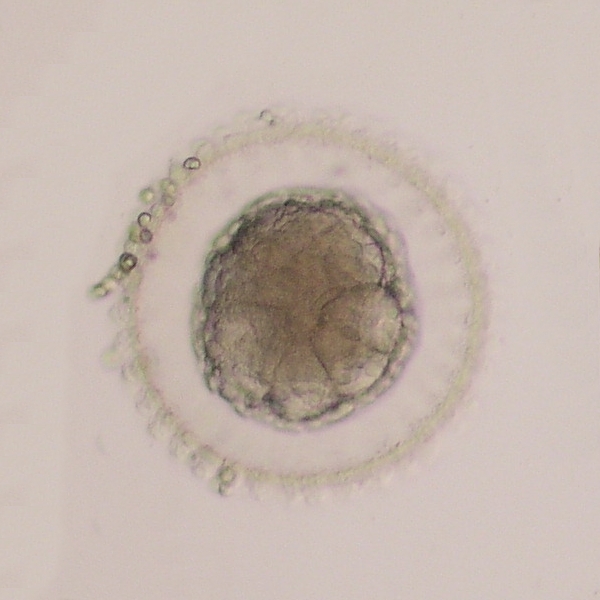
The first one to go up is a poster I presented at the third International Tunicate Conference in 2005 at the University of California Santa Barbara.

This one is one of the relatively few projects that we were never able to push out into a paper. I still think it makes for a pretty good poster, though.

Archiving this poster got me thinking. I see clear value in archiving old posters that can document projects that never made it into the scientific literature. But is there value in archiving posters that were the early versions of projects that did make it into the regular scientific literature? I can see old posters have some interest as examples of design (see the Better Posters blog). They might eventually have some historical interest.

But is there any scientific interest in archiving old posters? Posters are generally works in progress, so tend to be incomplete and preliminary. Might they actually confuse matters by including dead end ideas that were abandoned by the authors?

Reference

Stwora A, Scofield VL, Faulkes Z. 2015. Effects of oxidative stress on Ascidia interrupta embryogenesis. figshare. http://dx.doi.org/10.6084/m9.figshare.1499282

18 July 2014

Where are they now? (Veterinary edition)

Back in 2006, I wrote:

In another one of those still-not-quite-sure-how-this happened events of the summer, I spent this afternoon meeting with various people about a summer internship program with high school students. I’ll have a student, Amanda, working with me for six weeks starting next Monday. Not quite sure what I'll have her do yet. Will have to spend some time sorting out project ideas next week.

What happened after that? I came up with a project, Amanda rocked it for six weeks, got data way more interesting than I expected, and we published a paper from it (Flores and Faulkes 2008). It was very cool to have a paper with a co-author who was in high school at the time.

Amanda went off and did one degree at Texas A & M University. She told me that having a publication from her internship was helpful, because it always gave her something that set her apart from the crowd. She stayed at A&M for another degree, and today posted this:


From ascidian intern to practicing vet! Sniff. They grow up so fast... Anyone in the region who needs animal care, please visit Dr. Flores, and tell them Zen sent you.

Related posts

In turn...
Best of times, worst of times, best of times
Personal review of 2008

Reference

Flores AR, Faulkes Z. 2008. Texture preferences of ascidian tadpole larvae during settlement. Marine and Freshwater Behaviour and Physiology 41(3): 155-159. http://dx.doi.org/10.1080/10236240802360914

03 June 2011

In memory of Charley Lambert

I’m sad to report that Charley Lambert has died suddenly from a stroke.

I co-authored a paper with Charley, and his wife, Gretchen, after a busy weekend of data collection at South Padre Island. I was lucky enough that they were able to fit in a stop in Texas to travel plans as they were on their way to Florida, if I remember right. They got their before me, and I met Charley and Gretchen on a dock where they had just pulled up a rope loaded with tunicates and were busily photographing it.

I remember Charley saying that weekend that you should never throw away any writing. He said he had one paper where he wanted to speculate on the ascidians that might have been attached to the hull of the early explorers. One editor hated it and made him take it out. But he kept it, and got it into another paper later.

I met him once more at the Tunicate meeting in Santa Barbara in 2005 (group photo at right; I think Charley is two down from me, on a 4 o’clock diagonal), and I remember him making the entire room laugh during his presentation. I wish I could remember the joke exactly, but the gist of it was that he had reached a point of not worrying too much about what other people thought.

He might not have cared that I thought it, but I thought Charley was a lovely guy, active and full of a sense of humour.

Additional: Finally found a much better picture of Charley that I’d taken during their visit here in August 2004. A photo gallery of Charley is here.


Reference

Lambert G, Faulkes Z, Lambert CC, Scofield VL. 2005. Ascidians of South Padre Island, Texas, with a key to species. The Texas Journal of Science 57(3): 251-262.

26 May 2008

Sea squirt myths busted

AscidiansI bust another invertebrate neurobiology myth on the All In The Mind blog that crops up in a post about cars, of all things. What follows is a slightly edited version of my comment on the post.
It’s widely thought that sea squirts (also known as tunicates or ascidians), once they’ve found the place where they'll spend the rest of their lives, have no further need of their brain and eat it.

The punchline is, “It’s rather like getting tenure.”

The facts should never get in the way of a great joke, but the truth is more complicated. The swimming tadpoles are only about a millimeter long, and there are only a few hundred neurons in the entire tadpole (Meinertzhagen and Okamura 2001), of which the “brain” is only a small part. Tadpoles have miniaturized brains.

Sea squirt larvae do undergo metamorphosis into a adult with a small brains, but it's not the vestigial little thing that the “eat your own brain” story suggests. “In fact, adult ascidians have perfectly good brains, an order of magnitude larger than those of their larvae, and their behaviour is as finely adapted to sessility as that of the larvae to motility” (Mackie and Burighel, 2005).

We’ve learned a lot about how brains work from invertebrates, and their complexity is often underrated.

References

Meinertzhagen IA, Okamura Y. 2001. The larval ascidian nervous system: the chordate brain from its small beginnings. Trends in Neurosciences 24(7): 401-410. http://dx.doi.org/10.1016/S0166-2236(00)01851-8

Mackie GO, Burighel P. 2005. The nervous system in adult tunicates: current research directions. Canadian Journal of Zoology 83(1): 151-183. http://pubs.nrc-cnrc.gc.ca/cgi-bin/rp/rp2_abst_e?cjz_z04-177_

15 December 2006

Ooooh, look, we're gel jockeys

Agarose gelIt's but a small, modest thing, but it is our own. The picture shows an agarose gel with nine columns. The two bright sets of bands on the margins are standards. The fainter columns (two so faint as to effectively be invisible, really) show faint smears. Those faint smear are DNA. Genetic material. The double helix, baby! Those smudges, unimpressive looking as they are, show that my student Sakshi and I successfully extracted DNA from some tunicates.

This is stuff that they often teach in undergraduate classes now. Very standard procedures. But for various reasons, I'd never done anything like this before. This smudgy gray picture represents the first little baby steps into some new research capabilities for me.

Now that we know we have DNA, I just have to figure out what the heck we want to do with it next...

Only about five days until the publication of my newest research paper. It's like science Santa is coming early! In the next issue of The Biological Bulletin. Accept no substitutes.

13 November 2006

Busted over cleavage

None of my developmental experiments worked this weekend. As a sort of last ditch effort, I tried to extract some DNA from the animals while the tissue was still fresh. Now I have to runs some tests to see if I succeeded, but since I never planned on being a molecular biologist, I yet again have to rely on the good will of my colleagues to let me scam a bit of their material.

One guy assured me that I must have DNA. When I told him I was using a Qiagen kit, he said, "That's the Mercedes of DNA kits."

"Maybe," I replied, "but a Mercedes driven by a giraffe is not going to be a smooth ride."

I am not convinced of the foolproofness of the kit. As Mark Twain wrote, it is impossible to make anything foolproof because fools are so ingenious."

11 November 2006

I want to see some cleavage!

Early ascidian embyroCell division, that is.

It's 4:00 p.m. rather than a.m. this time, but otherwise, the story is much the same as my last post. I'm here again, trying to get an little experiment to work with my tunicates. I got plenty of eggs and sperm from the adults, but for some reason, the fertilized eggs are just not dividing. I must have done something wrong, but cannot think of what it might be.

It is absolutely maddening, because the number of animals is running low now, so if I don't get the data today or tomorrow, I'm back to my waiting game. When will the next rack of animals come in so I can try to do this experiment again...?

10 November 2006

Latest post ever?

It's now about 3:15 a.m.

Yes, I'm running an experiment.

About a week ago, I went out to the Coastal Studies Lab, and to my surprise, there were adult tunicates (Ascidia interrupta, to be exact) on the racks. I brought them back to my lab, and to my surprise and delight, they were reproductive! This is the first year since I started working with them that I've been able to get animals at two different times of the year and have them be reproductive so I can do experiments.

My work with these animals is very much hot and cold: either the animals are out in abundance, or they seem to have vanished from the Laguna Madre. Plus, they don't tend to live in the lab for terribly long periods of time. And my other commitments -- teaching, meetings, and so on -- don't conveniently stop because I have animals to work with.

So when I get them, I really try to push to get things done. Hence a late night.

I started in the lab this morning at 8:00 a.m. The design of the experiment calls for the animals to be treated and measured every two hours until they hatch into little tadpoles, and that takes about 14-16 hours for the fast ones. My student Veronica met me then and worked until 8:00 p.m., and I took over from 10:00 p.m. to now. I had little swimming tadpoles just hatching out around midnight. Now I'm just trying to stay a little longer to see if I can get a little more data.

I was hoping I could maybe start some writing, but the measuring is taking up more of the interval than I expected. I've worked a bit on today's lecture, skimmed the new issue of Science (sea urchin genome stuff looks very cool), and had a late night snack of pretzels from a vending machine. Yum.

And due to doing all of those things while writing a blog post, it's now 4:00 a.m., which means I do my last prep and head home for a snooze. Yay!

15 July 2006

Getting help

InternA trip out to the Coastal Studies Lab was encouraging. I met the new research assistant, Felecia, who was at one point a nationally ranked surfer. Cool. I talked to her about some of the plans I have in mind, and what she can do to facilitate them. I was also able to bring back some more tunicates for experiments that my students and intern (shown with slide overgrown with tunicates and other marine invertebrates) are doing.

20 July 2005

Tunicate 3

It's been a week since I left Santa Barbara from the Third International Tunicate conference. Long past time for a report.

I left in plenty of time on Saturday. Went up to Houston, as usual, then had over an hour layover at Los Angeles in LAX, wherein I had plenty of time to contemplate the outrageous prices for things in the store. (Tip: If you want some chocolate bars or snacks when you're traveling, get them before your plane stops at LAX!) And I missed my plane to Santa Barbara.

This is one of those awkward points where one is torn between being honest and knowing someone is going to read it and think, "This guy is too stupid to live."

The deal is this. I get into the airport. Check the gate. The gate says 62A. I'm at gate 62A. There's a sign up saying this is a shuttle to other gates. "Ah," I think, "we wait here until an agent comes to gather all of us going to that flight in one go." I sit there and miss I don't know how many opportunities to got the right gate I don't really realize how the shuttle works until it's too late. There's no sign saying how often the shuttle is supposed to run. I later realized the driver had been in a few times, but didn't say anything! So unless you were looking up at the right moment, you wouldn't realize anyone was there to take you over to another gate.

Luckily, the fine folks get me on another plane and I'm only a little late to Santa Barbara. Missed registration by a few minutes, but not the opening night reception. There are all of three people I know at this meeting. When I get back from the reception, I look into my suitcase (actually a fine backpack designed for air travel by Mountain Equipment Co-op, which I love), and realize I forgot my bag with toothpaste, shampoo, shaver, and so on. (Wondering "How does this guy manage to live?" yet?)

The next morning (Sunday), I wake up well before breakfast is served. Fortunately, Santa Barbara is the only university in North America built on a beach, so I go walk around the beach. I've been to the campus before, almost exactly 10 years ago, and am reminded how nice it is. I'm also reminded throughout my visit about how environmentally conscious California is compared to Texas, where I think "environment" is considered to be a dirty word. Electric cars, notices up encouraging water conservation, signs noting that recycled water is used in the toilet, recycle bins, and much more -- none of which I ever see a hint of in Texas.

So I spend the day sitting in talks. For the night, they've put us in student housing, with various games (ping pong, pool, foosball, air hockey, those sorts of things.) I stay up quite late goofing around and talking to people.

The next morning, I wake up very early again, and go to talks with only a few hours of sleep. The big thing is that posters are Monday night, which I have. I get my poster up. I'm up late again talking about my poster and socializing. The response to the poster is good, although I wish there were more data on it. Basically, the sort of questions I get convince me that I'm on the right track with the project.

Tuesday morning, I can't sleep in again. The talks that are further afield from my work -- well, I zone out a bit during some of those, I'm afraid. But the nice thing is, they've only scheduled a half day's worth of talks. During the afternoon, they give us an excursion to the Santa Barbara Natural History Museum, which is really excellent. It's got some great research programs and excellent exhibits. Some of the highlights include a real blue whale skeleton, the only woolly mammoth hair on display in North America, and a butterfly house. Much more besides! I wish I'd had another hour or so there. That night, I think this was the night they had a roundtable discussion. I got up and talked a bit about what we're trying to do with the Coastal Studies Lab. I kind of feel it's important for me to promote the lab, because the two other people associated with it who were supposed to come, couldn't. My colleague Virginia was recovering from minor surgery, while the lab's director had his reservations fouled up.

After the roundtable, yes, I'm up late again. Not quite as late as the previous nights, but I still don't think I'm in my room before midnight. I learn that the European's love for soccer seems to carry over to foosball. An Italian woman named Lucia positively slays at foosball, much to the surprise of many. I lose at pretty much every game I play at; I think I win one game of ping pong. Another Italian researcher, Paolo, tickles the ivories and plays a few things like "O Solo Mio" on the upright piano in the room. Down the hall, I hear some spirited alcohol-enhanced discussion about ascidians and Hox genes from the conference organizers and a couple of of bigshots in the field.

The last morning of the conference, we take a picture of attendees during the coffee break. I think there's about 100 people total, which is a good size for a conference. I don't go to the last couple of talks so I can get ready to catch my plane back.

All in all, a very good conference. The major complaint I had (which I posted to the Tunicata email discussion list later) was how few people kept their talks to the scheduled 20 minutes. If people had kept on time, I could have done a few other things (like write blog entries, deal with email from the office, etc.), but I was kept running pretty much nonstop during the day.

09 February 2005

Chugging along

I've managed to get my butt into the lab the last couple of days and do a few things. First, I received some ascidians from Wood Hole Marine Biological Lab for some genetic experiments I'm doing with my student Joe. Luckily, these animals are reproductive, which means I might be able to get double duty out of them. Have also been working with my student Anna to try to get some labeling done with preserved ascidian embryos -- we'll see tomorrow if it has worked. Fingers crossed.

In other news, I have somehow manged to get myself slated to give three talks in as many weeks. First, I'll be giving a teaching and technology lunchtime seminar about my experience with wireless polling on 1 March. At the end of that week, I'll be giving a presentation (co-authored by my student Anna and my colleague Virginia) at the annual Texas Academy of Science meeting. Two weeks after that, I've set the wheel in motion to give a public lecture on neurobiology as part of Brain Awareness Week. I'll make it work, but I didn't quite realize how these were all going to pile up. This is what happens when my computer program, with my scheduling software, gets taken away... (No, my computer still isn't fixed. Grrrrrrrrrrrrrrrrrrrrrr.)

09 December 2004

Bad to worse

December 7th, 2004... a day that will live in suckage...

Yeah, it's been a pretty naff week. Tuesday was, as you've gathered, particularly bad. I drove out to the Coastal Studies Lab to collect some mud shrimp. The waves were considerably higher than I expected, and the tide was high. I spent a couple of hours getting wet and messy and ended up with one small mud shrimp to show for it. Well, one and a half, really, but the half wasn't of much use to me. And that one shrimp didn't manage to make it through the night.

Then, I worked on an ascidian experiment. My student Anna and I went though about ten animals trying to get some eggs and sperm, but they were all pretty much spawned out. That was very depressing, because the species we're working on isn't available year round, and those were the last animals of the season. And we didn't get all the experiments done that we wanted to do. They're not even hard experiments -- but there are just so many other things to do that we didn't get them done in time. Yes, this means that I'm probably going to have to wait nine months or so for the next opportunity to do finish the experiments. Crap.

Even the one thing that was nominally good news was a double edged sword at best. I got a letter in the post from our Office of Sponsored Research informing me that I have been given the opportunity to submit a grant proposal for the NSF's major equipment grant program. This program only accepts a small number of proposals (three, I think) from each institution, so there's an advance selection process to pick which get sent forward. I am trying to get our department a confocal microscope. The downside to all of this is that it means I now have two grant proposals due in January with the deadlines a fairly short period apart from each other. In short, I've been told, "Yes, Zen, please go ahead and do even more work from now until when classes start again in January."

And I was still trying to track down money that people are owed from August.

And there were a few other things. I just generally felt like I sucked on Tuesday.

I'm not sure that getting into the car at 4:00 a.m. this morning to put my S.O. on a plane back to Canada for Christmas is entirely an upbeat development, either. Stupid early flight.

14 October 2004

I've been looking at cleavage today, and I'm very excited by it

By "cleavage," I mean "cell division." I'm running an experiment on the development of ascidian embryos. What did you think I meant?

Lots of promising things have been going on. The ascidian species I was working on last year finally showed up again, about a month later than last year. I was getting so scared that they wouldn't, and my student Anna and I wouldn't be able to complete the experiments we started last year. But they've shown up, we have plenty of animals, and I'm feeling optimistic that we'll be able to pull together the experiments and get a manuscript together in fairly short order.

And I actually had supplies get ordered and arrive promptly for once. The supplies were things necessary to do the experiments I mentioned above. Some of the material arrived packed in dry ice. I never get tired of tossing it into the sink, turning the water on, and watching the fog roll over my lab bench. Also very fun to scoop up the mist in beakers and laugh maniacally. (I mean, you've got what looks like a smoking beaker in your hand, what else are you going to do?)

And I had some promising staining results last week with a new technique I have a student trying.

And two of my students got selected for Howard Hughes Medical Institute undergraduate research fellowships. Only one can officially work with me, but it's a good thing for both of them, and will be a good thing for me.

And I finished a short grant proposal for a new program called SOMAS. My grant paperwork is now making the rounds for institutional approval.

And I'm meeting with our new president, Bambi Cardenas, tomorrow, as part of a representative group from the Biology Department.

And my student Sandra is just about ready to provide me with some final data for my neuroscience poster (if all goes well).

The frustrations I have? One is that my colleague Virginia will be down next weekend, just when I have to leave for the Society for Neuroscience meeting. ANd all of my students who are working on our collaborative projects are also going out of town for things like medical school interviews.

And I have to finish a bunch of marking before going to the Neuroscience meeting.

And I've been waiting a week from someone from the computer helpdesk services to come and type in a password on a class computer so that I can install a simple driver for software.

And there just aren't enough days in the week to get things accomplished.

15 September 2004

The animals do what they please

One of the logical corollaries to Murphy's Law is known as the Harvard Rule of Animal Behaviour. It goes something along the lines of, "You can have the most beautifully designed experiment with the most carefully controlled variables, and the animal will do what it damn well pleases."

That is currently one of my biggest problems. I changed my entire teaching schedule on the idea that the ascidian species I was working with last year would be back again this year.

Nope.

These little babies just have not shown up again. Whether it's En Nino, sunspots, bad luck, or whatever, I'm sort of stuck without the animals I wanted to work with. 'Tis a quandry. It wouldn't be so bad if I didn't have a student who worked with me last year ready to do a series of follow-up experiments. Eeep! So now I have to think of a back-up plan.

Still, I find this problem less aggravating than my other major problem, which is the seeming inability of getting anything I order here promptly.

07 September 2004

Mysterious deaths, 7 day work weeks, and other reasons for cheer

I drove out to the Coastal Studies Lab last week, and brought back many animals. Some hermit crabs, ghost shrimp, sand crabs, and tunicates. All had survived well in tanks recently. But for some mysterious unknown reason, just about all of the hermit crabs and ghost shrimp keeled over in less than a week this time! About half died on Sunday, the other half on Labour Day.

This is one reason I was glad to have come into the uni every day this week. It would have stunk to high heaven – both literally and figuratively – to have come in to all those corpses after a long weekend.

The tunicates didn't die prematurely, but the work I was trying to do with them was not encouraging, either. They're about as easy to dissect as old boot leather.

On the plus side, I'm more glad than ever that I live within walking distance of the university.

10 August 2004

The Lamberts have left the Island

The Lamberts


Charlie (standing) and Gretchen Lambert (seated, perhaps obviously). Merci beaucoup to both of you!

Yesterday was another good day for my attempts to push forward with ascidian research. Gretchen Lambert was able to identify some more species. I think our final total is something like 15 species from a large number of genera, maybe 10 or 12. Interestingly, all of them seem to be invasive species that have been brought in on the bottoms of boats. This is a worldwide problem: many ports and harbours have lots of invaders.

Also, my colleague Virginia was finally able to locate some little baby tadpoles of her tunicates. She had been frustrated for some time because she couldn't find reproductive animals, but it turned out she was looking for baby tunicates in the wrong place. The species she had worked on previously turns out to have a reproductive system that is unique to that species, not common to all the species as Virginia had assumed. Now we can rear "clones" of ascidians from a known individual. This gives us the advantage of being able to work with a bunch of animals that all have the same genetics.

All of this slightly offset the crummy collecting I had for sand crabs. I turned over a lot of sand to find very few animals! I did find a mud shrimp (Callianassa, I thought, but apparently has been renamed as Lepidophthalmus louisianensis), though. This was the first time I'd ever pulled up one of them in one of my shovels. Also found two sand crabs with egss, which I'd not seen before in my collections.

25 August 2002

Last day of freedom!

Yes, that's an overly melodramatic way of saying, "Classes start tomorrow."

Being an academic is a two part job: you're researcher and instructor both. This is the time of year when the instruction tends to take precedence over research, but I'll be working hard to ensure that research doesn't grind to a halt.

Made yet another trip out to the Coastal Studies Lab yesterday, both to learn a bit more about ascidian development, and to show the lab (and the bee-yoo-tiful South Padre Island beach) to one of our new hires in the department, Chris Little.

Also on my agenda these days is that I am putting together a proposal for a symposium that might run at next year's Animal Behavior Society meeting. This proposal has to go to the meeting's Program Committee, then the Executive Committee in mid-September. Fortunately, the bulk of work for me consists of finding good speakers with interesting things to say.

I'm sure many other interesting things are happening to me, but I'm ignoring them for now.

Pages read of The Structure of Evolutionary Theory: 652.

;;;;;

Additional: This article on "cam girls" gives me pause about this project, and wonder about my own motivations, to some degree. Did I run this journal as a method of public outreach about science and research -- or I am just a narcissist? Needless to say, I hope I'm the former.

19 August 2002

Don't be sad...

This article in The Scientist (free registration required) has a quote from someone saying that assistant professors (like me) are expected to write 3 papers a year.

Lucky for me, within this month I have a new technical article coming out in Marine and Freshwater Behaviour and Physiology (you can read a summary here) and a book chapter in Crustacean Experimental Systems in Neurobiology, published by Springer Verlag. (You can find a description of the book by searching Springer's on-line catalogue for the title or the main editor: Wiese.) I will follow Meat Loaf's advice and not be sad, 'cause "Two out of three ain't bad."

I spent a good chunk of Friday and the weekend at the Coastal Studies Lab, learning more about tunicates from Virgina Scofield. She took a couple of animals and extracted eggs and sperm and fertilized them on Saturday morning. By the afternoon, they had divided several times and were starting to make their guts tails. When I came back Sunday morning, we had a bunch of tiny, but complete, little swimming tadpoles with complete nervous systems and behaviour, looking for places to settle. When I say tiny, I mean it; the swimming tadpole larva is about the same size as the unfertilised egg.

Also picked up a few more sand crabs.

;;;;;

Pages read of The Structure of Evolutionary Theory: 480.

15 August 2002

We now return to your regularly scheduled journal...

Bad news: Vacation is over.

Good news: It was very fun, thanks.

Bad news: I didn't get quite as much work done along the way as I hoped. I had forgotten how difficult it can be to read in a moving car.

Good news: Most of my crabs are alive and well even after another 10 days of benign neglect. They've been surviving reasonably well for six weeks with no intervention on my part, which is highly encouraging. Animals that require large amounts of care are not on the agenda right now.

Bad news: U.S. Customs rejected our application to import some equipment from the U.K. duty-free. Disappointing, but not a surprise.

Good news: My colleague Virginia Scofield will be making a trip to the Coastal Studies Lab tomorrow, so I will probably be going out to meet her. I hope I finally see some active ascidian larvae!

Good news: My on-line material for my General Biology class has passed muster from one of the folks in our Center for Distance Learning. There are still improvements to be made, but they're relatively minor.

So overall, there's more good news than bad. And that alone is good news!

08 July 2002

In the lab

I spent the end of last week on South Padre Island at the Coastal Studies Lab, enjoying the company of colleagues Virginia Scofield, Baruch ("Buki") Rinkevich, and new department hire Mike Persans. Lot of good conversation, and I successfully collected some sand crabs (mostly Lepidopa -- I'll explain what those are later) and brought them back to the lab. We all got to see the American Independence Day fireworks from the water, which was a definite bonus.

Today has been good too, as I've spent most of the day working in the lab. A few more equipment odds and ends arrived. I spent part of the day setting those up, checking on my sand crabs, and making a few things I'll need in the coming weeks. Also had a former student drop by with a couple more sand crabs for me, which was a nice surprise.