Showing posts with label time management. Show all posts

31 August 2022

The only real work

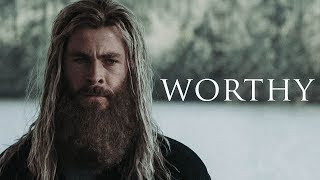
"Worthy" next to picture of Thor in Avengers: Endgame.
A lot of arguments about science, and particularly scientific publication, seem based around an underlying difference of opinion about what work is worthy. 

I get the strong sense that for some researchers, running experiments is the only work that matters.

Anything else is just a nuisance, a distraction, a thing that no “real scientist” would do if they weren’t forced to do so by career necessity.

On search committees, it was job candidates who kept asking about how they could get out of teaching.

Online, I think this attitude informs a lot of discussion around publishing and peer review. 

Submitting to journals? Nuisance. For some people, science paradise would be a website that automatically pushes out protocols and data and protocols, so anyone who wanted could use the data. But no time wasted on pesky explaining work to other people. Just pure flow in data collection.

Peer reviewing? That takes me away from data collection, so you better pay me to make it worth my time. 

Proofreading and editing? Not even real work. This may partly explain why some people keep asking, “Why aren’t all scientific article free?” Because they just can’t imagine that managing articles is real work that deserves fair compensation.

To be clear, I have no problem with anyone saying, “Running experiments is what I value and how I want to spend my time.” But other people should get to value other things.

Maybe we are doing a better job now of recognizing the labour that goes into scientific research. More people are rightfully insisting that doing research should be treated as work, not a vocation or calling or passion (you know, things that don’t get you paid). But I feel like we not doing such a great job of recognizing that what other people do that supports research is also worthwhile work.

08 August 2022

Lessons from megapodes: You can waste a lot of time trying to save time

Tanimbar megapode nest, much bigger than person standing to the left of it.
In his book Last Chance to See (co-authored with Mark Carwadine), Douglas Adams describes nesting by megapode birds. Megapodes don’t build a typical next out of sticks and feathers and mud and the like. Instead, they build these enormous mounds, stacked with decaying vegetable matter.  Compost, basically. As the compost decays, it generates enough heat to incubate the megapode’s eggs.

In his often imitated but never equalled style, Adams wrote:

So all the megapode has to do to incubate its eggs is to dig three cubic yards of earth out of the ground, fill it with three cubic yards of rotting vegetation, collect a further six cubic yards of vegetation, build it into a mound, and then continually monitor the heat it is producing and run about adding bits or taking bits away.

And thus it saves itself all the bother of sitting on its eggs from time to time.

Put like that, it doesn’t seem like that much of a time saver.

To get those numbers of megapode nest size to put into his book, Adams had to do some calculating. Two facts about Adams are relevant here.

  1. He was an early Apple fanboy.
  2. He was a notorious procrastinator.

Not satisfied with pen and paper or a spreadsheet, Adams wrote a complete program in HyperCard to calculate the volume of megapode nests on his Mac. It is a rather beautiful little app for the time.

Adams was naturally aware of the parallel between himself and the megapode.

I’ve just spent a cheerful hour of my time writing a program on my computer that will tell me instantly what the volume of the mound was. It’s a very neat and sexy program with all sorts of pop-up menus and things, and the advantage of doing it the way I have is that on any future occasion on which I need to know the volume of a megapode nest, given its basic dimensions, my computer will give me the answer in less than a second, which is a wonderful saving of time. The downside, I suppose, is that I cannot conceive of any future occasion that I am likely to need to know the volume of a megapode nest(.)

I see a tendency in a lot of scientists (myself included) to build megapode nests. Because some existing solution fails in one way, we will create elaborate schemes and software to do something that is ostensibly “better” in that one way. 

The amount of time spent can be large.

The potential re-use of that solution for yourself, never mind others, can be tiny.

And the moral of the story is: Before you start some project because you don’t like the existing solutions, ask if you’re acting like a megapode parent.

External links

Douglas Adams’s megapode next volume calculator

 Picture from here.

21 December 2018

Rubber, glass, chainsaw

Being an academic is a juggling act. You’re expected to perform teaching, and do research, and do service. And that’s just the highest level breakdown of your responsibilities.

With so much to juggle, some balls get dropped. It happens.

But one of the things you have to learn is that not all the things you juggle are the same.

Some balls are rubber. You can drop these. They’ll bounce and be okay.

Some balls are glass. You can’t drop these or they crack, break, or shatter.

The trick is knowing which one is which.

A lot of the tasks that administrators give rank and file faculty are rubber balls. Answering every email is a rubber ball.

Teaching, on the other hand, is usually a glass ball. Writing that scheduled exam is a glass ball. Grading final exams so they can go on student transcripts is a glass ball.

And sometimes you’re juggling a flaming chainsaw in the mix, too.

Your research is a chainsaw. Drop it, and it will sputter around wildly and has the potential to really damage you.

External links

Tweet from 4 December

10 April 2017

Grad student stops meeting supervisor, who doesn’t notice

Two years ago, Eleftherios Diamandis wrote a horrible piece in Science Careers that glorified overwork. This was widely criticized. And for this, he now gets... a platform at Nature?

Yes, Diamandis just published a new piece in a glamour magazine, in which he freely confesses to being a negligent grad student mentor. He writes (my emphasis):

I remember remarking on the slow progress of one PhD student's research project at our second review meeting (typically held six months after their project launch). Three months later, I repeated my concerns, which were mainly about how slowly the student was learning essential techniques such as mass spectrometry, the workhorse of our lab. But instead of addressing those concerns, the student stopped scheduling meetings. I was too busy to notice for another six months.

I should be surprised by Diamandis’s lack of self-awareness, but he’s already amply demonstrated his obliviousness. I guess I’m surprised that when he boasted about all the time he spent away from his family and the hours and hours and hours of working, I somehow thought that he might actually care enough about his work to be competent at it.

Grad students are not loose change that you can lose in a couch cushion, for crying out loud.

When Diamandis suggests the student do a master’s degree:

I was horrified when my suggestion elicited tears. The student and I decided to give the programme another try, with the proviso that we would hold mandatory monthly meetings. I also ensured that the student could get technical support from my lab manager. After three years, the student published in a good journal, and 18 months and two research papers later, was ready to write a thesis.

This guy is surprised that a student cries after literally forgetting that the student did not meet with him. And why is technical support not available to grad students all the time?

He may publish a lot of papers (and he does), but this event marks him as an incompetent supervisor. Diamandis cares only about one person: Diamandis.

Hat tip to Justin Kiggins and Meghan Duffy.

Additional: I’d forgotten than Diamandis had another Nature piece last year, pontificating about when he would retire. I think one of the more revealing moments in that piece is when he talks about how much he loves the h-index as a measure of productivity. It explains why he can take the time to write all these career opinion pieces but forget his student.

He measures his importance by his publication record, his h-index, and the Impact Factor of the journals he publishes in. Those are things he values. His trainees, not so much.

Given what he’s written, particularly the newest piece, a lot of people might suggest he move the clock on his retirement up quite a bit. Like, “You can retire any time now. Here’s your hat, what’s your hurry?”

Update, 11 April 2017. Edge for Scholars has summarized  some of the reaction from social media to Diamandis’s article.

More update, 11 April 2017: I changed the title of this post. It was originally, “Grad student goes missing and supervisor doesn’t notice.” That was not a correct characterization of the situation. It is not like the student vanished, nobody knew where he was, and a missing persons report should have been filed. The student was there, just not making progress.

A couple of other issues raised by Diamandis’s post that have come up.

First, I noted that this article shows how disrespected master’s degrees are. It is seen as a failure, not an achievement. This is a bit of a slap to the many faculty and students who work hard at master’s degrees, whether they do not want, or are not able, to do doctoral work.

Second, Kevin Wright noted that this is a sign of the inefficiency of large labs. Someone making no progress would not escape notice in a small lab. A small lab could not afford to have a student doing very little for half a year.

Related posts

Glorifying overworking: another self-inflicted crisis in Science Careers

External links

A growing phobia
The question I hate the most
Glam Journals Whiff Again: Nature Shares Advice from Neglectful Mentor

30 December 2016

2016: Where did the work go?

There are reasons aplenty to hate this wretched year, but I’m just going to focus on the professional side for me. 2016 was a year I felt like I just couldn’t get stuff done.

On paper, it was not a horrible year. On paper, the book Freshwater Crayfish was released, which I co-edited and had a couple of chapters in. But in reality, the physical copy of that book was released in August 2015.

I also had one other book chapter, in Science Blogging: The Essential Guide, back in February. But the production on that book had dragged on for so long (I first blogged that it was coming out late in 2014) that it certainly didn’t feel like it was something new.

My frustrations were compounded because I had submitted a couple of papers early in the year; one early January, in fact. But for reasons that do not need exploring at this juncture, the editorial process for both of them dragged out longer than usual and they won’t see the light of day until 2017.

(At least, I hope they will appear in 2017. One journal that has accepted one of my articles still has items in its pre-print queue today, 30 December 2016, that are dated 30 December 2015. A whole year as a “forthcoming” article? That sucks.)

The number of blog posts was down here on NeuroDojo, but holding reasonably steady on Marmorkrebs and Better Posters. I have a lot of blog posts that I started but wasn’t able to finish.

I did teach a lot this year. I just got through the heaviest teaching load in a semester I’ve had in a very long time (and am so pleased nobody yelled at me, which I was convinced was about to happen any day). I did two graduate classes that were new to me for the first time ever. I taught a grad course in summer. And I taught the #SciFund poster class for the second time.

For me, professionally, 2016 feels like “the one that got away.”

19 December 2016

The tyranny of free time

“Have a nice break.”

I know students and other mean well, but “breaks” are very stressful for me.

I’m sure I’ve complained about this before, but work rarely stops. Before classes start up again, I have a conference (SICB in New Orleans), potentially an NSF pre-proposal to write, and two projects where data collection ends on 1 January that I can start writing up.

Second, and increasingly so, I feel pressure to make the best use of my time on things other than work.

“Hey, I have nothing slated for today! Should I do my laundry? Go shopping? Write a blog post? Play a video game? Read a book? Watch those DVD bonus features? Netflix binge on that show I’ve been meaning to catch up on? Work out at the wellness center? Clear all the crap out of my office? Clear all the crap out of my apartment?”

At least with work, I know what I am supposed to be doing. With my time, things are not so clear.

28 September 2016

Fifteen rounds


There are fifteen rounds in a heavyweight boxing match.

There are fifteen weeks in a semester.

Today, I feel like that isn’t a coincidence.

Sometimes, a semester can feel like a boxing match. You know when it starts, know when it ends, you get a few breaks in the middle, and you just know that there are going to be a lot of punches thrown at you in between.

You hope that you can dodge out of the way of some of those punches.


But you cannot dodge them all.


You’re going to get tired, you’re going to lose your quickness, as the rounds wear on.

The difference between the two is that in teaching, you can’t win early. You have to go the full fifteen rounds. You can only win by judge’s decision, never by knockout.

You just hope that you have trained well enough make it to the last round. You just don’t want to throw in the towel...


Or be the one who goes down in an early round.


And I think there’s a risk both fighters and academics take. They can start to lose their form after too many of these encounters. It takes its toll.

I can’t recall the last time I felt so drained so early in the semester. We’ve barely been at this a month, and I’m already looking forward to the last round.

External links

Losing Your Way as a Scientist: How Not to Suck

Round card photo by leyla.a on Flickr; used under a Creative Commons license.

28 December 2015

Time policing

Are you reading the blog post from your home or your office?

It’s the start of the week between Christmas and New Year’s. There is a lot of discussion on my social media feed today about academic work, I think prompted by this tweet:

Quick test to see if you're going to “make it” in academia: Are you working this week?

As advice, it’s dumb. Whether you’re working this week is no test of whether you will be a successful academic. Lots of people might work this week, but work on the wrong things. Like writing a blog post instead of that NSF pre-proposal... but I digress.

As a joke, it’s mean. It suggests overwork is the norm in academia, and that if you’re not working now, you are obviously inferior.

Academia has a deep and sometimes oppressive culture of overwork. There are many examples on this blog. There was Scott Kern saying colleagues lacked passion because research labs were empty on evenings and weekends. More recently, Eletftherios Diamandis wrote about how he worked sixteen hours a day, left childcare to his wife, and had his kids playing in the lobby and eating food from the microwave – and this was in a career advice column as an exemplar of success.

Put that attitude together in a person whose position gives them a fair amount of power and minimal oversight – like someone in charge of a grad student or post-doc – and you have the potential for stressful, terrible situations where people work like dogs because they think there is no alternative.

That said... I am a bit concerned by the potential for time policing that’s hinted at in the reactions to this tweet, and in similar situations.

First, a lot of people outside of academia have to work the week between Christmas and New Year’s. For most people, suggesting that you work this week is not something that only a Dickensian factory owner would say. That is is even an argument could contribute to the perception among non-academics that academics are overpaid, lazy fat cats.

Second, we should be careful about criticizing academics who do choose to work this week. There are many reasons to do so.

I have animals that need feeding and looking after. It’s my job to look after them. I don’t like the implication that I’m contributing to a workaholic culture because I’m doing animal care.

There are also externalities that work against taking this week off for many people. For instance, for biologists, the Society for Integrative and Comparative Biology meeting is held in early January. The deadline for many National Science Foundation pre-proposals is in January. Yes, in theory, people are well organized to have completed all those proposal and presentations and posters before Christmas, but in actuality, for real people, this is a good time to do that work.

And that sort of leads into my biggest point. Is it so bad to like what you do? SciCurious wrote:

Well, I mean...it doesn't help that I...enjoy work. A lot. Part of academic conditioning?

I’m reluctant to admit that I am in the office writing this post, and that I’m happy about working this week. I like the quiet. I like that I don’t have meetings or deadlines. Yet if you’re an academic who likes working more than 40 hours a week, you can be tagged as part of the problem and a victim of mindwashing. For instance:

Nobody dies wishing they published one more paper.

We’re expected to resent work. Mike Rowe talks about this, based in part on his experience on the TV show Dirty Jobs (emphasis added):

We’ve declared war on work, as a society, all of us. It’s a civil war. It’s a cold war, really. We didn’t set out to do it and we didn’t twist our mustache in some Machiavellian way, but we’ve done it. ... We’ve waged this war on Madison Avenue. I mean, so many of the commercials that come out there – in the way of a message, what’s really being said? Your life would be better if you could work a little less, if you didn’t have to work so hard, if you could get home a little earlier, if you could retire a little faster, if you could punch out a little sooner – it’s all in there, over and over, again and again.

A job well done is rewarding. It’s rewarding to be able to look back and see that you have created a body of work. Some people might die wishing they had created more, or done more professionally, or solved an unanswered question. Why should regrets about unfinished things be confined to the personal, non-work realm?

We do have to be careful not to let that desire to work become a macho bullshit test of endurance. In academia, feeling guilt over not working is almost infinitely more common that feeling shame about working when others are not. The expectation that research academics should work long hours, including evenings, weekends, and holidays, is the bigger problem.

But you shouldn’t be made to feel embarrassed if you’re working this week and you’re happy about it. While we’re pushing back against a very real culture of overwork, let’s not forget how great it is to have work that is fulfilling.

Update: I’m tempted to characterize this as another example of work shaming:

Maybe the most relevant answer to academic productivity discussions on Dec 29th is “Nobody cares, go get a life.”

More additional: Post edited for emphasis and clarity, prompted by Julie Brommaert.

Related posts

My new work week
Why cure disease?
Glorifying overworking: another self-inflicted crisis in Science Careers

18 December 2015

Today is the day and I just can’t wait!

Today is the day I will finish grading this last assignment I gave my neurobiology students! Just five left! I cannot remember the last time grading has taken so long and taken so much out of me. It’s been tough this semester.

Oh yeah, there’s also a sequel out to a movie that rocked my world some thirty odd years ago.


But apart from this blog post, I am staying off social media for a few days* until I can submit my final grades and avoid all the trolls posting Star Wars spoilers!

* Except maybe Google Plus. Because not much ever happens there, right?

28 October 2015

Putting on the cleaning gloves

“I have to clean the tub today.”


The tub’s been dirty for a while, but you finally have a quiet Sunday morning. So you pull on the cleaning gloves, get out a scrubber or rag for one hand, and put a bottle of cleaner in the other. You fully intend just to get rid of the soap scum in your tub.

But then you think, “I’ve already got the gloves on, and I’ve got the rag and cleaner, so I might as well do the bathroom sink.”

By the time the gloves come off, you’ve done the tub, bathroom sink, toilet, and kitchen sinks and counters.

For that reason, anytime you start a scientific project, open up your writing program and save a file. Even if it’s just a title, a few headings, your address, and maybe a few lines of introduction. If you have enough of an to start collecting data, you have enough of an idea to know, in broad strokes, some of the stuff you need to say in the introduction.

It’s easier to continue projects than it is to start them.

09 April 2015

My new work week

For several unbloggable reasons, I have spent very close to working a traditional 40 hour work week the last few months. This is a pretty substantial cut for me.

And this is the point where everyone wants me to say, “And I’m feeling much better now!”

A lot of people have written about the cult of business in academia, and how there are a lot of bad examples of overwork. A few years ago, one person (Nobel prize winner, I think) talked about how some of his best ideas he got from noodling around in the lab... on Sunday afternoons. He copped it for setting a bad example for unrealistic work expectations. Not everyone can or should spend weekends in the lab.

My feelings about moving to a more “9 to 5” schedule are not that simple.

On the one hand, if I’m honest, I did used to feel that there was nothing in my life but work. That wasn’t very pleasant.

Now, there is more to my life than work, and that’s good. But now I feel crummy about the work I do get done. I’m constantly aware of how many tasks need doing. I’m behind on grading, I’m behind on page proofs, I’m behind on administration, I’m behind on revising manuscripts... and I hate that feeling.

(Oh, and my office is a disaster area.)

Fortunately, this feeling of not getting it done isn’t showing in my productivity on paper yet. I’ve had one paper published that year, pre-prints are out for a second, and several contributions for books are in the pipeline for later this year. But I was lucky: I had a lot of projects that had a very long, slow, fuse that are just finally coming out after long delays.

And the things that are suffering are things that I like doing, that make me feel like an academic contributing to the dialogue. It feels so good when I get to blog now. I want to do more. I’m turning down students interesting in research projects, because I know I don’t have the time to give them the attention they deserve. I’ve had to cut myself off a lot in an effort to keep myself focused on the backlog.

I think I may need some time that isn’t the daily 9 to 5 grind of academia (teaching and meetings and writing) but that is still related to it. Maybe that guy was on to something with Sunday afternoons in the lab. Maybe just occasionally.

01 January 2015

2014: fruitful and frustrating in equal measure

I worried that I would never had a professional year as productive as 2011. I had six papers that year. I'm super pleased I matched my 2011 record this year, with six papers out again, four of which were data-driven papers.

The year started crazy, with the parasite symposium I co-organized with Kelly Weinersmith being a big success at the Society for Integrative and Comparative Biology meeting. What I thought would result in one paper turned into three. And a few other manuscripts deadlines on top of those meant that I had my door closed a lot of the first part of the year.

I had two papers that, according to their altmetric scores, were more widely seen and discussed (post-publication peer review and crowdfunding) than anything I've ever written.

But I was also frustrated. For one, I could have broken that 2011 record by a couple of papers.

One paper, whose publication seemed to occur in geological time, came out this year... but it has a 2013 publication date on the article, because it was supposed to come out at the end of last year. So it doesn't add to annual tally in my CV.

Then, I had a paper that could have been out in November. But it didn't make it out because my institution couldn't pay the publication fees on time. It's now scheduled for March.

My frustration was compounded by my apparently inability to get manuscripts off my desk and into the hands of editors in the latter part of the year. In this quiet week between Christmas and New Year's, I made good progress on revising one long-suffering manuscript. Now if I just can get a couple of other manuscripts started, which have data in the can and ready to write up... maybe I'll start feeling more productive.

Personally, it was a year of many unbloggable changes.

I am hoping that a habit of a productive person is to think about not just what you have done, but what you could have done better. And there was a lot I could have done better.

The big news on the horizon for 2015 for me is easy to pick. My current institution, The University of Texas-Pan American, is abolished and we will see the start of University of Texas Rio Grande Valley. I expect all manner of craziness to ensue as part of the creation of the new university. We have less than a year to go, and there are huge amounts of things that haven't even been close to being decided.

Related posts

All downhill from here?
In the hands of editors now

22 October 2014

Should you reply to spamming students?

A colleague, who is a new assistant professor, asked on Facebook, if he should reply to an “endless” stream of emails from international students.

I know the kinds of letters this person is asking about. Many show the candidate has extremely limited ability to express him or herself in written English, the tone is often obsequious, and the letters are often clearly “form” letters sent to who knows how many institutions.

What’s the right course of action? On the one hand, there is an actual person on the other end. A person who has probably gotten bad advice, but still. On the other hand, it can take up a huge block of time to reply to all of these.

If someone sends you a cut and paste inquiry, it’s okay a cut and paste response. Signs of a cut and paste from a student include the opening, “Dear Sir / Madame,” or discussing research interests that are nowhere near the kind of stuff you do.

Only if someone has clearly written a personalized inquiry to you, that shows they understand what you do, should you spend the time to write a personal response.

I don’t have an endless stream of these letters - and I am the grad program coordinator - so I do reply. I send links to our entry requirements and program FAQ, and answer any direct questions in the letter.

05 August 2014

Better a deluge than a drought

Another prominent opinion piece is crying again that there is too much low-quality research.

This annoys me so much. It presumes “quality” can be judged immediately and accurately, and that researchers should all be of the same mind about what the “right” research questions to ask are.

I wonder if, in other fields of creative endeavor, people write editorials calling for less work. “People are releasing more songs than ever, but have you noticed that there are still only 52 number one songs on Billboard magazine each year? We haven’t had any increases in number one songs since the 1950s!”

Would anyone ask a musician, “Why don’t you just write hits?” without expecting to get punched in the face? No, because there is some understanding that not everything is going to be a hit.

Let’s look at a few bits of the article here.

Estimates vary wildly, but probably between a quarter and a third of all research papers in the natural sciences go uncited.

“Uncited research” is research that has not been cited yet. This is a great strength of scientific literature: you can go back and look at the old stuff. Some projects have “long tails,” and it’s not possible to know when someone will stumble across something you have created and find out something relevant to what they are doing. For example, Hill (1979) was not cited for almost two decades. Failure? Maybe. But because there is no statute of limitations on when we can cite papers, it eventually was cited. (Yes, I’ve cited it.)

Scientific papers are love letters to the future. We write them in hope that not only will they be useful within the first few years of publication, but that they may be useful to researchers living long after we are not.

Some works will only reach a small audience. That does not automatically make them less worthy, or less influential.

To use the music analogy again:


In 1968, The Velvet Underground were releasing records that very few people bought. But their work lasted, and regularly shows up on “Best of all time” lists.

In comparison, the 1968 Grammy winner for Record of the Year that year was “Up, Up, and Away.”


It’s a breezy, catchy, even memorable tune, but... I bet it doesn’t show on on many “Best of all time” lists now. I wager not many people would know the name of the band now.

This in turn leads to the bane of every scientist's existence: far too many papers to read in far too little time.

Not my bane. It has never been easier for me to find papers that are relevant to my interests, thanks to Google Scholar and similar tools.

One reason is the rise of author-pays open-access publishing. This has the benefit of allowing anyone to read the research in question without paying the publisher, but also has the disadvantage of giving publishers a strong commercial incentive to issue as much content as possible. ...
(S)ubscription business models at least help to concentrate the minds of publishers on the poor souls trying to keep up with their journals.

Elsevier has almost 3,000 technical journals, and Springer has 2,200 journals, and Wiley has 1,500 journals, most of which are subscription journals. That, to me, does not suggest that subscription-based publishers are trying to keep the literature down to a manageable size.

Subscription publishers have incentives to publish more scientific literature, just like open access publishers do. If each journal tends to be profitable, then you have incentive for publishers to make more journals. The more journals they can put in their “big deal” packages, they more they might make.

The incentive to publish is not coming from publishers. The incentive to publish comes from administrations, funding agencies, hiring committees, tenure and promotion committees. They all count publications. This seems indisputable. Indeed, the article goes on to admit this:

On one hand funders and employers should encourage scientists to issue smaller numbers of more significant research papers. This could be achieved by placing even greater emphasis on the impact of a researcher's very best work and less on their aggregate activity.

How are we going to evaluate “best” work? Unfortunately, the typical way that “very best work” is evaluate now is the journal Impact Factor (van Dijk et al. 2014). The problems of using Impact Factor to assess individual work are many, to put it mildly (Brembs et al. 2013).

In the end, we get a bait and switch! Instead of what the piece initially calls for (publish less), it ends with a call to publish even more. Now we are supposed to publish data in addition to our papers:

On the other they should require scientists to share all of their results as far as practically possible. But most of these should not appear in the form of traditional scholarly papers, which are too laborious for both the author and the reader to fulfil such a role. Rather, less significant work should be a issued in a form that is simple, standardised and easy for computers to index, retrieve, merge and analyse. Humans would interact with them only when looking for aggregated information on very specific topics.

So the issue is filter failure, not information overload.

Whatever the shortcomings of traditional journal articles are, they realize the awesome power of narrative. This is, I think, the reason why scientific journals have never just published the data, as I wrote before:

If science is purely and solely about “the facts,” why do we publish scientific papers at all? Why not just upload methods and datasets? If you have the data and the methods to generate them, isn’t that all you need to assess the “facts” in play?

(T)here is an inherent connection between stories and experimental science: they are both about causes. A satisfying story is built around causal connections. Without those causal connections, you have a series of disconnected events that makes about as much sense as a random inkblot.

If we struggle with too many papers now, we will struggle even more with too many datasets.

Ignorance is a much, much bigger problem than too much knowledge.

References

Brembs B, Button K, Munafò M. 2013. Deep Impact: Unintended consequences of journal rank. Frontiers in Human Neuroscience 7: 291. http://www.frontiersin.org/Journal/Abstract.aspx?s=537&name=human_neuroscience&ART_DOI=10.3389/fnhum.2013.00291

Hill GW. 1979. Biogenic sedimentary structures produced by the mole crab Lepidopa websteri Benedict. Texas Journal of Science 31(1): 43-51.

van Dijk D, Manor O, Carey LB. Publication metrics and success on the academic job market. Current Biology 24(11): R516-R517. http://www.cell.com/current-biology/abstract/S0960-9822(14)00477-1

Related posts

I’m a pebble in the avalanche
Balkanizing small universities 
Storytelling is dead, long live narrative

External links

Stop the deluge of science research

Photo by Broo_am (Andy B) on Flickr; used under a Creative Commons license.

27 February 2014

In the hands of editors now

Since Christmas Eve (i.e., two months and change), I have submitted into the hands of editors:

Three data-driven manuscripts.

Two book chapters.

One commentary / opinion piece a journal commissioned me to do. This last one was just submitted today. It was due at the end of the month, so I officially got it in early.

That’s pretty good, right? Right? At least, it will be if a decent number of those get accepted. (Imposter syndrome nipping at my heels.)

And I have one more article that is due any second now. Fortunately, my co-author on that one has bought us a little more time already.

These are seven reasons why blogging here has been a little slow of late.

31 December 2013

Best of 2013

Things have been crazy around here. In the last couple of weeks, I have submitted a book chapter (never again, no more book chapters), and am preparing for the Society for Integrative and Comparative Biology meeting in Austin later this week, where I shall be:


And I have a manuscript due in January and another due in February. So yes, blog posts have suffered a little.

To make up for this, here are the top five most popular posts from 2013!

  1. All lobsters are mortal (by a wide margin of victory)
  2. Sasquatch DNA: new journal or vanity press
  3. What we know, and don’t know, about crustacean pain 
  4. “I’ll be brave after I’m tenured”
  5. When to pack it in

26 August 2013

How to get an appointment faster

I get a lot of emails asking for appointments that say, “When can I see you?”

This will make it harder to get your appointment. First, there is no indication of when you are available. Second, faculty are busy, but a lot of our time is unstructured. So I have to send you back a list of days and times, none of which may be a decent time for you, because I have no knowledge of your schedule.

You’re much more likely to get an appointment fast if you list about three different times you could make it. Then, I check my calendar and decide on the spot which of those (if any) works for me.

Photo by Serenae on Flickr; used under a Creative Commons license.
18 July 2012

Vendor venting

Why do scientific supply companies’s websites have to be so bad?

Trying to find anything on them is an excruciating experience.

Let’s compare your typical shopping experience at an online electronics store. You can drill down to find products by a particular maker, that have certain features, or are within your price range.

This ability to drill down is even more important in scientific equipment, as there are often more options, and it's more critical to meet certain criteria. But go looking for dissecting scissors, and you can't even sort out which ones have straight blades or curved. You have to go through them one at a time.

However, since the website is built on a more standard commerical model, you can sort by the number of ratings or average ratings. Because academics just love to rate glassware. "It was so transparent! Five stars!"

30 December 2011

All downhill from here?

Last year, I was hoping to break my record for most original papers. I tied it, with three papers. This year, I broke it.

Actually, shattered might be more apt than broke. Or maybe smithereened.

I had five data-driven papers, an ethics paper, and a chapter in Open Lab 2010. Six original peer-reviewed papers, and a book chapter that was more heavily vetted than any of the papers. A couple, though, were things that had been in the pipeline for a long time – some my fault, some not. They probably should have been out earlier.

And then there was #SciFund.

That’s still pretty productive. And it was made possible by hard working students and collaborations. As I wrote before, it was great to have two papers on subjects that I never in a million years expected to be publishing on (ecological modeling and parasitology).

The downside to having a great year is that you know you’re not going to top it next year. While I don’t have the same momentum going into 2012 as I did for 2011, I have a few things lined up for next year already. There’s the symposium for the tenth International Congress for Neuroethology; the Manuscript That Will Not Die finally seems to have left my desk for the last time and is in press; and I’ve got a paper in the hands of an editor being reviewed right now.

Maybe I’m finally getting the hand of this science thing.

26 August 2011

Overdoing it?

This morning, I got a workload report for our college.

Every department in the college exceed the required workload standards. Two departments (out of the four in the college) did twice the amount of work they were required to do.

Some people promote the view that professors work very little. I’m sure there are some professors who only do the bare minimum required of their job. But as I said before, my experience is rather different.

Additional: The University of Texas system has announced it will have a reporting system on professors and institutions up and running soon.