12 May 2015

Tuesday Crustie: Go!

Meet a regular on Teen Titans Go!


Unfortunately, this resident outside Titans Tower seems to have no name.


But he can take comfort.
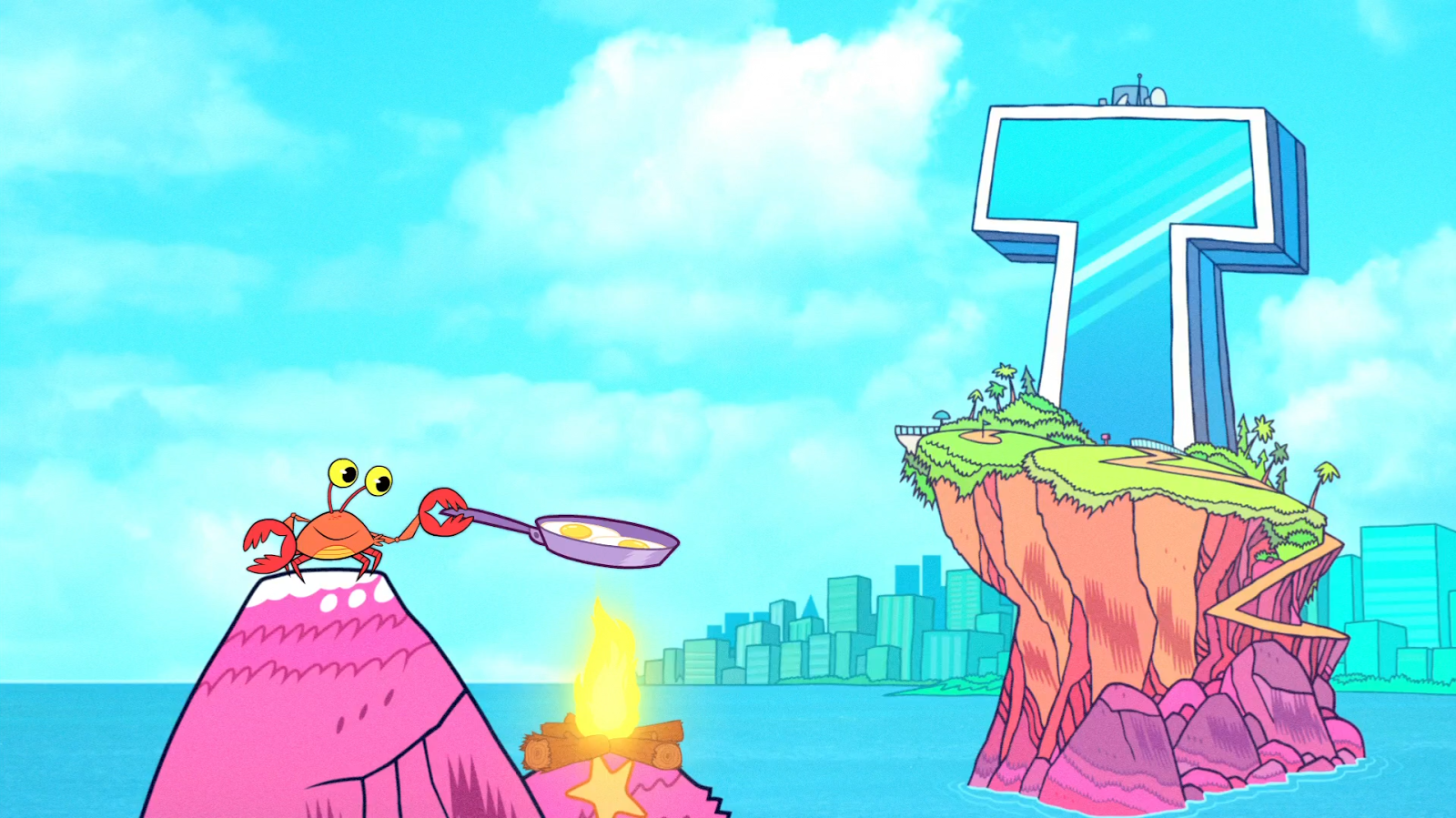

At least he has his own wiki entry.


And crabs are much cooler than seagulls.

11 May 2015

When does authorship stop meaning anything useful?

“My god... it’s full of authors.”

Prof-Like Substance drew my attention to this fruit fly paper, which may be a new record setter. I have never before seen a paper with over one thousand authors. One thousand and fourteen, if my count is correct. (Image at right. Click to enlarge... if you dare. That took some image stitching, let me tell you)

The highest I’d seen before this was a paltry 816.

I was curious what you had to have done to be listed as an author. With that many, it seemed like the criteria for authorship might have been, “Have you ever seen a fruit fly?” I went looking for statement about author contributions, which some journals have. There is not any such declaration in the paper.

The PDF of the paper gives a bit of a clue as to what’s going one. The author list is more modest on the title page, which lists the authors as, “Wilson Leung and Participating Students and Faculty of the Genomics Education Partnership.” So a lot of these authors are students who took a class, and probably completed part of the analysis as a course assignment.

Digging into the acknowledgements, though, suggests that the inclusion for authorship was marginally higher than being an data monkey:

The authors also thank additional students who contributed data analysis to this project, but for various reasons did not participate in reviewing the manuscript.

This suggests that all thousand or so authors at least looked at the paper and signed off on it. But judging from the course listings in the Acknowledgments section, it seems that many of these were undergraduate students, and I wonder whether any of them had any substantive opportunity to have input into the text and interpretations of the paper. And can everyone stand behind, and vouchsafe, the data here? Some guidelines require that of authors, and I think that’s a pretty good guideline.

I am all for engaging students in research, and crediting them. But this is a bad way of doing it.

Papers like this render the concept of “authorship” of a scientific paper meaningless. This feel more like a participation award than authorship. A possible solution, as I’ve suggested before (also here; paywalled), is that we need to give up “authorship” and focus on “credits” that are clearer descriptions of the contribution individuals make. Call the students “contributors” rather than authors. Put it in a supplemental file.

Additional: Okay, this paper has 1,446 authors, and this one has 2,932 authors. (Hat tip to Jens Foell for pointing those out.) Both are particle physics papers, though, a field which has been dealing with large author numbers for a long time. The paper under discussion here, the fruit fly paper, may be a record for biology. Even the draft human genome got ‘er done with “just” 272 authors.

New rule! If the number of authors on your paper can be measured in “kiloauthors,” having your name on the paper will not count for tenure and promotion purposes.

Update, 12 May 2015: The journal’s blog describes how this paper came to have over 1,000 authors, with over 900 of them being undergraduate students.

I will point out that there are guidelines for who gets to be an author. These are not perfect (Drugmonkey hates them), and not often followed in the trenches. But they do represent an attempt to spell out what authorship should mean, by a fairly substantial number of people working in scientific publishing.

I doubt that every undergraduates on this paper truly helped draft or revise the paper (criterion 2) or can be truly accountable for everything related to the paper (criterion 4). To their credit, author number 1,014 says on the blog:

“Actually we got some important comments back from students,” says Elgin.

I’m pleased that some students made important comments, but I have doubts that all the students genuinely met the “draft and revise” criterion. Reading a paper and saying, “Okay,” doesn’t cut it for me.

Update, 13 May 2015: This story has bubbled over to Nature’s website, with some comments from the non-student authors. Warning: contains me.

Update, 21 July 2016: This blog post discusses a highly cited technician (mostly so I can find it again later).

Related posts

Letter in Science

External links

Class projects as publishable research?
Undergrads power genomics research
Who is an author? (ICMJE “Vancouver guidelines”) 
Fruit-fly paper has 1,000 authors

06 May 2015

Riding into the sunset: my last class at UTPA

I just taught my last class at The University of Texas-Pan American ever. And, in contemporary fashion, I marked the occasion with a few selfies with my students.


Today is the last day of classes for the spring semester. There are still grades to calculate and such, but there are no more lecture days.


I am not teaching in summer 2015. I desperately need time not teaching to do many, many things. My office is about two years overdue for a purge, I have two manuscripts waiting for my revisions, there’s administrative stuff...


And when Fall 2015 rolls around, I will be teaching at the University of Texas Rio Grande Valley.

When I got here in 2001, the first class I taught was General Biology. And today, the last class I taught was General Biology again. And the students were good sports, so it was a nice class to end my UTPA teaching on.

It’s the end of an era.

05 May 2015

Tuesday Crustie: Beautiful


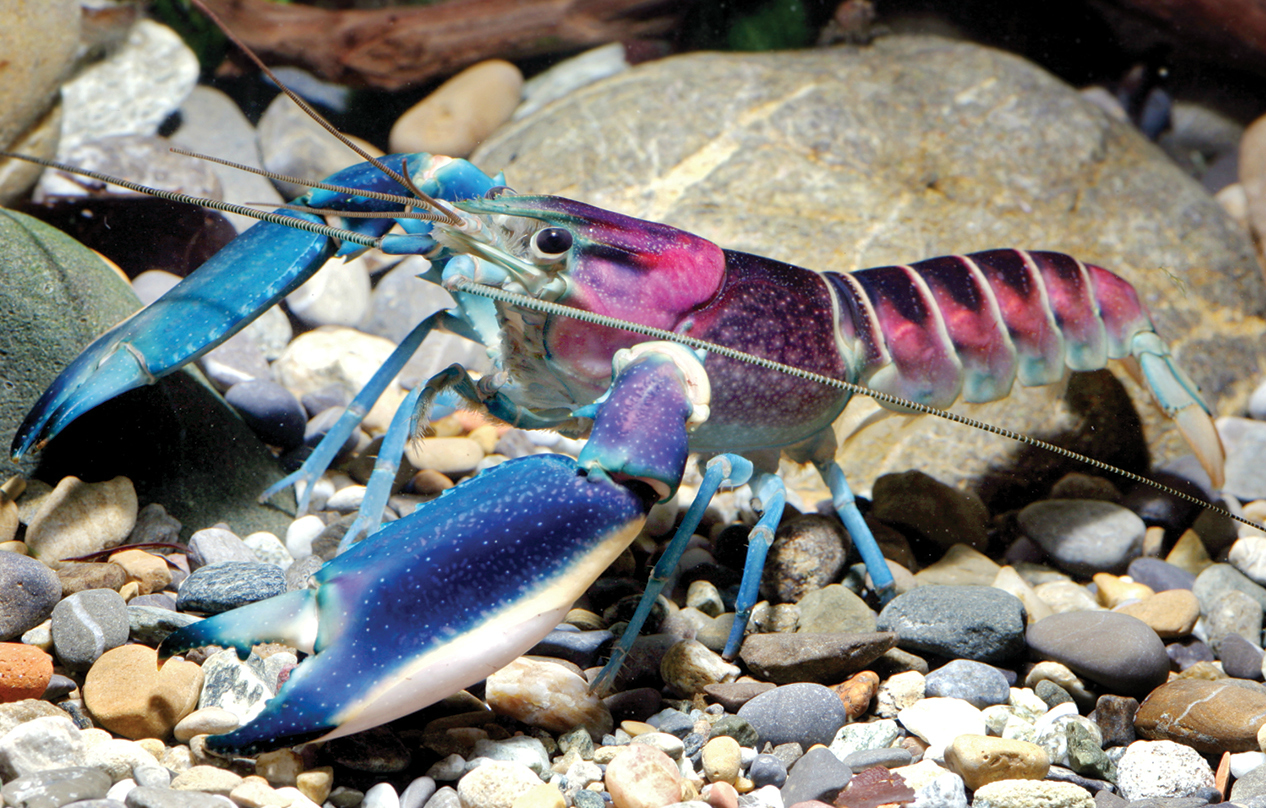
Meet Cherax pulcher. Its last name, “pulcher,” literally translates to “beautiful.”

Unfortunately, the beauty of this species may be its downfall. They are already for sale, and collected in large numbers, in the pet trade. And since the species is new to science, we know almost nothing about its basic biology.

Astacologist Chris Lukhaup mentioned on his Facebook page that he’s spent over a decade working on the description of this gorgeous new species. They aren’t all this pretty; there are a couple of different morphs, and no doubt Chris’s considerable photographic talents are at play in this picture, too.

Update, 13 May 2015: This crayfish is featured in this New Scientist article. Warning: contains me.

Update, 15 May 2015: It’s so nice to see crayfish in the news, and attention being drawn to the potential dangers of exploiting an almost unknown species for the pet trade. This article in the Washington Post says the species looks like a Lisa Frank creation... wait, did they steal Jason Goldman’s joke?

Reference

Lukhaup C. 2015. Cherax (Astaconephrops) pulcher, a new species of freshwater crayfish (Crustacea, Decapoda, Parastacidae) from the Kepala Burung (Vogelkop) Peninsula, Irian Jaya (West Papua), Indonesia. ZooKeys 502: 1-10. http://dx.doi.org/10.3897/zookeys.502.9800


04 May 2015

Don’t forget who approves new doctoral programs

The University of Michigan has been hosting a series of talks on the future of graduate and postdoctoral training in biology. There is a comprehensive Storify of tweet here.

American discussions about whether there are too many doctoral students and postdocs appear to be very much driven by federal funding agencies, mainly the National Science Foundation and the National Institutes of Health. Both have an interest because they provide are the source of support (salaries and such) for graduate students and post-docs.

The role of American states in this whole scenario is almost never mentioned.

In Texas, new doctoral programs have to be approved by the Texas Higher Education Coordinating Board. I have not conducted a survey of all the higher education systems in the United States, but I suspect that there are similar boards in other states.

If there is overproduction of doctorates, the states bear some responsibility for creating new doctoral programs.

While I hear from federal agencies on graduate student and post-doc training quite often, I almost never hear what the states think of all this.This mattere, because each state can have its own higher education agenda. And that agenda may not align with the agenda of the federal funding agencies.

The federal agencies get a lot of attention in this regard because they have money. But there should be a lot more attention focused on what the individual states think on the future of graduates and post-doctoral training. The states should not create doctoral programs at whim then leave them to be funded by federal agencies, any more than institutions should recruit grad students, and send their recent graduates off with little more than, “Good luck with that job hunt!” when they’re done.


03 May 2015

Epic fail: universities scared of dealing with bad behaviour

If a student called me a “f*cking moron” to my face, do I have the right to fail that student in my class?

Because that happened recently, just not to me. This story broke a few days ago: a Texas A&M professor decided to fail his entire class. The professor involved reported a host of issues with his students, including clear academic misconduct, but it seems that a lot of the problem arose because students were behaving badly. Calling a professor a moron is... not the way to win friends and influence people.

The university, predictably, is responding thus:

Dr. Patrick Louchouarn, the vice president of Academic affairs at the university made it very clear that although they respect Horwtiz, his failing grades won’t stick.

This is a problem, because a professor’s ability to assign grades is usually one of the places were the instructor has a very high degree of autonomy. It is very, very unusual for an administrator to meddle with the grades assigned by a faculty member.

From this article:

Henry Reichman, chairman of the American Association of University Professors’ Committee on Academic Freedom... said faculty members generally do have the right to assign grades, but there are some extreme circumstances under which this may be limited. He said, for example, that if a college found that a professor was failing students for clearly inappropriate reasons, the institution would be correct to intervene. ...

It should be the right of a professor to grade on behavioral issues and not strictly academic ones, whether that means failing a student who engages in academic misconduct or taking off points for people who miss class or turn in work late.

Reichman understandably goes for clear cut cases in his examples. Academic misconduct is an academic issue, not really a behavioural one. There is a well-established tradition and understanding in higher education that late work is penalized, and that also seems to be an academic issue.

What about students lack “honour and maturity”? Or, to use the case I started with, a student says something hateful to a professor? Can a professor fail a student for that?

I have a problem with that approach. I don’t think I have a right to give a student a lower grade because he or she yelled at me. Grade assignment should be related to the content of the work.

That is not to say that I don’t think the student should have no consequences for bad behaviour. Quite the opposite; I want there to be robust ways for me to report and censure such students. But I don’t have a simple toolkit for doing so. Assigning a grade is easy and involves only me. Report a student acting badly, and suddenly there are whole other levels of administrative machinery that kick into gear. I’m guessing three levels of administration (department chair, a dean, maybe a vice-president) and an investigating committee of faculty will be involved, minimum. And it’s not clear that those other levels of the university will support me. Suddenly, you are worried about retaliation, leniency, and more.

I suspect that trying to fail the student is how many, many professors would deal with the problem. They try to turn a behavioural problem into an academic one. It’s just easier.

And it’s not just professors relating to students.

A new professor who is demanding and abusive is more likely to have his or her department try to get rid of them by saying, “You didn’t publish enough papers in the right journals or get enough grants for tenure” rather than saying, “You’re a jerk who is making everyone around you miserable.” The American Association for University Professors specifically recommends that collegiality should not be a criterion for evaluating faculty.

I’ve said this for a long time. Universities are extremely bad at handling behavioural problems head on. The usual approach is to try getting rid of bad players by giving them a rough ride over academic issues, and not addressing the fundamental problem.

Related posts

Their grades were too... high?

External links

Slam flunk
Professor at Texas A&M Galveston fails entire class

Picture by Nicolas Raymond on Flickr; used under a Creative Commone license.

01 May 2015

Fix journals you have before you make new ones

In an editorial, Society for Neuroscience president Steve Hyman takes on issues of replication and rigor. Near the end, he writes:

With the launch of eNeuro, SfN aims to alter some of the troubling patterns in publication.

I still don’t see why the society needs a new journal to alter those patterns, when it could just change the editorial policies of the journal it already has.

If you think publishing negative results is important, if you think publishing replications is important, change the editorial policies, priorities, and format of Journal of Neuroscience. Cordoning these results into eNeuro sends a clear signal that replications and negative results are second rate science.

Additional, 6 May 2015: Ivan Oransky notes that the Journal of Neuroscience has some “troubling patterns in publication,” like not explaining editorial decisions on retractions and publication bans.

Comments for second half of April 2015

Dead Sea News has a nice new paper on science outreach. Love that. But confused as to why it’as in a computational biology journal.

DrugMonkey asks why people are scientists.

28 April 2015

Tuesday Crustie: Concealment

You may have to look twice for the crustaceans in this picture...


And yes, it’s crustaceans, plural. They are sitting on top of a crinoid.

Picture by Klaus Steifel on Flickr; used under a Creative Commons license.

A new email signals the beginning of the end

Late today, I got notice that it was time to activate my email address for UTRGV.

Done.

It was quick to do, but in many ways, it signaled the end of an era for me.

An institutional email address is central to modern academic life. It is the first point of contact that people look for if they are trying to connect with you. More than office space, building keys, an ID card, or listing on an university website, a .edu email address defines your affiliation with an institution, both to that institution and to the rest of the world.

The UTRGV email drives home for me that UTPA is coming to an end.

Since I practically live online (“Hi, my name is Zen, and I’m a netaholic”), I have made the problem much, much worse for myself. I use my academic email for a lot of online services, and now I will have a long, slow trudge of switching all the profile account information. Updating a single paper in my academic sites took me half a day. I have no idea how long it will be before I swap over all my accounts to my @utrgv.edu email addy.

This is probably a good time to start listing my university affiliation on new manuscripts I submit as “University of Texas Rio Grande Valley,” too.

I have a lot of mixed feelings about this, because I am watching how this institution is developing. And I am not always feeling optimistic about what I see. But maybe that’s another post for another time.

Related posts

Updating, updating. and updating some more

22 April 2015

The first registration for UTRGV...

We’ve started registering students for the inaugural fall semester of University of Texas Rio Grand Valley (UTRGV), and it’s kind of a mess.

Student records are not showing up properly in the student record system. Prerequisites are not properly in the system. Classes are disappearing from registration. 

The next few months are going to be extremely interesting.

21 April 2015

Tuesday Crustie: Opportunistic

My field work is on a sandy beach, so there are not very many hard surfaces available for organisms to settle on. So I don’t expect to find these crustaceans when I was at the beach on the weekend...


Barnacles! Some variety of gooseneck barnacle, I reckon, growing on some sort of floating seed (I think). I love that they would just keep extending their feeding legs (cirri, pretty calmly, even though I was holding them out of the water.

15 April 2015

Comments for first half of April 2015

Awesome discussion over at Small Pond Science about the disparities in the National Science Foundations graduate research fellowship program (GRFP). It looks like institutional prestige is a great big trump card in competitions, again.

The discussion about GRFPs continues at Savage Minds.

Neuroskeptic wonders what you need to make a perfect brain scanner.

At Mistress of the Animals blog, Potnia Theron looks at why we do what science we do. (Spoiler alert: money can have a bloody awful lot to do with it.)

Pondering Blather examines a forthcoming article on papers that don’t get many citations.

Mark worries about “self-funded” doctoral degrees. Is this exploitation? Maybe, but I’m curious about where the line is drawn. Should we be drawing lines in the sand over “self-funded” master’s degrees, particularly with thesis? Undergraduate degrees that are research intensive?

14 April 2015

Tuesday Crustie: Skeletons in your closet


I’m not terribly familiar with these skeleton shrimp. When I saw the picture, I had to go look them up on Wikipedia, just like everyone else.

So many crustaceans, so little time...


Picture by Klaus Steifl on Flickr.

13 April 2015

Nature wants to eat you

I’m trying to work out which is the more terrifying image.

This:


Or this:


The lion’s face is perhaps the purest expression of fury I have ever seen. The penguin picture is shocking because it is completely unexpected. It’s also a vivid reminder that birds are the direct descendents of meat-eating dinosaurs.

Why can’t I cite Mythbusters?

I’m sorry, Adam and Jamie. I tried.

In our most recent paper on nociception, one of the major points is that not all animals react to potentially nasty stimuli the same way. And it turns out that there’s a very nice demonstration of that idea on Mythbusters. In the 2008 Shark Week “Jawsome Special,” the Mythbusters did a segment called “Spicy Salsa Shark Shield.”

They showed that sharks were not deterred by the presence of capsaicin-laden material.


I included this in the references as:

Dallow, A. and Lentle, T. (2008). Mythbusters: Shark Week Special 2, Episode 102. Discovery Channel, USA: Beyond Entertainment Limited.

The journal copy editors wrote:

Only peer-reviewed references are permitted in the reference list.

This policy is nowhere to be found in the journal’s instructions to authors.

I took it out, because there were other references that made the point about how responses to noxious stimuli varied from species to species. It wasn’t worth fighting over, and I think I’d have lost.

Regardless of the esteem you hold for the work done by Mythbusters, the journal’s citation policing raises bigger issues. A current trend in academic publishing is to broaden the kinds of research products that people can get academic credit for. Why should only publications “count,” and not sharing a database, or writing useful code?

Consider figshare, the cloud storage data archiving service. One of their big selling points as a data repository is that they generate digital object identifiers (DOI) for stuff submitted there. The DOI itself is not the selling point, but they strongly imply that this makes whatever is archived on Figshare citable in scholarly publications. Here’s the top from their “about” page: making things citable is the first thing the list. (my emphasis):

figshare is a repository where users can make all of their research outputs available in a citable, shareable and discoverable manner.

But all those hopes can be dashed by a single sentence from a journal. “Nope, we only take peer reviewed papers.”

Interestingly, the journal let us keep in a couple of conference abstracts. The abstracts were in published in a peer-reviewed society journal, but the abstracts themselves were not peer-reviewed.

I’ve noted before that some journals have had a tradition of allowing people to cite “grey literature,” like conference abstracts, newspaper articles, web pages, or tweets. I think that is a positive thing. I worry that this sort of “journals citing (and therefore promoting) journals” policy might become more common as journals compete for scientific products. Such policies could hamper the development of academic publishing innovations.

Even worse, a “journal only” policy has the potential to force authors into intellectual dishonesty. “We got this idea from another lab’s data on figshare, but we can’t say that in the paper, so we’ll just have to say something else.”

Authors and possibly reviewers should be determining what is a legitimate citation on a case by case basis, rather than a journal setting a blanket policy favourable to itself.

10 April 2015

Feeling successful

This is sitting on my desk.


The inside says:

To celebrate the outstanding UTPA authors who have published scholarly works or been awarded major research grants in the past year.

It’s next week. I’m not going. There are more interesting things I could do. Trivia night at the pub, the Face-Off finale, cheap movie night... But most importantly, I’m not going because it doesn’t make me feel good about what I achieved.

I got thinking about what makes me feel successful after reading this article in The Chronicle of Higher Education (my emphasis):

For some of us, it’s not that we are afraid to lean in. It’s that we have jumped in head first and are barely treading water even when we are considered “successful.” It’s not that my success has come at the expense of family or that my career advancement has been stifled by raising a family. It’s that my success in academe is simply not the kind of success that I envisioned for myself. Success should feel good, make you beam with pride, feel as if all your hard work was worthy of something bigger. I envisioned, and frankly deserve, a type of success in which the next panic attack isn’t just around the corner and in which supportive spouses don’t feel like they must resort to ultimatums to cultivate a meaningful family life.

An institutional dinner doesn’t make me feel successful. If I go, I’ll just be annoyed.

First, this event isn’t for people who published a lot of papers. Oh no. “Scholarly works” is defined here as books and book chapters. That’s not the major way people in the sciences communicate their work. In fact, book chapters a good way to bury your work in science. So all my colleagues who are kicking ass writing publications... too bad. No dinner for you.

Second, that it includes people who get grants is a reminder of that my institution values money for its own sake, rather than focusing on the new knowledge that we’re supposed to be generating with the money. If you want to reward people who got grants, great. Getting a grant is hard. But don’t call it an “author’s recognition and reception”; call it an “author’s and fundraisers recognition and reception”

Third, how do you get invited to this event? By self identification. The institution can’t even be bothered to check our annual folders, our CVs that I’ve sent forward multiple copies every year, it seems, or the “digital measures” system they put in place to be able to keep track of what people are doing. No, they have to email deans and chairs to ask their faculty, “Who put out a book or a chapter in the last year?”

Nope. That invitation didn’t make me feel “celebrated.” It make me feel like a cog in an institutional public relations machine.

But there was something that made me feel successful recently. It was easy to pick out. My department chair was in the doorway of my office, and we were talking about something, and he said something like, “I noticed that you’ve been kicking ass at research lately.”

That one sentence felt really good.

It felt good because it was personal, face-to-face, from a colleague I like and trust, unsolicited, and not in response to any self-promotion I was doing. That was so much better than any institutional dinner shindig.

External links

A hockey mom seeks tenure

09 April 2015

My new work week

For several unbloggable reasons, I have spent very close to working a traditional 40 hour work week the last few months. This is a pretty substantial cut for me.

And this is the point where everyone wants me to say, “And I’m feeling much better now!”

A lot of people have written about the cult of business in academia, and how there are a lot of bad examples of overwork. A few years ago, one person (Nobel prize winner, I think) talked about how some of his best ideas he got from noodling around in the lab... on Sunday afternoons. He copped it for setting a bad example for unrealistic work expectations. Not everyone can or should spend weekends in the lab.

My feelings about moving to a more “9 to 5” schedule are not that simple.

On the one hand, if I’m honest, I did used to feel that there was nothing in my life but work. That wasn’t very pleasant.

Now, there is more to my life than work, and that’s good. But now I feel crummy about the work I do get done. I’m constantly aware of how many tasks need doing. I’m behind on grading, I’m behind on page proofs, I’m behind on administration, I’m behind on revising manuscripts... and I hate that feeling.

(Oh, and my office is a disaster area.)

Fortunately, this feeling of not getting it done isn’t showing in my productivity on paper yet. I’ve had one paper published that year, pre-prints are out for a second, and several contributions for books are in the pipeline for later this year. But I was lucky: I had a lot of projects that had a very long, slow, fuse that are just finally coming out after long delays.

And the things that are suffering are things that I like doing, that make me feel like an academic contributing to the dialogue. It feels so good when I get to blog now. I want to do more. I’m turning down students interesting in research projects, because I know I don’t have the time to give them the attention they deserve. I’ve had to cut myself off a lot in an effort to keep myself focused on the backlog.

I think I may need some time that isn’t the daily 9 to 5 grind of academia (teaching and meetings and writing) but that is still related to it. Maybe that guy was on to something with Sunday afternoons in the lab. Maybe just occasionally.

08 April 2015

Incoming: Evo devo inverts 4!

Model organisms are great, but as interest has turned to model organisms (particularly genetic ones), we’ve seen less and less attention paid to... the rest of the living world.

A new book series tries to remedy this somewhat for one field: Evolutionary Developmental Biology of Invertebrates. I contributed a little to a chapter in volume 4 with Steffen Harzsch and Jakob Kreiger on development in decapod crustaceans. I just looked at the page proofs recently, and it looks lovely.

Volumes 1, 3, 4, 5, and 6 are listed in the Springer website. I am guessing that there will be a volume 2, and the editor is not pulling some elaborate prank to leave us with non-sequential volumes.

07 April 2015

Tuesday Crustie: Bringing the thunder

The big science news that everyone is talking about today is the proposal to return the genus name Brontosaurus (translation: “thunder lizard”) a valid taxonomic moniker again. Well, dinosaurs aren’t the only thunder around...


Check out those claws! That’s clearly what it uses to bring the thunder. Myomenippe hardwickii, which the photographer designates as a “thunder crab.”

Photo by budak on Flickr; used under a Creative Commons license.

06 April 2015

How much harm is done by predatory journals?

There is a cottage industry of people who feel the need to show, “There are journals that will publish crap!” And it’s getting tiring.

The Scholarly Kitchen did this to Bentham Journals a few years ago, we had the Bohannon “sting” in Science, the angry “Get me off your fucking mailing list” paper. A recent entry into this pageant is a cocoa puffs paper. A new editorial calls predatory journals “publication pollution.”

To listen to some of these, you could be forgiven for thinking that publishing a paper in one of these journals is practically academic misconduct: a career-ending, unrecoverable event.

I talk to a lot of working scientists, both online and in person. And in all of that time, how many scientists have I heard of who have reported someone who submitted to one of these journals, who were not satisfied with their experience?

Three. One experience is described in two posts (here and here), and a couple of others were tweeted at me when I asked for examples. And two were “my friend” stories, not personal accounts. For the amount of handwringing over predatory publishers, this is a vanishingly small number.

Of course, these numbers are probably under reported, because nobody wants to admit that they published in a junk journal. It’s like admitting you got taken in by an email from someone claiming to be a Nigerian prince. It’s embarrassing to admit when you should have known better.

Let’s say that someone pays and publishes a paper in a predatory journal. Who is harmed, how much are they harmed, and what recourse is there to address the harm?

The author

An author who publishes in such a journal has paid the article processing charge. Okay, that sucks. But presumably the author knew she or he was going to be getting an invoice, and would not have gone that route if she or he was utterly unable to pay.

Assuming that the author has not gone into great financial hardship, let’s say the paper is published online, but without proper peer review. What are the possible outcomes, and what harms might arise?

If the paper is competent, the author could harmed because people will not read the paper because of the journal. But the paper is available for other researchers can use it and cite it if they so choose. People cite non-reviewed stuff all the time (conference abstracts, non journal articles).

If an author realizes that this was a non-peer reviewed venue, what can she or he do about it? The author can try to retract it. If the journal does not, the author can try to publish it elsewhere. Real journal editors might be sympathetic to the plight of authors who made a mistake in the publishing venue.

An author could choose not to list the paper on her or his CV. Other professionals do similar things. Actor Peter MacNicol never listed the movie Dragonslayer on his list of films.

Ultimately, I don’t see severe harm done to an honest author who publishes in the wrong journal. It’s reasonable to ask if that harm couldn’t have been avoided with a little due diligence. Authors should know the principle “Caveat emptor” applies as much to journals as other services.

The public

Another argument is that the harm of publishing in predatory journals is that the public or the unwary will be confused, because the findings could be untrue. Let’s examine a few scenarios of how findings could be false.

The research was not done well. This is no different from research published in other journals. There are many, many cases of research that was poorly done, but published anyway. This is why post-publication peer review is important. This is why replication is important. Scientists perform post-publication peer review all the time. It is our job. This is what we do.

The researchers are malicious. It is possible that someone with an agenda might try to give dubious information some sort of veneer of respectability by publishing it in a predatory journal. But... why? There are many easier ways for people with an agenda to spread lies than publishing in a crummy journal.

Professional climate denier Marc Morano has never published a scientific article. Neither has dubious diet critic the Food Babe. They don’t need to, when they’ve found so many media platforms that give them a so much bigger audience. It’s not clear how an article in a junk journal is supposed to be a more effective way of spreading untrue information than a blog, or an infomercial, appearing on a cable news network sympathetic to certain ideas and ideologies, or any of the other hundreds of ways people can spread lies.

This raises the question of how the general public finds out about research of any sort, including the dodgy stuff. Most members of the general public are not scouring academic journals. For there to be significant spread of the false research findings, it would either have to be spread through the general media or social media

General media. Science journalists who have any baseline competence should understand scientific publishing enough to realize that not every research article in every scientific journal is true. Publishing in a little known journal should raise an immediate red flag and warrant investigation before filing a story. If any journalist doesn’t do that, you have “churnalism,” and in my mind, that’s a separate – and much bigger – problem than a junk journal.

Social media. So far, I know of no cases where an article from an alleged “predatory” journal has gone viral. But let’s say it does. One of the powers of social media is that if something does go viral, it gets a lot of attention, including relevant experts can talk about it. They are probably going to comment, and be asked to comment, and can explain why such and such a paper is problematic. One of the wonderful things about the dress was that it gave lots of experts a chance to explain what we know about visual system.

Other scientists

I am not sure I see much potential harm for other scientists if a paper is published in a crappy journal. Because the entire point of a journal being called “predatory” is a way of saying that it has no standing in the scientific community. So if a journal is already being ignored by a scientific community, how is it going supposed to affect that community?

Evaluating articles is what we working professional are supposed to be doing. Like, all the time. I suppose that there is a minor harm in that people might have an opportunity cost in time spent debunking papers in junk journals. But more likely, papers in bogus journals are going to suffer the same fate as a lot of other articles: they’ll just be ignored.

Another argument might be that the general scientific community is harmed because there is reduced public trust in science. As I outlined above, I can’t see that happening.

The major reasons that scientists get their panties in a bunch about predatory journals is not because junk “predatory” have done much demonstrable harm to anyone, other than authors who are out their processing fees. I see lots hand waving about the “purity and integrity of the scientific record,” which is never how it’s been. The scientific literature has always been messy. We always have verify, replicate, and often correct published results.

Stephen Curry wrote:

“The danger of this model is that upfront fees provide short term incentives for journals to accept papers from anyone who has the money to pay, regardless of their scientific value or accuracy.” Is there any evidence that this is a serious risk? As the author himself notes, no journal will build a reputation for quality by publishing any old rubbish. This is a bit of a straw man argument.

Some people have claimed that these predatory journals exploit scientists in developing countries. It reminds me a little of someone on Twitter who recounted asking at a historical tour, “Were slaves kept here?” The guide answered, “Yes, they had good houses and were well cared for.” The problem wasn’t whether they had decent housing, the problem was they were slaves.

The problems for researchers in developing countries are not predatory journals. The problems that such researchers have is bad infrastructure, lack of support, and poor mentoring that prevents them from putting together papers that could be published in mainstream scientific journals. That they may be working under incentives that do not reward them for discriminating between journals. I also am waiting to hear from the waves of dissatisfied scientists from developing countries who feel they got ripped off.

I also noticed this when I tried to read a new entry in the “OMG predatory journals” collection:


It’s not quite an open access irony award winner... but it’s close. You want to complain about scientific publishing? Let’s talk about the regular, routine obstruction to reading the scientific literature that occurs even a professional working scientist at an expanding university with ever increasing research expectations. That affects routinely me, in a way predatory journals never have.

Open access is a new business model. Who benefits from constantly crying wolf on “predatory” journals? Established journals from established publishers, whose business model includes, in part, in asking over US$30 to read an editorial.

We should be worried about parasites as well as predators in the scientific publishing ecosystem.

Additional, 8 April 2015: There is a little bit of data indicating that these junk journals are not being read here. Hat tip to Lenny Teytelman.

Related posts

Science Online 2013: Open access or vanity press appetizer
Open access or vanity press, the Science sting edition

External links

Why A Fake Article Titled "Cuckoo for Cocoa Puffs?" Was Accepted By 17 Medical Journals
Comment on “Open Access must be open at both ends”
Beyond Beall’s List: We need a better understanding of predatory publishing without overstating its size and danger.
Some perspective on “predatory” open access journals
Science’s Big Scandal
Science and medicine have a 'publication pollution' problem
Academic journals in glass houses... 

31 March 2015

Tuesday Crustie: Made in Taiwan


Even though I’m nominally an expert in crustaceans, I’m embarrassed by how little I know about them. If I was walking down a beach and saw this little guy, I would recognize it as Emerita – which I should, since they were one of the species in my doctoral thesis! – but I would be completely oblivious to this being a new species.

I might, and I stress might, clue into to the colour. The blue patch at the front around the eyes is something that is different than in other mole crabs, but it’s still quite subtle.

Of course, I’m unlikely to spot this walking down a beach, since its name, Emerita taiwanensis, indicates where it’s from: Taiwan. They’ve been found only at two locations, and only once from one of those two.

Reference

Hsueh P-W. 2015. A new species of Emerita (Decapoda, Anomura, Hippidae) from Taiwan, with a key to species of the genus. Crustaceana 88(3): 247-258. http://dx.doi.org/10.1163/15685403-00003413


17 March 2015

Tuesday Crustie: Pinch me, I’m Irish

Something for St. Patrick’s Day! (I get to celebrate, because my grandmother’s original name was Murphy, which is about as Irish as you get.)


This green crab (Carcinas maenas) can be found in the waters around Ireland. Unfortunately,it’s been distributed around the world, and is no one of the world’s worst invasive species.

However, Ireland also has its own problems with unwelcome visitors. My most recent paper looks at this.

If St. Patrick were alive today, his job should be casting out alien crayfish, not snakes.

13 March 2015

Jobs at UTRGV

The Department of Biology at the University of Texas Rio Grande Valley has put out the call for two tenure-track assistant professor positions!


Applications close 23 March 2015.

If you have questions about the institution, department, and so on, you can find all my pertinent contact information on my home page.

Come work with me!

12 March 2015

The Zen of Presentations, Part 68: Literally too literal


I’ve been trying to teach my biology students about the importance of narrative in presentations. As part of their task, I’ve been using two parts of the techniques elaborated in the book Connection: Hollywood Storytelling Meets Critical Thinking (reviewed here).

Summarize your talk in a single thematic word.

Summarize your talk in a single, “And... but... therefore” sentence.

Students are finding this a much harder task than I expected. I was particularly surprised by how many of them stumbled over drilling down their talk to just one word.

Over and over again, students are submitting just be something that is in the paper. If I give them a paper on coral reef ecosystems, their word is, “coral.”

It would be like someone asked to write a single word for last year’s movie Guardians of the Galaxy, and saying, “spaceships.” Or worse, “galaxies.” Sure, there are spaceships in the movie, but that isn’t the theme of the story.

Basically the movie is about characters with a traumatic family history getting over their trauma to forge a new family. Sure, the movie uses the word “friend” but the point is still clear. Drax lost his whole family; Gamora’s family was abusive; Peter Quill’s dad abandoned him, his mom died, and he was adopted; and Rocket and Groot are orphans who’ve never really had parents. The movie is all about these characters learning to surmount their history, communicate, and forge a new family. (From here.)

“Teamwork” or “family” or “trauma” might be better.

This literal take on their topics carries through the main presentation. Over and over again, students get focused on the minutia. They spend an enormous amount of time on minor points. When presenting a singe scientific paper, a large number of students spend a lot of time on methods, up to and including which institutional board did the ethics review for the experiments.

It may be that the sort of education that science majors get tends to be way focused on details, and seemingly irrelevant details are often exactly the sort of knowledge students are tested on. I don’t know how to get them out of their heads and stepping back to see more “forest” and less on “every leaf on every tree.”

Related posts

Connection: Hollywood Storytelling Meets Critical Thinking review

11 March 2015

“What’s our Nature paper?”

A few years ago, a candidate interviewing for a gig in our department said that he routinely asked people in the lab, “What’s our Nature paper?”

I have severe concerns about chasing after glamour magazine publications. But that question stuck with me. I may hate the way the question is phrased, but I understand what the question is asking at a deeper level. It’s asking, “What research will do you do that would be important, not just to your narrow field, but to science generally? What research would you do that would change the world?”

And when I thought about my own work, I didn’t have an answer.

It’s a well known thing in psychology that when things go wrong, we blame external influences. (But when things go right, we credit ourselves.) And it’s increasingly easy to say, “I can’t have a manuscript worth sending to Nature because grants are hard to get these days, my teaching load is too heavy, the best students won’t apply to my program, we don’t have a doctoral program...” and on and on and on.

And then I asked, “What if none of those were problems? What if I had no other commitments, and all the supplies and cash and colleagues I needed? What would be my Nature paper?”

And I still don’t have an answer.

Maybe as you go on in your career, you get complacent. You have a line of research, and you know what the next experiment is for the next few papers. And you don’t stop to ask yourself, “Forget about external limitations, do I have an question or an idea that – if I could answer it well and before anyone else – would shake things up?”

Ambition has a bad rap in science. There are a lot of people with massive egos who are very ambitious. But ambition is not all bad. You can achieve a lot of positive things if you are ambitious. So maybe it’s worth asking yourself, “Am I being ambitious enough?”

Myself, I have the ambition to live 300 years. I will not live 300 years. Maybe I will live one year more. But I have the ambition.
Why will you not have ambition? Why?
Have the greatest ambition possible.
You want to be immortal? Fight to be immortal. Do it.
You want to make the most fantastic art of movie? Try.
If you fail, it’s not important. We need to try.
Alejandro Jodorowsky, Jodorowksy’s Dune (2014)

10 March 2015

Tuesday Crustie: Young but old

This is a baby crab, therefore young.


This is also a reconstruction of a 150 million year old fossil, therefore old. Huag and colleagues show this is the oldest baby crab in the fossil record (150 million years!). That it’s the oldest may not be as impressive when you consider that it’s only the second baby crab in the fossil record ever found. So it had a fifty-fifty chance to be oldest!

What a spectacular find.

For more on this discovery, read here. I’d like to direct you to the original paper, but despite Nature Communications being an “open access journal now,” not all of its papers are open access - including this one. Sigh.

Reference

Haug JT, Martin JW, Haug C. 2015. A 150-million-year-old crab larva and its implications for the early rise of brachyuran crabs. Nature Communications 6: 6417. http://dx.doi.org/10.1038/ncomms7417


04 March 2015

Can civil servants defuse a bomb? An Irish crayfish problem


There are papers you write for your self.

There are papers you write for your colleagues.

I wrote my latest paper for civil servants.

My newest paper on the sale of marbled crayfish is short. I bet that some people reading it might wonder why it’s not just a blog post. I debated with myself a lot whether I should try to get it in a journal. (I assure you, it would have been much easier to blog about it that publish it in a journal.)

It started when I was checking my email, and saw one of my regular alerts for “marbled crayfish.” I don’t think I can recreate the sound I made when I read one of my alerts and saw the link was from Ireland. It was a sort of sharp, squeeky inhaling – probably close to an “Eeep!”

I panicked.

When I describe the situation native European crayfish, the phrase I almost always use is, “horror show.” It was just so obvious to me after I went to the International Association for Astacology conference in 2010 (blogged here). Between introduced crayfish species and crayfish plague, things for native European crayfish species are bad.

Ireland has been an exception. There’s only one native species, the white-clawed crayfish (Austropotamobius pallipes, pictured above). And those Irish crayfish populations are in pretty good shape, relatively speaking, mainly because there aren’t any exotic invasive crayfish species in Ireland.

Ireland and Marmorkrebs – a cloning species that needs only one to start a population, and carries crayfish plague – would be a spectacularly bad combination.

I wanted to get this into a journal because documenting occurrences like this is important for policy and enforcement purposes. Ireland is ostensibly doing everything right. Importing crayfish into Ireland is already illegal. Ireland has public awareness campaigns about crayfish. And yet people are still selling Marmorkrebs publicly.

I hoped that for anyone who had some power to do something about Ireland’s crayfish, a scientific article in a peer reviewed journal might have more clout than a blog post.

After I decided that I wanted to publish this in a journal, it was not smooth sailing. Finding a home for this article was not easy, because it’s not exactly a traditional biology article.

While my article was being reviewed, I panicked again. A scientific society newsletter article scooped mine: it also reported Marmorkrebs were for sale in Ireland. I thought, “There goes my paper’s reason for uniqueness.” But there were enough differences that I thought my paper would still have something new and important to report. More importantly, a couple of sentences in the middle of a society newsletter was still not part of the mainstream literature. Because one goal was to make sure that the sale of exotic crayfish in Ireland was not overlooked, I still believed a paper was necessary.

And I found a third case of Marmorkrebs for sale in Ireland at the page proofs stage. Adding things at this late stage is always tricky, but the editor was cooperative and it went in, so the article became at least a little more substantive than what I initially submitted.

The final challenge was institutional rather than editorial or scientific. I was hoping to have this paper out at the end of 2014, but the article processing fees did not get paid in time. Sigh. Paying a bill should be routine, not be something to celebrate. But I did celebrate when it was paid, so my article wasn’t pushed back a second time.

Now that the article is out, I hope that it will make a few people aware that Ireland has a great resource in its crayfish. And maybe it will act as a slight nudge to stop non-native crayfish, like Marmorkrebs, from getting loose in Ireland’s rivers and lakes and streams.

Reference

Faulkes Z. 2015. A bomb set to drop: parthenogenetic Marmorkrebs for sale in Ireland, a European location without non-indigenous crayfish. Management of Biological Invasions 6(1): 111-114. http://dx.doi.org/10.3391/mbi.2015.6.1.09

Top crayfish picture from here.

03 March 2015

Tuesday Crustie: Crabz n the Hood


A new paper by Kim and Christy (2015) gets ace graphic treatment in a BBC summary.


Reference

Kim TW, Christy JH. 2015. A mechanism for visual orientation may facilitate courtship in a fiddler crab. Animal Behaviour 101: 61-66.

External links

Crabs build ‘temples of love’

02 March 2015

The “Texas transcript” is a good idea, but won’t solve grade inflation

“Devastating crisis.”

“Scandal.”

“Ravaging.”

“Debasing.”

“Toxic.”

“Virulent.”

“Still worse is its effect on the souls.”

With language like that, you’d think the author was talking about a terrorist attack, Biblical plague,  or a new Twilight book.

Nope. This is about grade inflation in universities. A C used to be considered average, but now, the most common grade in American universities is an “A.”


The solution being proposed to this scourge? (Sorry, got carried in wanting to match the original article’s over the top descriptions.)

Texas House Bill 1196 [and] Senate Bill 499... would require schools to “place the average or median grade, as applicable, immediately to the right of the student’s individual grade” on official transcripts.

I like this idea. Letter grades alone are not all that informative. I am often asked to write recommendation letters for students, and one of the things I often try to do is to give the reviewer a sense of where that student stood relative to the rest of the class. A student might have an A but be in the bottom half of the class, or might have a B but be in the top ten percent of a class.

Author Tom Lindsay says we would need a “wait and see” if this approach curbs grade inflation. But he claims:

At the least, the larger culture would be alerted to those schools and majors that have maintained standards and those that have not.

The transcript described can’t inform “the larger culture” about universities and majors. All it does is provide information about the classes one student took. An employer, review committee, parent, or even the student still has no way of knowing how one major or one university stacks up to any other.

More seriously, the “larger culture” has deep, preconceived notions about “standards.” And people will tell their own narratives that fit their preconceived ideas.

Remember a couple of recent papers that showed that the graduates of “elite” universities locked up a disproportionate number of tenure-track academic positions? I saw a discussion of that paper on Facebook, and people immediately leaped to the hypothesis that the reason for this was that the graduates from those universities were better. People made arguments like:

Highly selective admission leads to better candidates.
Guess what schools don’t have to admit “warm bodies?” The elite schools get plenty of top notch applicants.
Higher profile or elite schools have wealthier alumni, and more resources, so that may lead to slightly stronger portfolios, giving grads an advantage.
Top-tier schools have more resources for research support.

People jumped to a “fair world” argument even though the authors of one paper (Clauset and colleagues) explicitly wrote that this hypothesis was highly unlikely:

Under a meritocracy, the observed placement rates would imply that faculty with doctorates from the top 10 units are inherently two to six times more productive than faculty with doctorates from the third 10 units. The magnitude of these differences makes a pure meritocracy seem implausible, suggesting the influence of nonmeritocratic factors like social status.

People will certainly start applying the same sorts of “just so” stories to explain differences in grades across institutions. They will say, “Well, of course students from Elite University get lots of As, because that one only takes the smartest! That’s not grade inflation, that’s just proof they are the best, and provide the best training to students!”

On the other hand, if a student gets low grades from an Elite University, people will say, “Well, of course Elite University has the most rigorous academic standards! A C from Elite University is equivalent to an A from Run-of-the-Mill University!”

So showing people the averages on transcripts seems unlikely to inform the “larger culture” about grade inflation in any meaningful way. And students at less prestigious institutions will continue to be shortchanged.

(Aside: For a long time, I didn’t understand why university administrators cared so much so much about university rankings and spent huge amounts of effort gaming the system to get their universities to be seen as “top tier.” The longer I stay in academia, the more I understand it. A lot rides on public perception of academic prestige and rigor, far more than actual rigor. It’s disappointing, but that’s the reality of the situation.)

The only way that you can demonstrate rigor across majors and institutions is by taking a bunch of students, and giving them all the same, standardized assessments. Sound familiar? It’s an approach that is rampant in K-12. It’s also an approach that has been widely criticized for not taking into account external influences like poverty and other socioeconomic factors. Do you expect a university that enrolls lots of first generation minority students from an economically disadvantaged background to have the same outcomes as a university that mostly enrolls majority students raised by professional parents?

What do “standards” and “rigor” mean to those two populations? I’m not sure they will mean the same thing, or that they should.

Linday also claims:

(T)he bill avoids seeking to micromanage the state’s institutions of higher education. It does not require them to do anything differently(.)

That’s got to be a little simplistic. While institutions have all that data, computing it, and then putting it on transcripts is probably a trivial thing, because transcripts are still stuck in the ninetheeth century. You would have to add columns, explanations, change all the typesetting, and so on. That means every university in Texas would have to retool their transcripts from scratch.

Related posts

What grades should look like 
Their grades were too... high?
Remaking the transcript
Why grade inflation is good for the GRE 

External links

The Texas Legislature looks to lift college grading standards

01 March 2015

Comments for second half of February 2015

The Molecular Ecologist has a some nifty survey results about how scientists pick which journal to publish in. Surprise! That intangible perfume of “prestige” and Impact Factor are two of the three biggest factors.

Bethany Brookshire introduces the lovely word parthenogenesis.

DrugMonkey asks readers in graduate programs about their entry requirements.

I make a cameo in an important post on scientists paying expenses out of pocket.